
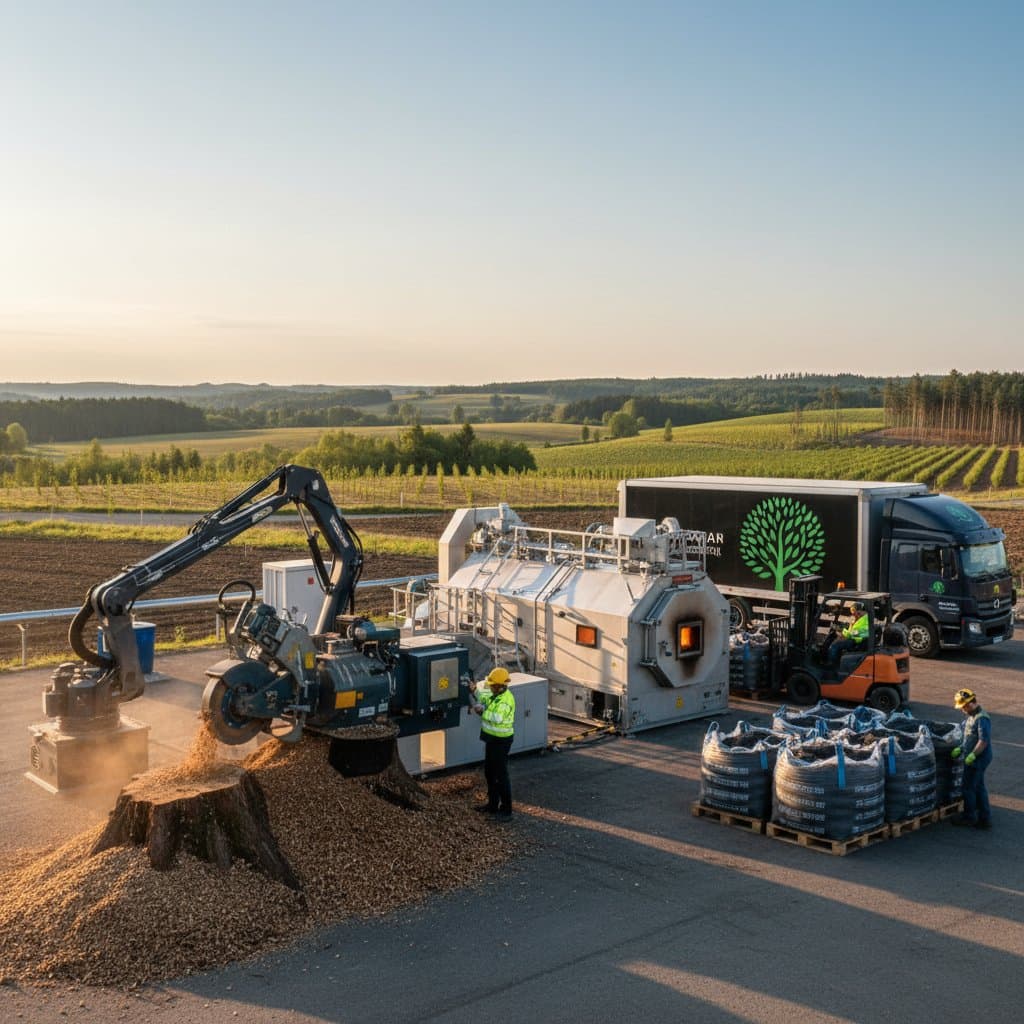
Convert Tree Stump Waste into $500+ Biochar Revenue
Tree removal frequently results in leftover stumps that pose challenges for homeowners. These remnants often require removal at additional cost and create unsightly debris. However, transforming stump waste into biochar offers a pathway to generate revenue exceeding $500 per batch. This guide details the conversion process, necessary equipment, cost considerations, and sales approaches to turn sustainable wood waste into a valuable product.
Understanding Biochar
Biochar consists of a charcoal-like materialorganic substances, such as wood, in an oxygen-limited setting. Known as pyrolysis, this method stabilizes carbon for long-term soil integration, potentially lasting centuries. The material's porous structure enhances nutrient and water retention, positioning it as a valuable amendment for agriculture and landscaping. When sourced from ground stumps, biochar promotes recycling while opening avenues for income generation.
Biochar Production Costs and Potential Profits
Expenses for producing biochar from stump waste depend on equipment scale, batch volume, and energy inputs. Typically, one cubic yard of processed wood yields between 50 and 100 pounds of biochar. With market prices from $5 to $10 per pound, a batch generates $250 to $1,000 in value. Subtracting fuel and labor costs, small producers often secure net profits of $500 or higher per operation.
| Material Source | Average Yield (lbs) | Retail Value Range | Estimated Net Profit |
|---|---|---|---|
| Small stump (under 20 in. diameter) | 30 - 50 | $150 - $300 | $100 - $200 |
| Medium stump (20-30 in. diameter) | 60 - 100 | $300 - $700 | $300 - $500 |
| Large stump (over 30 in. diameter) | 100 - 200 | $500 - $1,000+ | $500 - $800+ |
Key Factors Influencing Biochar Profitability
Stump Dimensions and Material Volume
Stumps of greater size supply more feedstock, boosting output proportionally. For instance, one large oak stump may yield two to three times the biochar compared to multiple smaller pine stumps.
Type of Wood
Hardwoods including oak, maple, and hickory generate compact, premium biochar commanding higher prices per pound. Softwoods like pine or cedar remain viable but produce less robust material.
Moisture Levels
Newly ground stumps carry substantial moisture, which hampers pyrolysis efficiency. Air-drying chips for 3 to 7 days, depending on weather, optimizes yields and minimizes energy use.
Processing Equipment
Kiln designs impact output quality and scale. Barrel-based top-lit updraft systems suit beginners, costing under $100 to assemble, whereas advanced retorts provide precise temperature control for commercial volumes.
Heating Methods
Propane or excess wood scraps as fuel sources control costs effectively. Electricity offers ease but elevates operational expenses by 20 to 30 percent.
Demand in the Marketplace
Local availability drives pricing; direct sales to organic farms or garden centers often exceed bulk distributor rates by 15 to 25 percent.
Step-by-Step Biochar Production Process
The method to convert stump waste into biochar involves straightforward stages adaptable to various scales.
-
Gather and Clean Waste
Post-grinding, collect chips and eliminate roots or dirt. Use a 1/4-inch mesh screen to ensure uniform particle size for even heating. -
Dry the Chips
Arrange material on tarps in a sunny, airy location for 3 to 7 days. Target moisture below 20 percent to enhance combustion control. -
Fill the Pyrolysis Unit
Load dried chips into the kiln, maintaining 30 to 40 percent empty space for ventilation. Secure the lid to regulate oxygen. -
Start the Pyrolysis
Ignite from the top surface. After flames establish, restrict air intake via vents to promote carbonization over full burning; monitor for 2 to 4 hours until smoke clears. -
Cool the Batch
Seal the unit and allow natural cooling for 12 to 24 hours. Introduce water gradually if needed to halt reactions without fracturing the char. -
Process and Store
Break down chunks with a hammer or mill into 1/2-inch pieces. Seal in breathable bags to preserve quality. -
Quality Assurance
Measure pH (aim for 7-9) and carbon levels using basic kits. Include production specs on labels for buyer trust.
Options: DIY Production or Professional Assistance
| Method | Ideal Scenarios | Advantages | Disadvantages |
|---|---|---|---|
| DIY Approach | Limited stump volumes and hobbyist setups | Minimal initial investment, hands-on learning, full control over process | Labor-intensive, safety concerns with open flames, variable results |
| Professional Service | Extensive removals or resale intentions | Superior machinery, optimized yields, compliance with regulations | Added fees (10-20% of value), dependency on availability |
Home-based production works well for batches under 50 pounds, fostering skill development. Larger efforts benefit from expert handling to maximize returns and safety.
Selecting a Biochar Conversion Provider
To engage a service for stump processing, follow these steps for optimal results.
-
Assess Qualifications
Seek providers with liability coverage, pyrolysis certifications, and at least two years of experience. -
Evaluate Technology
Inquire about kiln types and output standards, ensuring biochar meets agricultural-grade purity. -
Obtain Comprehensive Pricing
Request breakdowns covering transport, processing, and delivery; compare at least three quotes. -
Review Client Feedback
Examine testimonials focusing on turnaround times and product satisfaction. -
Clarify Product Rights
Confirm ownership transfer for resale purposes. -
Explore Revenue Models
Negotiate splits or direct purchases to enhance profitability.
Common Questions About Biochar from Stumps
How Much Biochar Yields from a Single Stump?
A medium-sized stump typically produces 60 to 100 pounds, varying with density and preparation. This amount translates to $300 to $700 at standard rates.
Is Home Biochar Production Safe?
It proves safe with precautions. Conduct operations outdoors using fire-resistant setups, maintain a water source, and supervise continuously. Steer clear of chemically treated wood to avoid harmful releases.
Can Biochar Be Sold Locally?
Yes, target nearby markets like community gardens or hardware outlets. Online platforms or farm co-ops expand reach while building repeat business.
Which Woods Produce Superior Biochar?
Hardwoods such as oak or walnut deliver enduring, high-carbon results. They outperform softwoods in longevity and market appeal.
Does Stump-to-Biochar Conversion Benefit the Environment?
This practice sequesters carbon, reducing greenhouse emissions by up to 50 percent compared to landfilling. It enriches soils naturally, supports biodiversity, and diverts waste from landfills, fostering regenerative land management.
Unlock Value Through Eco-Innovation
Converting stumps to biochar bridges environmental stewardship with economic gain. Start small with DIY methods or scale via partnerships to harvest profits from what was once discarded. Each batch reinforces sustainable practices while delivering tangible returns.