
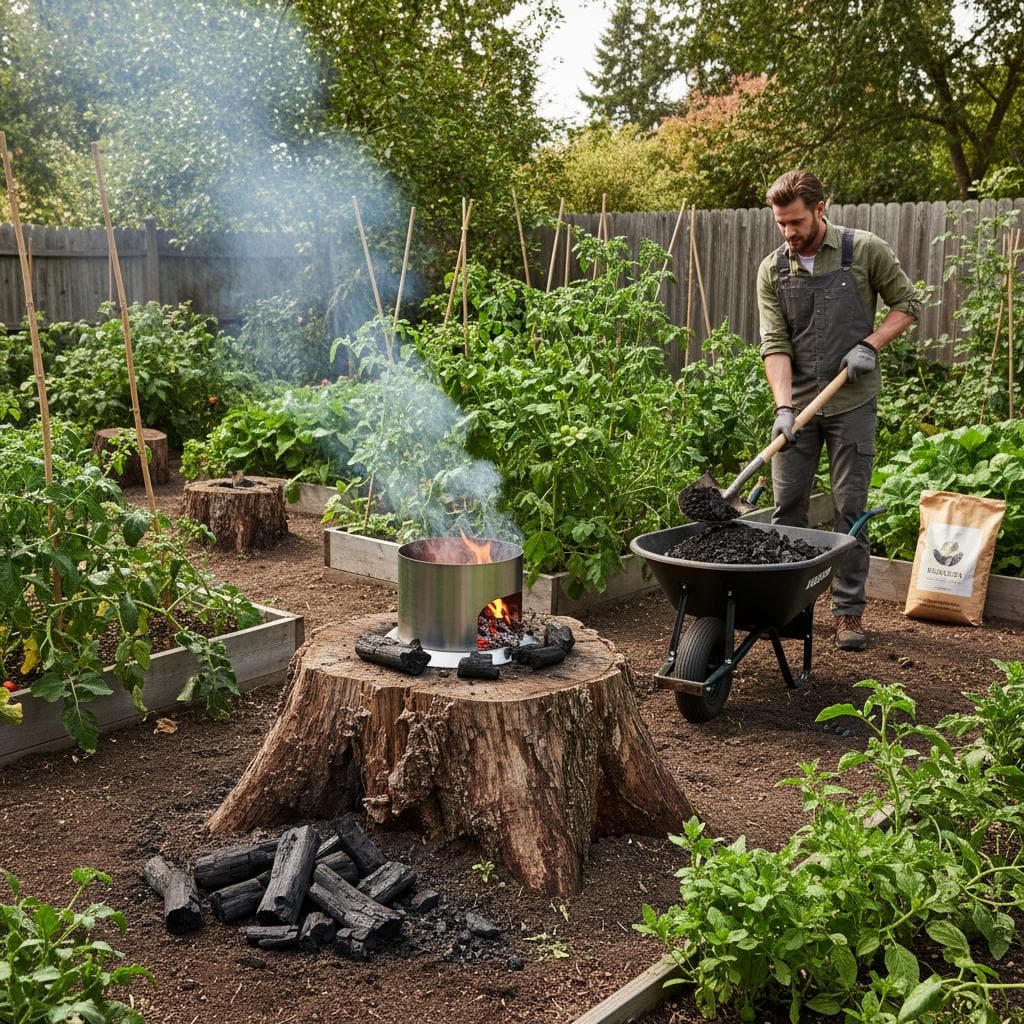
Introduction to Biochar from Tree Stumps
Biochar is a form of charcoal produced from organic materials through pyrolysis, a process of heating in low-oxygen conditions. When made from tree stumps, it serves as an exceptional soil amendment that increases fertility, improves water retention, and sequesters carbon to combat climate change. Homeowners often overlook stump waste as a resource, yet it holds potential to enrich gardens while minimizing environmental impact.
The process begins with understanding key factors that influence biochar quality. Dry feedstock burns cleaner and more efficiently, producing a higher-quality biochar. Moisture content, temperature control, and oxygen levels all play critical roles in the outcome.
Grasping these variables ensures that the resulting biochar provides enduring soil benefits without unwanted residues or incomplete carbonization.
Preparing Stump Material for Biochar Production
Tree stumps represent a readily available source of woody biomass ideal for biochar. After tree removal, the stump remains as a bulky remnant that requires processing. Selecting stumps from healthy, untreated trees avoids introducing contaminants into the soil.
Hardwoods such as oak or maple yield denser biochar with greater longevity, while softwoods like pine create a lighter variant that integrates quickly. Avoid stumps treated with chemicals, as residues can harm soil microbes. Proper preparation transforms this waste into a valuable asset.
Integrating Stump Grinding into Biochar Workflow
Stump grinding marks the initial phase in converting a removed tree stump into biochar feedstock. Professionals employ heavy-duty grinders to pulverize the stump into fine wood chips, which serve as optimal raw material. This method not only clears the landscape but also generates uniform particles suitable for charring.
The grindings feature consistent texture and size, facilitating even heating during production. Costs for grinding range from one to five dollars per inch of stump diameter, influenced by root depth and accessibility. Requesting on-site grindings allows homeowners to retain the material, bypassing disposal expenses and enabling eco-friendly reuse.
Step-by-Step Guide to Producing Biochar
Producing biochar from stump grindings demands precision to achieve optimal results. Small-scale operations suit backyard setups, but larger volumes benefit from expert oversight to manage safety and emissions. Essential equipment includes fire-resistant containers and monitoring tools.
-
Gather and dry the feedstock. Collect stump grindings and spread them in a sunny area to air-dry for several days. Wet material generates excessive smoke and yields inconsistent char.
-
Set up a controlled pyrolysis environment. Employ a metal drum, earthen pit, or dedicated kiln to restrict oxygen flow. This setup promotes charring over complete combustion.
-
Initiate and control heating. Start with a modest fire at the base, gradually increasing temperature to 400-700 degrees Celsius. Maintain minimal airflow to sustain pyrolysis without flames.
-
Observe carbonization progress. The material shifts to black and emits a smoky aroma when ready. Prevent overheating, which converts char to ash and diminishes benefits.
-
Extinguish and cool the batch. Seal the container or apply water to halt the reaction promptly. Allow full cooling before handling to preserve structure.
-
Process for soil integration. Crush cooled biochar into granules and activate by soaking in nutrient-rich solutions like compost tea. This step enhances microbial colonization.
The entire procedure spans hours, varying with batch size. Prioritize safety by maintaining water access and adhering to local fire regulations to prevent hazards.
Weighing DIY Biochar Production Against Professional Services
Home-based biochar creation offers hands-on involvement but involves managing combustion risks. Beginners should start small to build confidence in temperature regulation. Access to suitable space and tools determines feasibility.
Benefits of DIY approach:
- Reduces expenses when utilizing existing grindings and simple setups
- Provides oversight of material purity and process customization
- Fosters learning about sustainable practices
Advantages of professional assistance:
- Utilizes specialized kilns for low-emission, efficient production
- Guarantees uniform quality and compliance with environmental standards
- Handles volume for comprehensive landscape projects
Professionals often incorporate carbon capture techniques, ensuring minimal atmospheric release. They deliver ready-to-use biochar, streamlining garden integration.
Applying Biochar Effectively in Landscapes
Integrating biochar into soil maximizes its porous structure for holding water and nutrients. Application rates depend on soil type, with initial doses around 5-10% by volume. Timing incorporation before planting optimizes root contact.
- Incorporate into garden beds: Blend one part biochar with three parts existing soil or compost, then till to a depth of six inches.
- Enhance raised planters: Mix into vegetable beds to boost drainage and cut irrigation frequency by up to 20%.
- Improve lawn areas: Spread a light layer combined with topdressing materials to promote deeper roots and resilience.
- Boost compost systems: Introduce to piles for faster decomposition and reduced methane emissions.
Biochar endures in soil for centuries, unlike transient amendments. It gradually releases stored benefits, supporting perennial health without repeated applications.
Indicators for Using Stump-Derived Biochar
Certain landscape conditions signal the value of biochar amendment. Quick-drying soils benefit from its moisture-trapping pores. Compacted zones gain aeration for better root penetration.
Clay-heavy areas drain more effectively, preventing waterlogging. High-maintenance gardens with leaching nutrients stabilize through biochar's adsorption. Post-tree removal sites often face imbalances, which biochar helps restore naturally.
Adopting this approach cuts waste management costs and advances sustainable land care.
Frequently Asked Questions
Does every tree stump suit biochar production?
Most species work well, with hardwoods yielding robust, persistent char and softwoods offering quicker soil integration. Select untreated stumps to safeguard soil quality. Experiment with blends for customized results.
Is biochar suitable for diverse plants?
Prepared biochar benefits nearly all vegetation when activated with organics. This prevents initial nutrient binding, allowing microbes to unlock availability. Test small areas for sensitive species.
How durable is biochar in soil?
Its structure resists breakdown, persisting for hundreds of years. This longevity sustains improvements in texture, hydrology, and biology across seasons.
What tools support home biochar making?
Basic needs include a sealed metal container, airflow regulators, and crushing implements. Ensure site ventilation and emergency suppression readiness.
How does biochar contribute to environmental goals?
Production locks carbon away, averting CO2 release. It diminishes fertilizer reliance and waste, bolstering ecosystem vitality.
Implementing Biochar for Lasting Garden Vitality
Start by assessing your stump resources and soil needs to launch biochar integration. This practice not only revitalizes landscapes but also embodies resourceful stewardship. Sustainable outcomes emerge from consistent, informed application.