
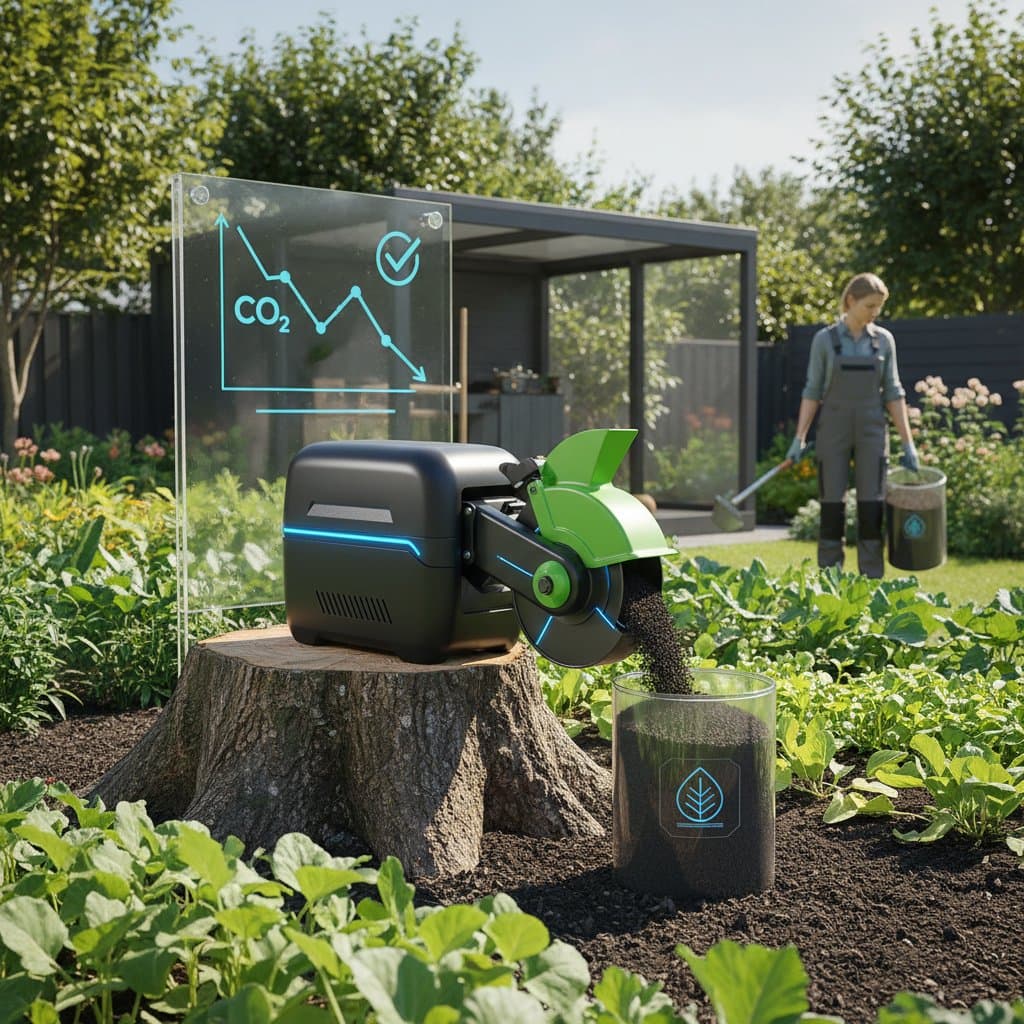
Stump Removals Become Biochar Soil Treasures in 2026
When a tree is removed, the remaining stump often appears as an obstacle. New carbon-negative landscaping methods now transform those leftover stumps into biochar, a charcoal-like soil additive that enriches gardens and sequesters carbon for decades. This approach converts what was once waste into a durable, eco-friendly resource that enhances soil health and promotes sustainability.
Homeowners can leverage this innovation by integrating stump grinding with biochar production. Rather than transporting wood debris away, professional arborists and landscapers process it on-site into a valuable soil amendment that fosters plant growth and lowers carbon emissions.
What Is Biochar and Why It Matters
Biochar results from heating wood or organic matter in a low-oxygen environment through a process called pyrolysis. Unlike typical compost, biochar resists decomposition and sequesters carbon in the soil for centuries. This stability positions it as a key element in carbon-negative landscaping, which aims to extract more carbon from the atmosphere than it emits.
Incorporated into soil, biochar boosts aeration, retains water, and harbors beneficial microbes. It helps sandy soils retain moisture and enables heavy clay soils to drain more effectively. Overall, biochar improves various soil types while supporting environmental goals.
How Stump Grinding Feeds the Biochar Cycle
Conventional stump grinding produces wood chips that are frequently discarded or allowed to decompose naturally. In biochar stump recycling, these chips gain renewed purpose. Following grinding, the debris is collected and fed into specialized kilns or portable biochar units, where controlled pyrolysis converts it into carbon-rich char rather than ash.
This method prevents the emissions associated with open-air burning, such as smoke and carbon dioxide. Instead, carbon becomes trapped within the biochar's structure, yielding a pure, enduring material suitable for integration into garden beds, planting zones, or compost systems.
Key Benefits of Turning Stumps Into Biochar
Transforming stumps into biochar delivers environmental and practical gains.
- Carbon storage: Biochar sequesters carbon that might otherwise escape through decomposition or combustion.
- Soil enrichment: Its porous form promotes root development and nutrient uptake.
- Water efficiency: Biochar-amended soils hold moisture extended periods, decreasing irrigation requirements.
- Reduced waste: Property owners sidestep disposal expenses and retain organic matter locally.
- Long-term sustainability: Biochar persists for generations, steadily elevating soil performance.
These advantages position biochar stump recycling as an ideal choice for environmentally aware individuals seeking robust landscapes with minimal carbon impact.
The Biochar Stump Grinding Process
The procedure starts with routine stump removal, but diverges by processing the wood into biochar rather than discarding it. The following steps outline the typical sequence:
- Assessment: A certified arborist examines the stump's dimensions, wood variety, and site conditions.
- Grinding: Specialized equipment pulverizes the stump into fine chips optimized for pyrolysis.
- Collection: Chips are assembled and dried to facilitate efficient carbonization.
- Pyrolysis: The material undergoes heating in an oxygen-limited chamber to form stable char.
- Conditioning: Biochar cools and may receive additions like compost or nutrients for enhanced usability.
- Application: The product integrates into garden soil, beds, or lawns.
This cyclical system maximizes the tree's contribution to landscape vitality, minimizing waste throughout.
DIY vs. Professional Biochar Conversion
Home production of small quantities of biochar is possible with a metal drum under strict oversight. However, handling large stumps demands industrial-grade tools for safety. The intense heat involved risks toxic emissions or fires if not managed properly.
Engaging a tree service experienced in biochar stump grinding guarantees adherence to environmental protocols. Experts also optimize biochar incorporation into soil for superior plant vitality and carbon retention.
Choosing a Qualified Tree Specialist
To select a provider for stump-to-biochar services, property owners should inquire about:
- Certification and training of arborists in biochar production.
- Equipment specifications for pyrolysis and grinding operations.
- Availability of on-site application or soil integration services.
- Comprehensive estimates covering removal and conversion.
- Protocols for safety and regulatory compliance.
These questions help identify reliable partners committed to quality outcomes.
Common Questions About Biochar Stump Recycling
How much does it cost to turn a stump into biochar?
Costs align with standard stump grinding fees, augmented by a modest charge for biochar processing. Larger stumps or dense hardwoods incur higher expenses due to increased energy demands in pyrolysis.
Can any tree stump be converted into biochar?
Most species qualify for conversion. Hardwoods yield compact, resilient biochar, whereas softwoods produce airy, absorbent varieties.
Is biochar safe for vegetable gardens?
Yes, conditioned biochar proves inert and harmless, fitting seamlessly into edible crops, turf, and decorative plantings.
How long does biochar last in the soil?
Biochar endures for centuries, progressively refining soil structure and nutrient dynamics without degradation.
Does biochar attract insects or pests?
No, biochar avoids decomposition and pest draw, unlike organic mulches. It nurtures helpful soil organisms through its structure.
Can biochar replace fertilizer?
Biochar complements rather than substitutes fertilizers. It functions as a reservoir, prolonging nutrient availability in the root zone when paired with compost or organics.
Building Resilient Gardens Through Biochar Integration
Adopting biochar from stump grinding elevates everyday landscaping into a proactive environmental strategy. Homeowners gain fertile, water-wise soils that sustain vibrant ecosystems. This practice not only cuts waste but also fortifies landscapes against climate challenges, fostering enduring benefits for properties and the planet.