
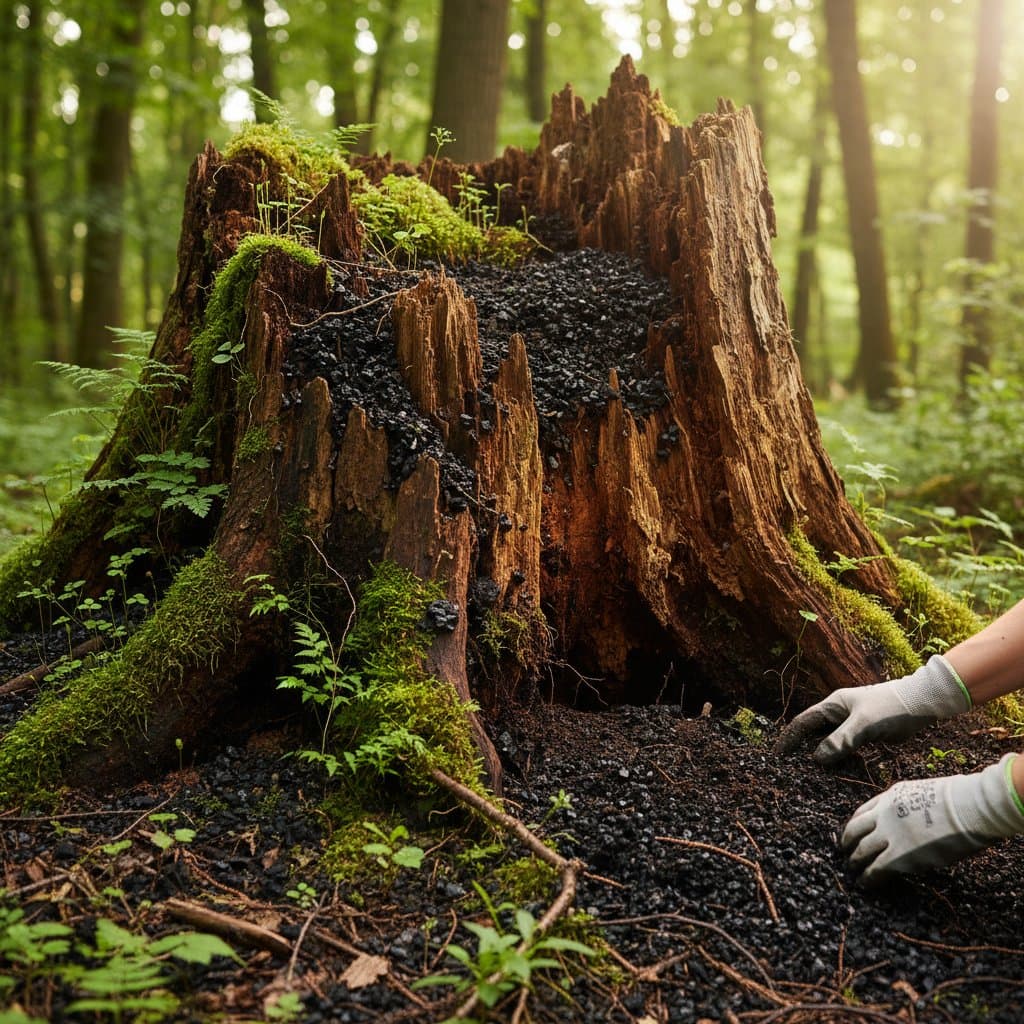
Eco-Friendly Biochar Decomposes Stumps in 6 Months
When treated correctly, biochar can help decompose old tree stumps in as little as six months. This eco-friendly solution offers homeowners a sustainable alternative to chemical stump removers or costly grinding. It works by accelerating natural microbial activity in the soil, safely breaking down wood fibers while enriching the surrounding ground.
Biochar decomposition treatments are becoming a popular option for property owners who want to restore their landscape without harsh chemicals or heavy machinery. The process is sustainable, cost-effective, and beneficial to soil health, making it a strong choice for environmentally conscious homeowners.
What Is Biochar and How Does It Work?
Biochar is a form of charcoal produced from organic materials such as wood or crop residue in a low-oxygen environment. This process, called pyrolysis, locks carbon into a stable form that remains in the soil for long periods. When used correctly, biochar enhances soil fertility, balances pH, and supports beneficial microorganisms.
In stump decomposition, biochar acts as both a microbial habitat and a carbon source. Microbes and fungi use the porous surface of biochar as shelter, allowing them to thrive and multiply near the decaying wood. These organisms feed on the cellulose and lignin within the stump, gradually softening and breaking it down. Over several months, the stump becomes spongy, then crumbly, and finally integrates naturally into the soil.
Why Choose Biochar Over Traditional Stump Removal
Traditional stump removal methods like grinding or chemical treatments often cause collateral damage. Grinding can disturb nearby roots, compact soil, and leave wood chips that take years to break down. Chemical stump removers usually rely on strong compounds that may harm beneficial soil life or leach into groundwater.
Biochar offers a cleaner and safer solution. The following benefits highlight its advantages:
- Eco-friendly breakdown: Biochar supports natural decomposition with no synthetic chemicals.
- Soil improvement: As biochar integrates into the ground, it enhances moisture retention and soil structure.
- No heavy equipment: There is no need for machinery that can damage lawns or nearby plants.
- Low maintenance: Once applied, the process largely manages itself with occasional moisture monitoring.
- Cost-effective: It typically costs less than mechanical removal and provides long-term soil benefits.
This environmentally safe method not only removes the stump but also improves the condition of your soil, making it ready for new planting in the same area.
Key Factors That Influence Biochar Decomposition Time
Although six months is a reasonable average, the exact time needed for biochar-assisted decomposition depends on several factors.
- Stump size and species: Hardwoods like oak or maple decompose more slowly than softwoods like pine or spruce. Larger stumps may take closer to nine months.
- Moisture levels: Microbes need a moist environment to thrive. Keeping the soil damp but not soaked speeds up the process.
- Temperature: Warm conditions favor microbial activity. Extremely cold or dry weather slows decomposition.
- Biochar quality: High-quality biochar with a fine, porous texture provides more surface area for microbes.
- Microbial inoculants: Some homeowners mix biochar with compost tea or mycorrhizal fungi to jumpstart microbial growth.
Maintaining an environment where microbes can flourish is the key to reaching full stump decomposition within half a year.
The Biochar Stump Decomposition Process: Step-by-Step
Removing a stump with biochar is simple but requires patience and correct setup. Below is a step-by-step guide for homeowners who want to use this eco-friendly technique.
- Prepare the stump: Cut the stump as close to ground level as possible. Drill several deep holes into the top surface to allow air and water to reach the core.
- Moisten the area: Lightly water the stump and surrounding soil. A damp environment helps microbes enter the wood more easily.
- Apply biochar mixture: Blend biochar with compost or organic soil at a ratio of roughly two parts compost to one part biochar. Spread this mixture over and around the stump, ensuring full coverage of at least two inches deep.
- Cover and seal: Add a layer of mulch or straw to retain moisture and create a stable temperature. In dry climates, covering the area with a permeable tarp can help maintain humidity without trapping excess heat.
- Monitor moisture: Check the stump every few weeks. If the soil feels dry, lightly water it to keep microbial activity strong, aiming for consistent dampness like a wrung-out sponge.
- Wait and test: After several months, the wood will begin to soften. You can test it by pressing a shovel or spade into the stump. When it crumbles easily, the decomposition is nearly complete.
This process requires minimal labor once established. Most of the work happens beneath the surface as beneficial microbes steadily transform the stump into rich organic matter.
DIY vs. Hiring a Professional: What to Consider
While many homeowners can manage biochar decomposition on their own, hiring a professional arborist or soil specialist can ensure the process is done properly.
DIY advantages:
- Lower cost and minimal equipment required
- Full control over materials and timing
- A rewarding, hands-on experience for homeowners who enjoy sustainable projects
Professional advantages:
- Expert evaluation of stump size, soil composition, and microbial balance
- Access to high-grade biochar and inoculants
- Safe handling of large or complex stumps near structures or utilities
If the stump is large, near a foundation, or part of an extensive root network, professional assistance is recommended. Arborists can combine biochar treatment with targeted root pruning or soil conditioning to prevent regrowth and ensure complete decay.
How to Choose a Qualified Tree or Soil Specialist
Selecting the right professional is crucial to achieving successful results. Look for specialists who understand both arboriculture and soil ecology.
When choosing a provider, ask the following:
- Do you have experience using biochar for stump decomposition?
- What type of biochar do you recommend, and why?
- Can you test my soil to ensure microbial balance?
- How will you monitor progress during the six-month period?
- What aftercare steps do you suggest once the stump decomposes?
Certified arborists or soil ecologists with sustainable landscaping experience will typically offer the most informed guidance. A professional who values both tree health and soil restoration ensures a balanced, eco-friendly outcome.
Signs That the Biochar Process Is Working
Homeowners often wonder how to tell if biochar is effectively decomposing their stump. Several visual and tactile signs indicate that the process is progressing well.
- The stump surface becomes darker and softer over time
- Mushrooms or fungal growth appear around the stump base
- The soil develops a rich, earthy smell
- The stump begins to crack or crumble when pressed
- Nearby plants appear healthier due to improved soil nutrients
Consistent moisture and microbial activity will keep the process on track. If the stump remains hard after several months, adding more compost or reapplying biochar can re-energize the system.
Common Mistakes to Avoid
While biochar decomposition is straightforward, a few mistakes can slow progress.
- Using dry biochar without mixing it with compost: Biochar alone lacks the nutrients microbes need.
- Letting the soil dry out: Microbes require steady moisture to remain active.
- Ignoring temperature extremes: Extremely hot or cold conditions can delay decay.
- Applying too little biochar: A thin layer might not provide enough microbial surface area.
- Expecting instant results: Even under ideal conditions, full decomposition takes several months.
Avoiding these pitfalls ensures consistent progress and a clean, natural finish once the stump is gone.
FAQ
How long does it really take for biochar to decompose a stump?
Under normal conditions, a medium-sized stump can decompose within about six months. Larger or denser hardwood stumps may take longer depending on moisture, temperature, and microbial activity.
Is biochar safe for pets and children?
Yes. Biochar is a non-toxic, natural material. It contains no harmful chemicals, so it is safe for lawns, gardens, pets, and people when used properly.
Can biochar be used on freshly cut stumps?
Absolutely. Applying biochar right after tree removal allows microbes to begin working immediately. The sooner it is applied, the faster the stump will break down.
Will biochar prevent new shoots from growing?
Biochar itself does not stop regrowth, but as the stump decomposes completely, it eliminates the root system’s ability to sprout new shoots.
How much biochar should I use?
For small stumps, one to two gallons of biochar mixed with compost is usually enough. Larger stumps may require additional material to ensure full coverage and microbial support.
Prepare Your Soil for Sustainable Planting
By embracing biochar for stump removal, homeowners contribute to a healthier ecosystem. This method transforms waste into an opportunity for soil regeneration, paving the way for vibrant new growth. Start with a small project to experience the benefits firsthand and build toward a more resilient landscape.