
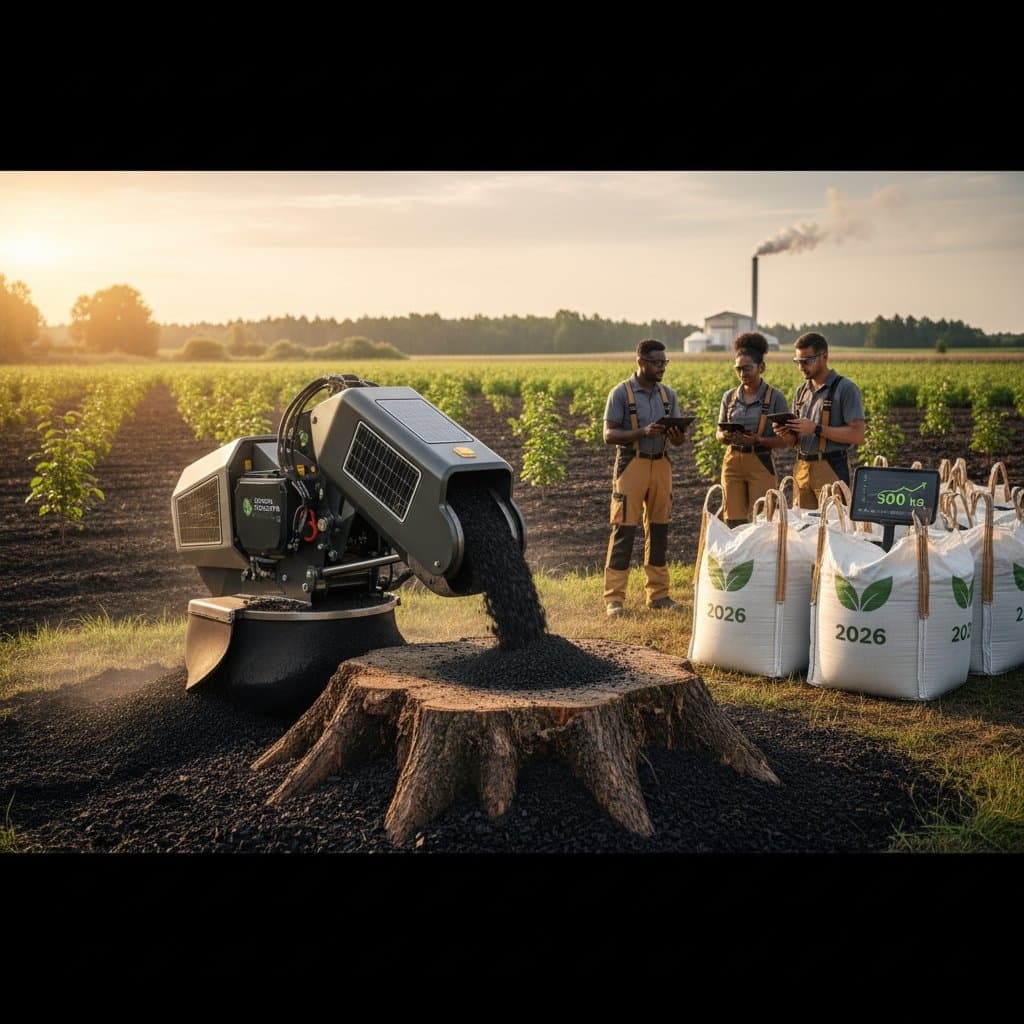
Transform Tree Stumps into Biochar: Unlock Profitable Opportunities by 2026
Tree removal projects frequently result in stumps that pose disposal challenges for property owners. Rather than incurring removal fees or allowing decay, these stumps offer potential for a viable business venture. Biochar production from stumps yields a resource that aids carbon sequestration, enhances soil fertility, and contributes to renewable energy efforts. This guide details the conversion process, associated costs, and strategies to establish a reliable income source.
Biochar Production Costs
National Average Costs
Costs for biochar production fluctuate based on operation scale and chosen equipment. Small-scale operators handling stump grindings or land-clearing debris typically account for expenses in fuel, labor, and upkeep. Initial setups demand moderate funding, whereas mobile units or ongoing kilns necessitate greater investment. Biochar commands strong market value, augmented by carbon credit programs, which often yield profitability in under two years.
Costs by Project Scale
Expenses vary with the production model:
- Small-scale operations: Employ adapted burn barrels or compact kilns. These options remain budget-friendly yet yield modest volumes, ideal for testing viability.
- Mid-scale operations: Utilize mobile retort systems capable of processing several tons weekly. Such setups balance investment with output for regional suppliers.
- Commercial operations: Rely on automated pyrolysis units that manage high stump volumes. Although initial outlays exceed $50,000, they enable bulk distribution and credit earnings for substantial returns.
Key Cost Influences
Multiple elements shape overall expenses:
- Equipment selection and throughput capacity
- Pyrolysis energy requirements, such as propane or biomass fuels
- Feedstock logistics, including stump hauling
- Workforce needs and skill development
- Regulatory approvals and ecological standards
- Post-production handling, like bagging for market
By evaluating these, operators gain precise profit projections and roadmap expansion.
Biochar Production Systems Overview
Basic Pit or Cone Kilns
These entry-level methods involve oxygen-restricted wood burning in earthen pits or metal cones.
Advantages:
- Minimal initial expenditure, often under $500
- Straightforward assembly and use
- Adaptable to off-grid sites
Disadvantages:
- Lower yield rates, around 20-30% biochar
- Risk of air pollutants without monitoring
- Variable end-product consistency
Retort Kilns
Retort designs heat biomass in enclosed vessels, promoting uniform charring.
Advantages:
- Reliable biochar uniformity for premium sales
- Enhanced carbon capture, up to 50% retention
- Lower emission profiles through controlled processes
Disadvantages:
- Elevated purchase price, starting at $2,000
- Dependence on external heat sources
- Steeper learning curve for optimal results
Continuous Pyrolysis Units
Advanced systems automate biomass conversion for industrial volumes.
Advantages:
- Superior efficiency, converting 40-60% to biochar
- Precise quality oversight via sensors
- Byproduct energy generation, like syngas
Disadvantages:
- High setup costs, often $100,000 or more
- Need for skilled personnel
- Suited primarily to established enterprises
DIY Production Versus Professional Services
Biochar creation from stumps suits either self-managed efforts or expert partnerships, each with unique merits.
DIY Method:
Smallholders construct kilns from drums or trenches, gaining practical knowledge at low cost. This hands-on route fosters innovation but demands vigilance on safety and emissions. Inexperienced users risk carbon inefficiency from improper techniques, underscoring the value of initial research.
Professional Engagement:
Specialists deploy advanced kilns to optimize yield and compliance. They manage logistics, certifications, and distribution, converting stump volumes into passive revenue. This option proves efficient for high-volume generators lacking operational bandwidth.
Step-by-Step Stump-to-Biochar Conversion
The process demands sequential actions to maximize output and value.
-
Gather and Prep Stumps
Excavate stumps, sever roots, and chop into 6-12 inch segments. Air-dry pieces for 4-6 weeks to drop moisture below 20%, enhancing pyrolysis performance. -
Choose Appropriate Equipment
Match systems to objectives: cone kilns for trials, retorts for consistency, or pyrolysis for scale. Factor in site space and power availability. -
Execute Pyrolysis
Fill the unit with prepared wood, ignite, and limit oxygen via vents. Sustain 400-700°C for 4-8 hours, monitoring to achieve deep char without ash excess. -
Quench and Harvest Biochar
Seal the chamber post-process to cool anaerobically for 24 hours. Extract, sieve to remove fines, and store in sealed containers to preserve properties.
Strategies for Effective Biochar Operations
- Assess Feedstock: Screen for pesticides or metals; source untreated hardwoods for purity.
- Control Heat Levels: Target 500°C for optimal porosity and nutrient hold.
- Activate for Application: Combine 10-20% biochar with organics in soil mixes.
- Pursue Credits: Document production via verified protocols for offset markets.
- Uphold Gear: Schedule bi-annual maintenance to sustain 90% uptime.
Common Questions on Stump Biochar
What Applications Suit Stump-Derived Biochar?
Biochar from stumps excels as a soil enhancer, retaining water and nutrients while fostering biology. It also filters water or qualifies as a sequestration asset.
How Does Stump Biochar Benefit Ecology?
The method stabilizes carbon, averting CO2 release from rot. It bolsters soil vitality, reducing fertilizer needs over time.
Can Small Properties Yield Biochar Profits?
Affirmative; local sales to gardeners or integration with clearing services build margins of 30-50%.
What Gear Is Essential for Biochar?
Start with DIY barrels for basics; advance to retorts for reliability, scaled to budget and aims.
Are Permits Necessary?
Regulations differ; consult fire and environmental agencies for open burns or emissions.
Advance Your Operations with Biochar Integration
Integrating biochar elevates stump management into a multifaceted enterprise. Pair production with services like land clearing to diversify revenue. Monitor market trends for biochar demand in agriculture and remediation, positioning for growth. By 2026, this approach not only recoups investments but fosters enduring environmental contributions.