
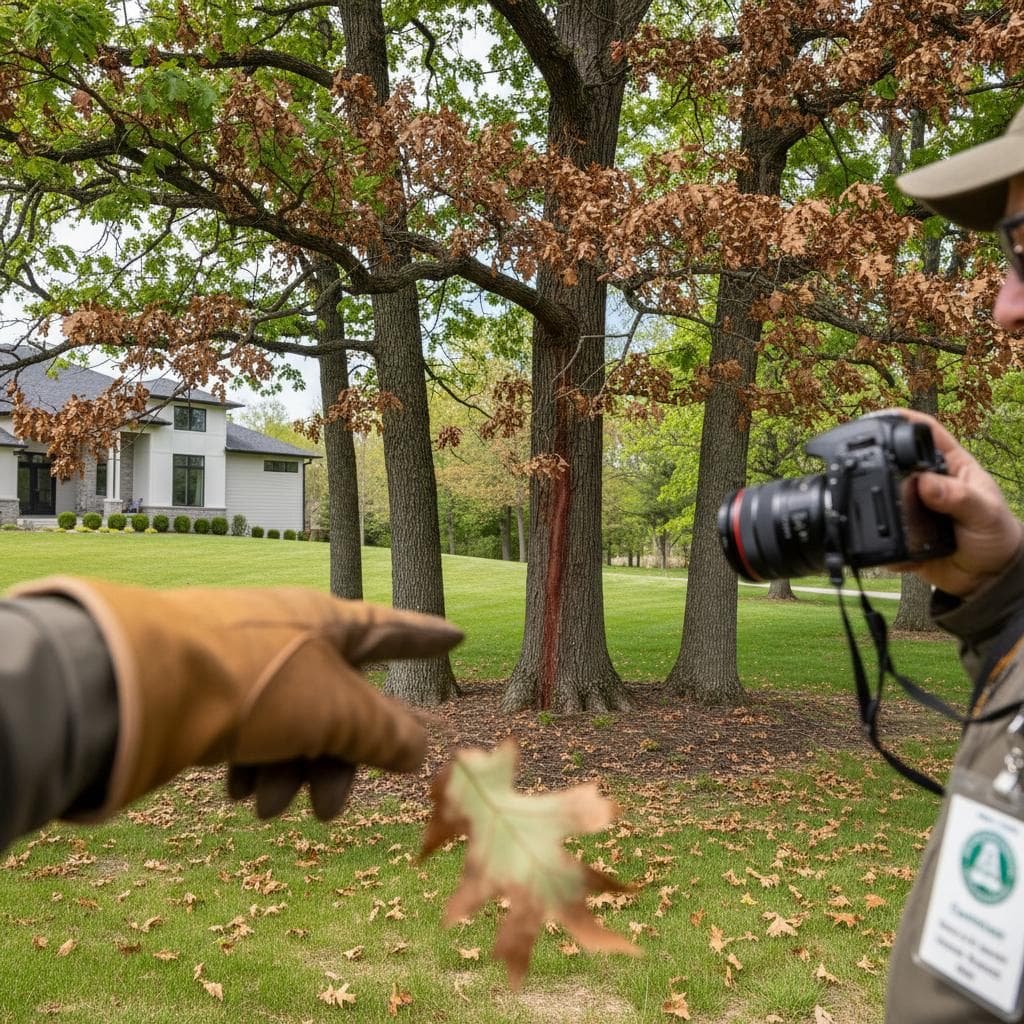
Oak Wilt Reaches Eight States: Recognize Early Indicators
Oak wilt advances rapidly across landscapes, now impacting eight newly affected states. This fungal disease targets oak trees, blocking their vascular systems and causing death in as little as four to six weeks for susceptible species. Homeowners face not only the loss of mature trees but also substantial expenses for removal and replacement.
Early recognition proves essential for containment. This article details identification methods, vulnerable oak types, prevention measures, treatment approaches, and the value of professional intervention. Prompt action preserves individual trees and protects broader ecosystems from widespread decline.
Understanding Oak Wilt and Its Spread
Oak wilt stems from the fungus Bretziella fagacearum, which invades the tree's water-conducting vessels. The pathogen enters through wounds, such as pruning cuts, and spreads via root grafts between nearby trees or through sap-feeding beetles that transport spores from fungal mats under bark.
In the eight states now reporting cases—primarily in the Midwest and South—the disease exploits interconnected root systems in oak groves. Urban and suburban properties prove particularly vulnerable, as fragmented woodlands facilitate underground transmission. Awareness of local outbreaks enables proactive monitoring.
Oaks Most Susceptible to Infection
Oak species vary in resistance, influencing monitoring priorities and response timelines. Familiarity with your trees' characteristics aids in targeted vigilance.
Red Oaks
Red oaks, including pin oak and northern red oak, fall victim quickest. The fungus clogs vessels within weeks, leading to rapid canopy failure.
Advantages: These trees offer vibrant fall color and moderate growth rates.
Challenges: Extreme sensitivity accelerates spread to adjacent plants via roots. Infected red oaks serve as primary spore sources for insect vectors.
White Oaks
White oaks, such as white oak and bur oak, exhibit greater tolerance. Infections progress over months rather than weeks, allowing time for intervention.
Advantages: Robust structure and longevity enhance landscape value.
Challenges: Infected individuals still produce spores, though at lower rates. Early fungicide application often yields recovery in these species.
Live Oaks
Live oaks form extensive clonal colonies through root sprouting, heightening transmission risks in southern regions.
Advantages: Persistent green foliage provides consistent shade and aesthetic appeal.
Challenges: Underground networks enable silent spread across large areas. Containment demands severing root connections between healthy and diseased trees.
Identifying Oak Wilt Symptoms
Detection hinges on observing progressive changes in foliage, bark, and overall vigor. Symptoms appear first in the canopy crown and expand downward.
Leaf Changes
Vein browning starts at leaf edges and tips, progressing between veins toward the center. This creates a distinctive scorched appearance, unlike the uniform yellowing from drought.
Canopy Thinning
Expect sudden defoliation of green leaves in spring or early summer. Remaining foliage wilts and hangs limp, signaling vascular blockage.
Bark and Vascular Signs
Cracked or sloughing bark reveals dark, streaked sapwood beneath. A faint, alcohol-like smell from oozing wounds confirms active infection.
Fungal Indicators
In dying red oaks, pressure forces bark separation, exposing spore-producing mats. These attract nitidulid beetles, perpetuating the cycle.
Immediate isolation follows confirmation. Halt all pruning within 100 feet and summon an arborist for verification through wood sample analysis.
Prevention Strategies to Limit Spread
Proactive steps disrupt transmission pathways and bolster tree defenses.
- Refrain from pruning oaks between April and July, when beetle activity peaks and wounds invite entry.
- Disinfect cutting tools with 10 percent bleach solution or 70 percent alcohol after each tree contact.
- Install physical barriers, such as 100-foot trenching to four feet depth, around infection zones to sever root grafts.
- Mulch and water trees during dry spells to reduce stress-induced susceptibility.
- Monitor high-risk areas near woodlands or streams, where moisture favors spore dispersal.
These measures, applied consistently, significantly lower infection odds in vulnerable landscapes.
Treatment Options and Associated Costs
Effective management combines fungicide applications, cultural practices, and removal when necessary. Costs vary by scale and urgency.
Average Treatment Expenses
Nationwide, initial diagnosis and fungicide injection for a single mature oak ranges from $800 to $1,500. Multi-tree interventions on properties with five or more affected oaks can total $5,000 to $15,000, including trenching.
Breakdown by Intervention Type
- Fungicide Injection: Professionals drill into the trunk base and inject propiconazole, effective if applied before 10 percent canopy loss. Single-tree cost: $600 to $1,200.
- Root Trenching: Vibratory plows create barriers; expenses reach $2 to $5 per linear foot, often $3,000 for a 500-foot perimeter.
- Tree Removal and Disposal: For unsalvageable specimens, removal costs $500 to $2,000 per tree, plus $200 to $500 for chipping or hauling infected debris.
Influencing Factors
Larger diameters demand more fungicide volume, escalating prices by 20 to 50 percent. Advanced infections necessitate combined treatments, doubling baseline fees. Urban access restrictions or protected sites add $500 or more for equipment mobilization.
Regional differences apply; consult local extension services for tailored estimates.
Homeowner Efforts Versus Professional Services
Basic prevention falls within homeowner capabilities, but advanced responses require expertise to avoid exacerbating spread.
Homeowner Actions: Conduct visual inspections quarterly, focusing on crown health. Prune only during dormant seasons (December to March) and maintain tool hygiene. Report suspected cases to state forestry departments for free assessments in many areas.
Professional Expertise: ISA-certified arborists perform lab-confirmed diagnoses, timed injections, and regulatory-compliant disposals. They deploy specialized gear for safe trenching and removal near utilities.
Best Practice: Initiate with self-monitoring and prevention. Engage professionals upon symptom detection to ensure accurate, effective containment.
Frequently Asked Questions
What initiates oak wilt infections?
The fungus enters via fresh wounds and propagates through connected roots or insect vectors carrying spores from over 50 tree species, though oaks suffer most.
How does oak wilt differ from other tree ailments?
Unlike drought, which affects lower branches first with slow browning, oak wilt strikes the upper canopy rapidly with veinal necrosis. Fungal staining in sapwood sets it apart from bacterial scorch.
Does oak wilt impact non-oak trees?
The pathogen targets Fagaceae family members exclusively, sparing maples, elms, and pines. However, dying oaks alter habitats, indirectly stressing associated species.
Is burning infected wood safe?
Burning debarked, dry wood poses minimal risk after six months of seasoning. Retain bark on fresh logs until processed to prevent spore release during transport.
How durable is the fungus in remnants?
Viable spores linger under bark for up to a year in cool, damp conditions. Solarization or commercial chipping neutralizes threats effectively.
Are permits required for diseased tree removal?
Local ordinances often mandate permits for oaks over 12 inches in diameter. Check municipal codes or consult arborists to navigate approvals.
Safeguarding Oaks for Lasting Landscapes
Vigilant stewardship counters oak wilt's regional expansion, preserving essential canopy cover. Regular assessments and swift professional responses mitigate losses, sustaining property aesthetics and ecological balance.
Collaborate with neighbors and extension experts to monitor outbreaks collectively. Through informed action, communities uphold resilient forests that support biodiversity and climate resilience for future generations.