
Hemlock Pest Spreads North: Gear Up for the Rush
Hemlock trees across the northern regions are facing a growing threat from the hemlock woolly adelgid, a tiny but destructive insect capable of killing mature trees within a few seasons. As this invasive pest spreads into colder territories once thought safe, homeowners, land managers, and forest stewards need to prepare. Understanding how the adelgid operates, what treatment options exist, and when to act can make the difference between saving a tree and losing it.
This guide explains what the hemlock woolly adelgid is, how to recognize it, what its spread means for northern landscapes, and how to protect your trees before infestations reach critical levels.
Hemlock Pest Threat and Cost
National Impact
The hemlock woolly adelgid, or HWA, feeds on sap at the base of hemlock needles, preventing the tree from drawing nutrients. The result is needle loss, branch dieback, and eventual death. Once established, infestations can spread rapidly across forests and residential areas. The cost of managing HWA varies depending on the number of trees affected, their size, and the treatment method chosen.
A single homeowner treating a few ornamental hemlocks might spend a few hundred dollars, while large-scale forest management efforts can reach thousands. The economic toll also extends beyond treatment, as hemlocks are valuable for shade, erosion control, and wildlife habitat.
Cost by Project Scope
- Individual Trees: Treating a single mature hemlock can cost between a modest to moderate range depending on the method. Soil drenches and injections typically cost more than foliar sprays but last longer.
- Multiple Trees or Acreage: Large properties often require professional treatment, which can include aerial applications or systemic injections. Costs rise with tree density and accessibility.
- Preventive Treatments: Applying systemic insecticides before visible infestation is usually more cost-effective than emergency intervention after damage appears.
Key Cost Factors
- Tree size and health influence how much chemical or labor is needed.
- Type of treatment affects longevity and cost, with soil injections often lasting several years.
- Location and accessibility determine labor intensity.
- Infestation severity impacts both the number of treatments and urgency.
- Professional vs. DIY choices can double or halve expenses depending on skill and equipment availability.
Types of Hemlock Woolly Adelgid Treatments
Chemical Treatments
Chemical options are the most reliable for protecting individual trees. They target the adelgid directly and can provide multi-year protection.
Pros:
- Fast-acting and effective against all life stages.
- Long-lasting results, especially with systemic products.
- Suitable for both preventive and curative applications.
Cons:
- Requires careful application to avoid runoff.
- May not be suitable near water sources.
- Needs reapplication over time to maintain protection.
Biological Control
Biological control uses natural predators, such as beetles that feed on the adelgid, to reduce populations over time.
Pros:
- Environmentally friendly and sustainable.
- Reduces dependence on chemicals.
- Can provide long-term balance in forest ecosystems.
Cons:
- Slow to establish and less predictable.
- Not practical for immediate relief in residential settings.
- Requires coordinated release and monitoring efforts.
Cultural and Mechanical Control
These methods focus on improving tree resilience and removing infested material.
Pros:
- Low cost and minimal environmental risk.
- Supports tree health through pruning, mulching, and watering.
- Helps slow the spread when combined with other methods.
Cons:
- Ineffective alone for heavy infestations.
- Requires ongoing maintenance and monitoring.
- Does not eliminate the pest entirely.
DIY vs. Hiring a Professional
Homeowners can undertake limited treatment efforts, but professional intervention is often recommended for established infestations or tall trees.
DIY Treatment:
DIY options include foliar sprays and soil drenches with homeowner-available insecticides. These can be effective for small trees under ten feet tall. The main challenges are ensuring even coverage and applying the correct dosage. Improper application may harm the tree or nearby vegetation.
Hiring a Professional:
Certified arborists and licensed applicators have access to stronger systemic treatments and the equipment to reach large canopies safely. They can diagnose infestation levels, recommend suitable products, and monitor progress. Professionals also handle environmental regulations and ensure treatments do not contaminate water sources.
Recommendation:
Homeowners can manage early or mild infestations themselves, but once multiple trees are involved or damage becomes visible, hiring a professional is the safer and more effective route.
How to Protect Your Hemlocks
1. Identify Early Signs
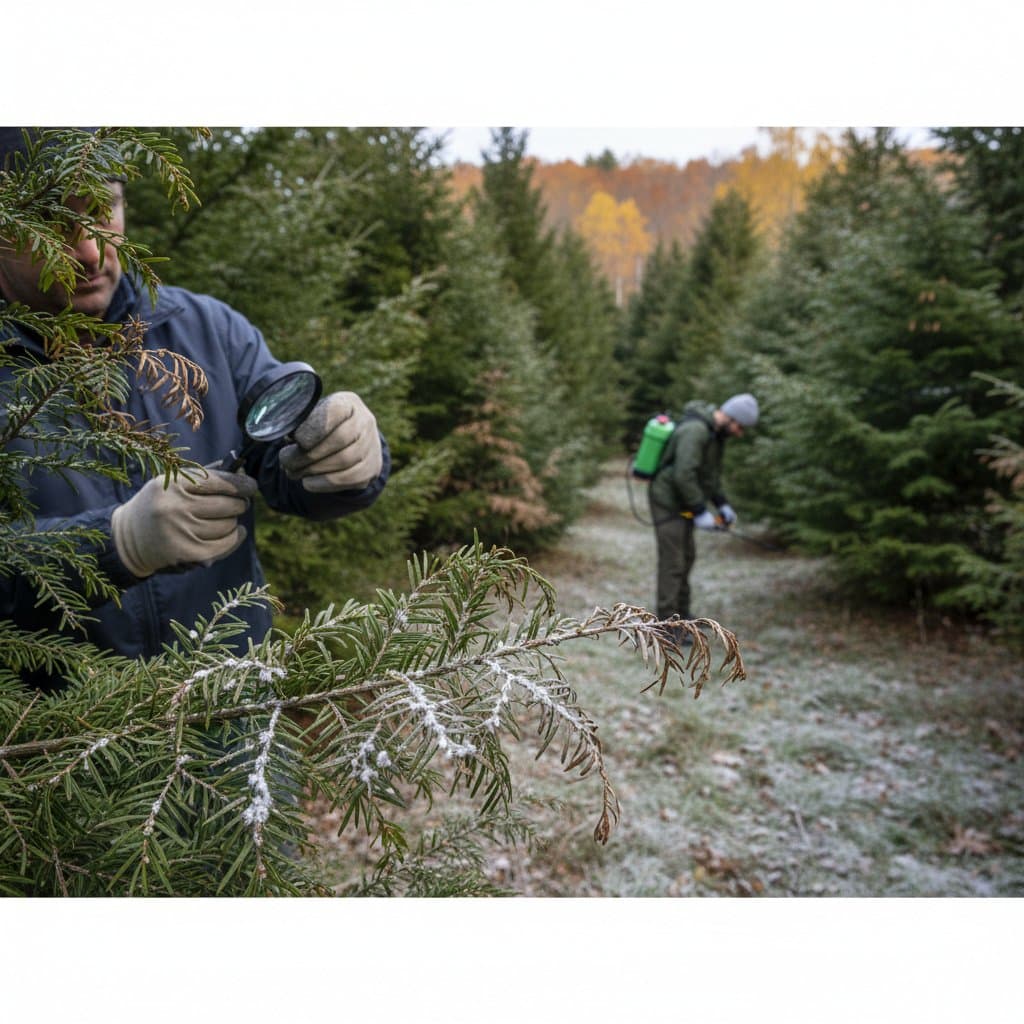
Look for small white cotton-like masses on the underside of hemlock branches near the base of needles. These are the protective coverings of the adelgid. Discoloration, needle drop, and branch thinning follow soon after.
2. Assess Tree Health
Healthy hemlocks withstand minor infestations better than stressed ones. Check for adequate moisture, soil drainage, and root health. Mulch and water during dry periods to keep trees vigorous.
3. Choose a Treatment Method
For light infestations, horticultural oil sprays can suffocate adelgids. For larger trees, systemic insecticides applied to the soil or trunk provide longer protection. Work with a certified arborist to determine the best fit for your site conditions.
4. Apply Treatments Correctly
Follow label directions for dosage and timing. Avoid treating when the ground is frozen or saturated. Ensure the chemical reaches the root zone or bark where it can be absorbed effectively.
5. Monitor and Reapply
Inspect trees each season for new activity. The adelgid reproduces quickly, so consistent monitoring is essential. Schedule reapplications as needed to maintain resistance.
6. Support Natural Predators
Encourage native lady beetles and lacewings by avoiding broad-spectrum insecticides that harm beneficial insects. Plant diverse vegetation to support these natural allies.
Tips for Long-Term Success
- Act early. Preventive treatments cost less and protect more effectively than emergency interventions.
- Inspect regularly. Check hemlocks at least twice a year for woolly white patches.
- Avoid stress. Maintain soil moisture and protect roots from compaction.
- Combine methods. Integrated pest management using both chemical and biological tools yields the best results.
- Plan ahead. If you have many hemlocks, create a multi-year management schedule to rotate treatments efficiently.
Frequently Asked Questions
What does the hemlock woolly adelgid look like?
The adelgid appears as tiny white cottony balls along the underside of hemlock branches. These are the waxy coverings that protect the insect as it feeds. The insects themselves are barely visible without magnification.
How quickly can the adelgid kill a tree?
Severe infestations can kill a mature hemlock in as little as a few growing cycles. Trees weakened by drought or poor soil often succumb faster.
Can the hemlock woolly adelgid survive cold winters?
Yes. The pest has adapted to lower temperatures and can now overwinter in regions previously considered safe. Warmer microclimates within forests or urban landscapes help it persist.
Are there natural predators that control the adelgid?
Several beetle species feed exclusively on the hemlock woolly adelgid. While they are being released in some areas, they take time to establish and are not a quick fix for homeowners.
Do I need to treat every hemlock tree on my property?
If one tree shows signs of infestation, nearby hemlocks are at risk. Treating all trees within a close radius ensures complete protection and prevents reinfestation.
Are chemical treatments safe for the environment?
When applied correctly and by licensed professionals, modern systemic insecticides are safe for most landscapes. Avoid direct application near water sources and always follow label instructions.
Preparing for the Northern Spread
As the hemlock woolly adelgid continues to move north, proactive management is essential. Waiting until visible decline occurs often means treatments will be less effective.
Protecting hemlocks preserves more than just a single tree. These evergreens anchor soil, shelter wildlife, and define the natural beauty of northern forests.
When in doubt, consult a certified arborist or forestry professional. They can create a tailored plan to safeguard your trees and help you stay ahead of the pest population before the next rush arrives.