
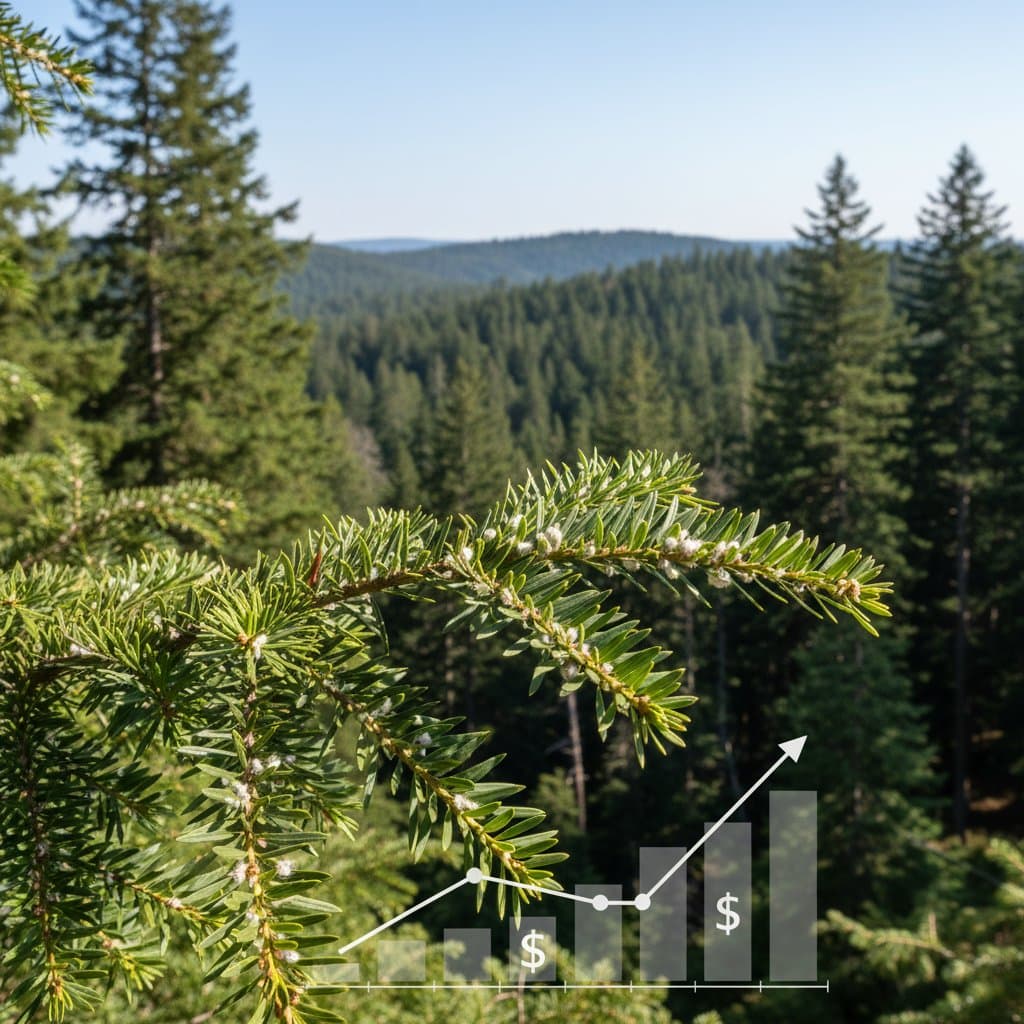
Hemlock Woolly Adelgid Expands to Eight New Regions: Treatment Expenses and Safeguards
The hemlock woolly adelgid continues its advance, with detections now confirmed in eight previously unaffected regions. This invasive insect poses a severe risk to hemlock trees, capable of causing death in as little as four years for mature specimens. Treatment expenses generally fall between $50 and $500 per tree, influenced by the chosen approach and the extent of the infestation.
Swift intervention, vigilant observation, and a tailored management strategy prove essential for hemlock preservation. Property owners with expansive woodlands or modest yard plantings alike benefit from grasping the financial implications, potential hazards, and viable interventions. Such knowledge enables the retention of these ecologically significant trees prior to extensive harm.
Identifying the Hemlock Woolly Adelgid
Known as HWA, the hemlock woolly adelgid represents a minuscule aphid relative that extracts sap from eastern and Carolina hemlock species. Measuring under one millimeter, adult insects remain inconspicuous, yet their impact manifests clearly. They form conspicuous white, woolen ovisacs on branch undersides, resembling small tufts of cotton that shelter eggs and nymphs over winter and into spring.
Feeding occurs at needle bases, where the pest injects toxins that impair vascular function. This interference halts essential water and nutrient movement, leading to progressive needle yellowing, branch desiccation, and full canopy failure. Untreated infestations escalate rapidly, transforming vibrant trees into skeletal remnants within seasons.
Mechanisms of Expansion into New Territories
Recent findings in eight novel locales illustrate the adelgid's adept dispersal capabilities. Avian transport, atmospheric currents, and anthropogenic activities facilitate unintended relocation. Contaminated nursery stock, transported logs, or contaminated gear introduce the pest to pristine habitats, where it establishes swiftly and proliferates.
Climatic variables exacerbate proliferation rates. Milder winters diminish natural mortality, while tree stressors like drought heighten susceptibility. In temperate zones, a single annual generation limits pace, but subtropical warmth permits two or more cycles yearly, accelerating regional conquests. These dynamics emphasize the necessity for proactive surveillance in emerging frontline areas.
Indicators of an Active Infestation
Early recognition of HWA symptoms curtails both ecological damage and fiscal outlay. Conduct thorough examinations of branch undersides, particularly in late fall or early spring when ovisacs stand out against bare wood.
Key symptoms encompass:
- Distinct white, wool-like aggregations on twig undersides
- Foliage adopting a dull gray hue or exhibiting sparse coverage
- Premature needle abscission or denuded branch ends
- Stunted emergence of fresh shoots
- Progressive dieback originating from peripheral limbs
Upon observing multiple signs, engage a licensed arborist without delay. Prompt diagnosis enhances remedial success and minimizes expenditure.
Determinants of Treatment Expenditures
Expenses for HWA mitigation fluctuate based on multiple variables:
- Scale of Trees and Volume: Substantial specimens demand greater volumes of agents, elevating charges. A solitary landscape hemlock might incur $75 to $150, whereas safeguarding a cluster of veterans could surpass $1,000.
- Infestation Intensity: Mild cases often resolve with a single intervention. Advanced outbreaks necessitate iterative dosing or supplementary root-zone applications.
- Methodological Selection: Choices span systemic injections, basal soaks, surface applications, or natural predators, each carrying distinct pricing and efficacy profiles.
- Site Accessibility: Sloped terrains or riparian proximities may necessitate advanced rigging or regulatory approvals, inflating operational fees.
- Application Mode: Homeowner-administered options exist for basal treatments, yet expert deployment guarantees precision and regulatory adherence.
Allocate resources for periodic reassessments as well. Post-treatment vigilance every two to three years detects potential recurrences early.
Implementing Hemlock Safeguards: A Sequential Guide
HWA defense demands a systematic protocol to eradicate colonists and fortify against recolonization.
Initial Evaluation
Engage an accredited arborist to survey affected specimens. Assessments cover ovisac prevalence, foliage density, and vitality metrics. Soil analysis may reveal nutritional deficits that amplify vulnerability.
Strategy Formulation
Selections hinge on infestation degree, specimen dimensions, and locale specifics. Experts advocate integrated tactics, including:
- Basal Soak or Root Injection: Systemic compounds like imidacloprid penetrate via soil absorption, circulating internally to target feeders.
- Stem Infusion: Suited for premium or expansive trees, this delivers agents intravascularly, yielding prolonged protection with reduced ecological impact.
- Canopy Application: Effective for compact plantings, contact formulations offer rapid knockdown, though repetition proves necessary.
- Predator Augmentation: Species such as Laricobius nigrinus consume HWA, providing sustainable suppression. Deployment requires strategic timing and monitoring.
Execution and Monitoring
Administer during low-temperature periods aligning with pest activity peaks. Subsequent evaluations track recovery indicators like renewed foliation. Robust trees rebound within 12 months; compromised ones demand extended care.
Sustained Vigilance
Treated assets persist at risk amid regional pressures. Implement seasonal checks, excise compromised sections, and optimize hydration plus fertilization. Community-wide initiatives blending agents and allies foster resilient ecosystems.
Homeowner Application Versus Expert Engagement: Key Considerations
Individuals confronting isolated, minor outbreaks may opt for self-management on diminutive specimens. Accessible basal formulations yield results when dosed accurately. Nonetheless, pitfalls warrant evaluation.
Advantages of Self-Management:
- Reduced initial outlay for modest scales
- On-demand procurement and deployment
- Viable suppression for nascent threats
Drawbacks of Self-Management:
- Suboptimal outcomes on grand or entrenched cases
- Potential for dosage errors or environmental contamination
- Absence of expert oversight or warranties
Benefits of Professional Services:
- Specialized knowledge and compliance protocols
- Utilization of potent, licensed materials
- Holistic diagnostics and continuity plans
- Landscape-wide resilience strategies
Limitations of Professional Services:
- Elevated starting fees
- Potential delays in high-demand periods
For comprehensive protection, professional consultation maximizes efficacy and minimizes liabilities.
Selecting a Competent Arborist
The choice of specialist determines intervention outcomes. Prioritize those holding International Society of Arboriculture certification and documented HWA remediation history.
During consultations, pose these inquiries:
- Do you possess pesticide applicator credentials?
- Which formulations do you employ, particularly for aquatic-adjacent sites?
- What duration of protection does the method provide, and when do evaluations resume?
- Can you integrate predator releases into the regimen?
- May I review case studies from comparable engagements?
Reputable practitioners furnish transparent responses, delineate pros and cons, and supply detailed proposals.
Common Inquiries
How rapidly does HWA cause tree mortality?
Vigorous hemlocks succumb in four to ten years post-colonization, modulated by regional temperatures, baseline vigor, and population density. Subtropical acceleration stems from accelerated reproduction.
Is recovery possible for infested specimens?
Affirmative, with timely measures. Canopies retaining over 50 percent vitality respond well to interventions. Irreversibly sparse trees necessitate excision to avert collapse risks.
When constitutes optimal treatment timing?
Align with agent pharmacokinetics. Basal and infusion methods thrive in cooler phases of nutrient translocation. Surface treatments suit active growth intervals.
Do interventions endanger animals or fauna?
Proper professional execution limits hazards. Disclose nearby sensitive elements to enable methodological adaptations.
What frequency of treatments applies?
Internally distributed agents endure two to five years; contact types demand yearly renewal. Observations dictate adjustments, particularly near unmanaged sources.
Do natural predators deliver reliable control?
They diminish densities progressively within multifaceted approaches. Observable declines emerge after multiple cycles.
Must compromised hemlocks be excised?
Hazardous or deceased individuals require prompt removal to mitigate dangers and curb dissemination.
Securing Hemlocks Amid Regional Advances
HWA's territorial gains challenge forested assets, yet deliberate actions yield preservation. Through routine scouting, decisive remedies, and informed partnerships, stewards reclaim control. These efforts sustain hemlock contributions to biodiversity and aesthetics, even as frontiers shift.