
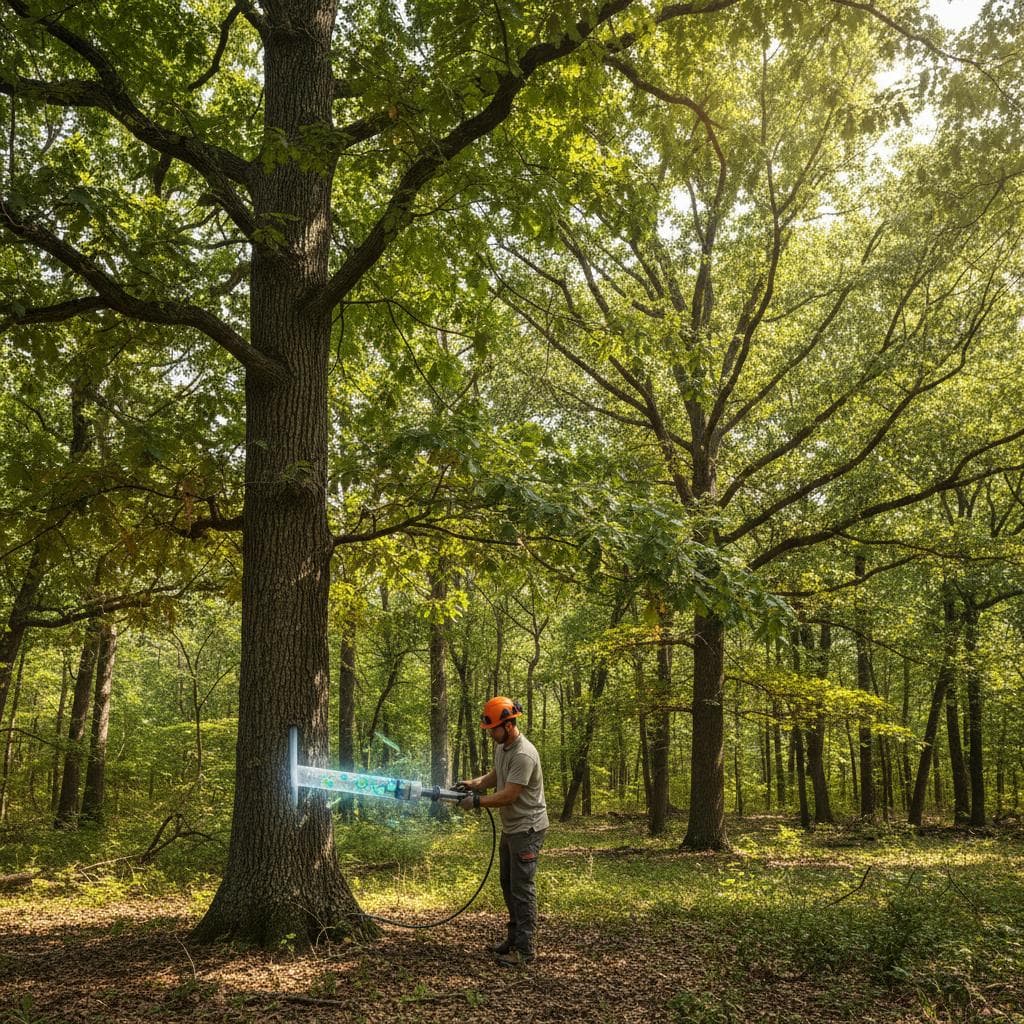
Breakthrough Bio-Fungicide Halts Oak Wilt in 30 Days
Tree diseases threaten landscapes, and oak wilt ranks among the most dreaded by homeowners and arborists alike. This aggressive fungal infection can fell healthy oak trees in weeks, propagating rapidly via root networks and beetle vectors. Traditional interventions have relied on expensive chemical applications or outright tree removal. A novel bio-fungicide now alters this landscape. This guide details the treatment's mechanics, associated expenses, and preventive measures for homeowners to shield their properties.
Understanding Oak Wilt
Oak wilt arises from a fungus that disrupts water and nutrient transport in oak trees. Infected leaves wilt, brown, and shed ahead of schedule. The pathogen disseminates through subterranean roots and sap-feeding beetles transporting spores between trees. Untreated, oaks succumb in weeks. The bio-fungicide provides a natural, secure method to arrest the disease and expedite recovery beyond conventional chemical approaches.
Typical Expenses for Oak Wilt Treatment
Treatment costs fluctuate according to tree dimensions, infection intensity, and selected method. Expenses generally span $150 to $1,200 per tree, averaging $600 nationally. Bio-fungicide applications align with this spectrum, yet their enduring efficacy often proves more economical than recurrent chemical doses.
| Tree Size | Typical Cost Range |
|---|---|
| Small (under 20 ft) | $150 - $300 |
| Medium (20-40 ft) | $300 - $700 |
| Large (over 40 ft) | $700 - $1,200 |
Influences on Oak Wilt Treatment Expenses
Tree Dimensions
Greater tree sizes demand increased product volumes and extended application durations. Canopy extent and root expanse dictate the quantity of bio-fungicide or injected fungicide required. Each increment in trunk diameter elevates material and labor expenditures.
Infection Intensity
Initial infections prove simpler to manage before fungal penetration into roots. Severe instances necessitate repeated applications or root barriers to segregate affected trees, thereby raising overall costs.
Oak Species Variations
Oak species exhibit differing vulnerabilities to oak wilt. Red oaks demand intensive interventions due to high susceptibility, whereas white oaks may rebound from a solitary injection. Species characteristics shape treatment protocols and subsequent surveillance needs.
Site and Access Conditions
Trees positioned in confined areas, adjacent to buildings, or on inclines pose treatment challenges. Arborists might require advanced tools or additional personnel for secure trunk and canopy access. Straightforward access generally lowers fees.
Seasonal Timing
Applications perform best in cooler seasons with reduced sap movement. Urgent interventions amid peak disease activity incur higher charges from expedited scheduling and crew demands on tree specialists.
Treatment Urgency
Rapid oak wilt advancement underscores the peril of delay, which can cause permanent harm. Rush services, off-hour responses, or immediate actions carry surcharges, particularly when safeguarding adjacent trees demands containment.
Steps in the Oak Wilt Treatment Procedure
Bio-fungicide administration for oak wilt employs a methodical approach blending scientific accuracy with meticulous tree oversight.
-
Preliminary Evaluation and Confirmation
Certified arborists examine the tree, pinpoint symptoms, and verify oak wilt via observable indicators or laboratory analysis. They evaluate surrounding trees for dissemination risks. -
Isolation Strategy Development
For multi-tree scenarios, arborists devise isolation tactics. Root severance severs subterranean links to prevent fungal migration. -
Bio-Fungicide Formulation
This microbial blend targets the oak wilt pathogen while bolstering the tree's inherent defenses. On-site mixing preserves peak efficacy for prompt deployment. -
Vascular or Root Zone Delivery
The formula enters the tree's circulatory system or root area. Trunk injections channel it internally, while root zone saturation permeates from below. Neutralization commences shortly after application. -
Observation and Subsequent Checks
The regimen curbs disease advancement in roughly 30 days, facilitating recovery. Arborists conduct return visits to verify foliage renewal and screen for emerging issues. -
Prophylactic Measures for Adjacent Trees
Nearby healthy oaks receive preemptive doses. This establishes a microbial barrier against root or insect-borne transmission.
Independent Efforts Versus Professional Assistance in Oak Wilt Management
Oak wilt remediation demands expertise and specialized gear, rendering self-treatment intricate and hazardous.
| Method | Suitable Scenarios | Potential Drawbacks and Constraints |
|---|---|---|
| Self-Management | Young saplings with initial wilting in remote spots | Subpar results, diagnostic errors, heightened spread risk |
| Expert Services | Established trees, verified infections, multi-tree sites | Accurate assessment, exact application, assured isolation |
Homeowners typically benefit from certified arborist involvement. Experts guarantee proper bio-fungicide deployment and avert contagion to neighboring specimens. Amateur attempts risk contamination via unclean implements or flawed techniques.
Selecting a Tree Care Provider for Oak Wilt Remediation
Securing competent expertise proves vital for optimal outcomes. Follow these guidelines to engage a skilled, dependable specialist.
-
Verify Qualifications and Coverage
Seek arborists accredited by esteemed tree care bodies. Confirm possession of liability and workers' compensation policies to mitigate accident or damage liabilities. -
Inquire About Oak Wilt Proficiency
Not every tree service excels in pathology. Probe the volume of prior oak wilt interventions and familiarity with bio-fungicide protocols. -
Solicit Comparative Proposals
Obtain at least three detailed bids. Prioritize comprehensive evaluations over minimal pricing, considering methodologies, aftercare, and assurances. -
Seek Client Endorsements
Reputable firms furnish references. Discussions with former clients reveal service caliber and remediation success. -
Secure Written Specifications
Contracts must delineate treatment type, application frequency, pricing, and monitoring commitments. Explicit terms forestall disputes. -
Probe Sustainable Methodologies
Premier providers incorporate biological agents and eco-conscious techniques that preserve soil biota and minimize pollutant discharge.
Common Inquiries on Oak Wilt Treatment
What Are the Expenses for Bio-Fungicide Oak Wilt Remediation?
Homeowners encounter fees of $300 to $700 per tree for bio-fungicide use. Variables include dimensions, severity, and site factors. Despite initial outlays, swift action and tree preservation yield enduring fiscal advantages.
In What Manner Does Bio-Fungicide Rapidly Arrest Oak Wilt?
Beneficial microbes within the bio-fungicide supplant and dismantle the fungal invader. They fortify the tree's resilience, reinstating hydration and foliage within 30 days. This biological synergy surpasses synthetic alternatives in harmony with tree physiology.
Does Pruning Offer a More Economical Alternative to Oak Wilt Treatment?
Pruning expenses undercut treatment fees, yet it fails to eradicate the infection. Improper tool sanitation during cuts can accelerate dissemination. Bio-fungicide addresses the underlying pathology to effectively terminate progression.
Which Season Optimizes Oak Wilt Interventions?
Cooler periods with subdued insect presence enhance bio-fungicide performance. Urgent cases permit year-round application upon detection. Specialists tailor schedules to regional weather and tree status.
Do Home Insurance Policies Encompass Oak Wilt Expenses?
Standard policies exclude disease therapies, potentially aiding removal if fallen trees cause harm. Consult your provider for precise coverage verification prior to arrangements.
Can Bio-Fungicide Serve as a Preventive for Unaffected Oaks?
Affirmative. Arborists apply it prophylactically to erect microbial safeguards around roots and bark, diminishing infection likelihood amid proximate outbreaks.
How to Detect Oak Wilt in an Oak Tree?
Initial indicators encompass abrupt leaf yellowing, drooping, and early abscission. Red oaks exhibit swift decline; white oaks progress gradually. Prompt arborist consultation enables confirmatory testing.
Safeguarding Your Oaks Through Prompt Intervention
Oak wilt advances covertly via roots and insects, yet bio-fungicide equips homeowners with a potent, natural countermeasure. Swift engagement of certified arborists and commitment to expert remediation preserves irreplaceable trees. Such actions sustain aesthetic appeal, elevate property worth, and bolster ecological balance.