
Budgeting for these components helps property owners prepare for potential outbreaks.
Mechanisms of Oak Wilt Transmission
Oak wilt propagates through two primary channels: underground root connections and airborne insect carriers. Recognizing these pathways enables targeted interventions to halt progression.
Root Graft Spread
Oaks frequently develop interconnected root systems via natural grafting, forming underground networks that span dozens of feet. The fungus exploits these grafts to invade adjacent trees silently and swiftly.
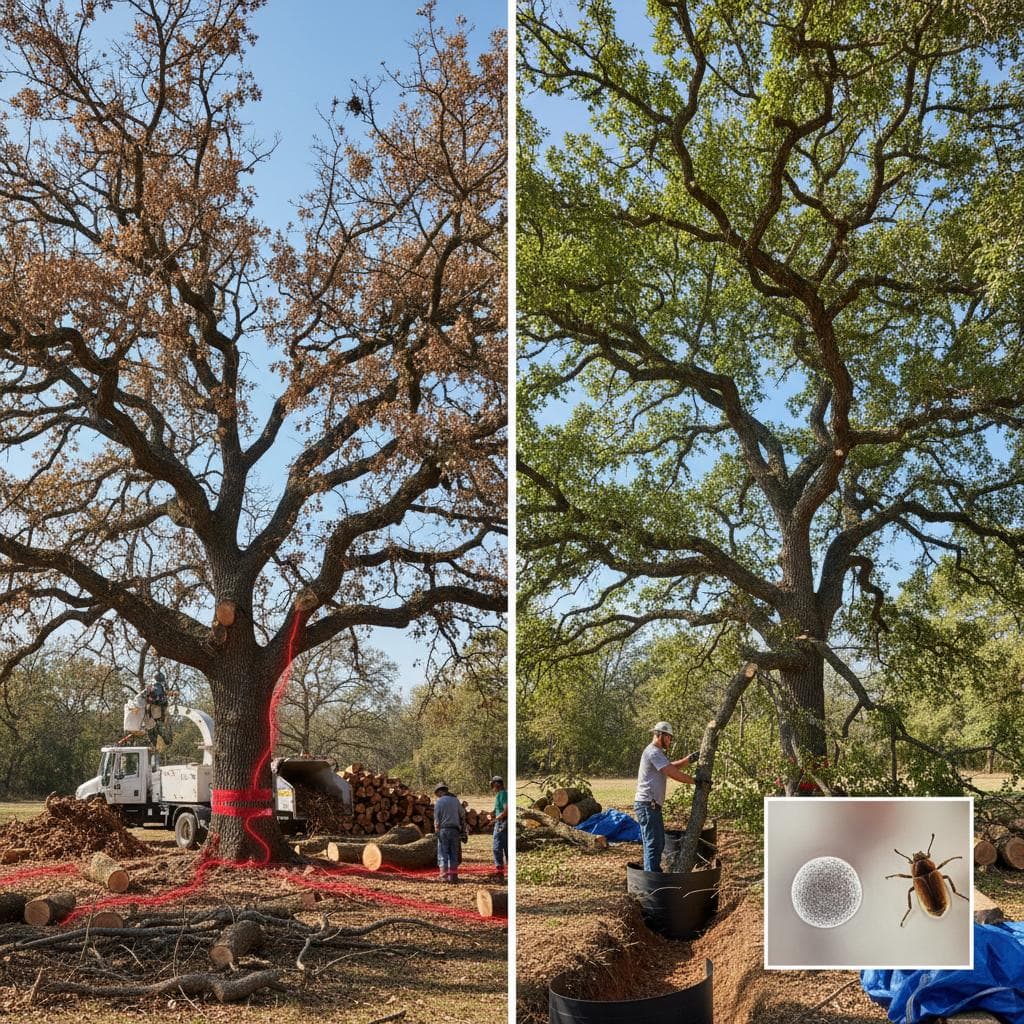
This method explains rapid grove-wide infections, as the pathogen travels without surface indicators. Severing these connections through trenching represents a key defensive tactic, though it demands precise execution to avoid further damage.
Insect-Mediated Dispersal
Nitidulid beetles, drawn to the sweet sap of wilting oaks, transport fungal spores on their bodies. These insects deposit spores into fresh pruning wounds or natural breaks on healthy trees, initiating new infections.
Pruning during active beetle seasons, typically spring and summer, heightens vulnerability. Implementing seasonal restrictions on tree work reduces this risk significantly.
Professional Removal Versus DIY Efforts
Attempting to remove an oak wilt-infected tree independently poses substantial dangers. Compromised trees often exhibit structural weaknesses, leading to unpredictable falls that endanger lives and property. Without proper assessment, DIY actions might inadvertently spread the fungus via contaminated tools or debris.
Certified arborists possess the expertise to evaluate infection scope, including subsurface root involvement. They employ industry-standard methods for felling, such as directional cuts and rigging systems, while adhering to disposal guidelines that prevent spore dissemination. Investing in professional services ensures safety and compliance, ultimately saving on potential liability costs.
Strategies to Prevent Oak Wilt Transmission
Preventing oak wilt requires diligent, multifaceted approaches focused on wound management and isolation.
-
Time pruning activities carefully. Schedule cuts for late fall or winter, when beetle activity remains low, minimizing attraction to infectious agents.
-
Apply protective sealants promptly. Coat all fresh wounds with a thick layer of latex-based paint to deter beetle entry and spore adhesion.
-
Eliminate infected material thoroughly. Chip or burn diseased wood on-site under supervision, avoiding stacking or storage that could harbor viable spores.
-
Erect physical barriers underground. Dig trenches at least five feet deep between infected and susceptible trees, installing impermeable sheets to sever root grafts.
-
Bolster tree vigor. Provide consistent irrigation during dry spells and apply balanced fertilizers to enhance natural defenses against fungal invasion.
These steps, when combined, form a robust defense protocol adaptable to various property sizes.
Practical Advice for Prevention and Post-Outbreak Recovery
Maintaining vigilance through routine professional evaluations uncovers issues early. Arborists can identify subtle symptoms like vein browning in leaves before widespread decline occurs.
Tool hygiene proves essential; disinfect blades with a 10 percent bleach solution after each use to eliminate fungal residues. Limit soil disturbance from construction or landscaping to preserve root stability.
In recovery phases, select wilt-resistant oak varieties such as bur oak or white oak for replanting. Collaborate with extension services to monitor local trends and access subsidized treatment options.
Prompt reporting to agricultural departments facilitates community-wide containment, protecting broader forested areas.
Frequently Asked Questions
What symptoms indicate oak wilt in oaks?
Affected leaves wilt progressively from the canopy tips, shifting to a bronzed hue before defoliation. Examine bark for vertical cracks revealing mats of fungal growth underneath.
Does oak wilt affect non-oak trees?
The disease targets only oak species. However, removal processes may inadvertently harm nearby plants through root severance or equipment impact.
Can wood from infected trees be stored safely?
Storage risks spore persistence in bark layers. Dispose of or consume such wood immediately to eliminate transmission potential.
Does addressing a single infected tree halt an outbreak?
Isolated treatment seldom suffices, given the dual spread vectors. Comprehensive surveys often reveal networked infections requiring holistic management.
Safeguarding Oaks for Long-Term Landscape Health
Implementing these prevention and response tactics not only curbs oak wilt's advance but also fosters resilient urban forests. Property owners who prioritize certified expertise and timely actions invest in enduring environmental benefits. By integrating these practices, communities can sustain the ecological and aesthetic value of their oak populations well into the future.