
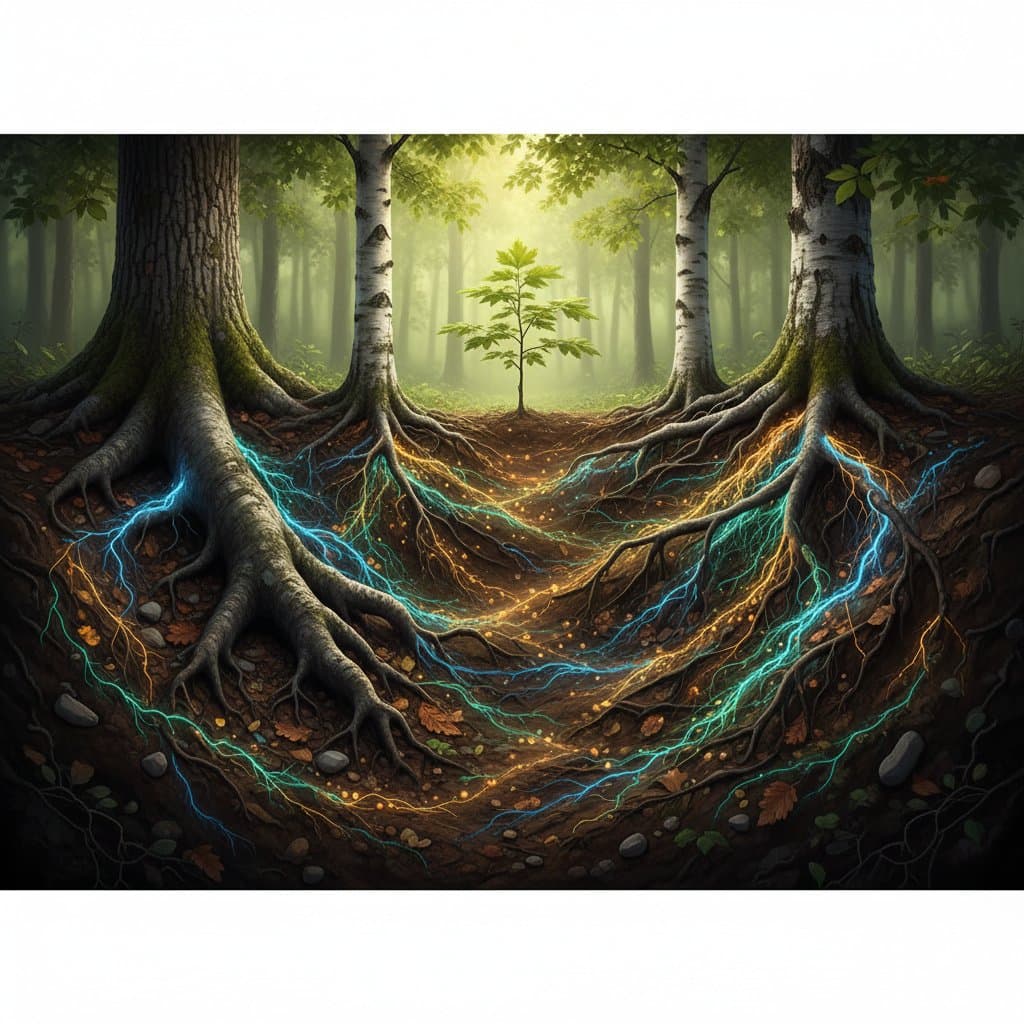
Mycelium Networks: Fungi Revolutionizing Tree Health
Healthy trees rely on robust roots, fertile soil, and essential nutrients. Below the forest floor exists an intricate layer of life that links trees through expansive underground systems for resource sharing and signaling. These systems, known as mycelium networks or the "wood wide web," reshape perspectives among arborists, soil scientists, and homeowners on tree vitality. This guide details mycelium networks, their impact on tree development, and emerging technologies that enable individuals to leverage them for durable landscapes.
What Is a Mycelium Network?
A mycelium network consists of fungal filaments called hyphae that weave through soil and interface with tree roots. This arrangement forms a mycorrhizal association, in which fungi deliver nutrients and water to trees while receiving sugars from photosynthesis. Such partnerships sustain most forest ecosystems and interconnect various tree species, facilitating resource and signal distribution over broad distances.
Average Benefits of Mycelium Networks for Trees
Robust mycelium networks yield measurable gains in growth rates, nutrient uptake, and pathogen resistance. The table below illustrates how network density and soil quality affect outcomes.
| Soil Condition | Tree Growth Improvement | Fungal Activity Level |
|---|---|---|
| Nutrient-rich garden soil | 15% faster growth | Moderate |
| Loamy forest soil | 25% faster growth | High |
| Compacted urban soil | 5% faster growth | Low |
These estimates reflect typical enhancements when active fungal networks integrate with roots. Greater network maturity correlates with superior tree vigor and stress tolerance.
Factors Influencing Mycelium Network Strength
Tree Species
Trees engage fungi differently based on their biology. Oaks and pines develop ectomycorrhizal associations, with fungi encasing root tips. Maples and birches establish endomycorrhizal links, where fungi enter root cells. These variations dictate compatible fungal types and nutrient pathways within the network.
Soil Composition
Soil structure, nutrient profiles, and hydration levels shape fungal proliferation. Aerated loamy soils promote hyphal extension, whereas compacted or sandy conditions impede it. Incorporating organic materials like compost or leaf litter fosters environments conducive to network development.
Moisture and Temperature
Fungi require steady moisture and temperate conditions to function. Prolonged dry spells or excessive flooding impair hyphal integrity and metabolic processes. Applying mulch and implementing targeted irrigation preserve consistent soil hydration for sustained fungal performance.
Chemical Applications
Herbicides, pesticides, and synthetic fertilizers often damage symbiotic fungi. Such agents diminish microbial variety and hinder nutrient transfers between fungi and roots. Opt for organic amendments and restrained fertilization to safeguard ecological equilibrium.
Tree Age and Root Condition
Mature trees typically host extensive fungal alliances, whereas saplings need time to forge connections. Vigorous roots offer ample interfaces for fungal attachment, underscoring the importance of initial root maintenance and soil conditioning for enduring networks.
The Process of Mycelium-Tree Connections
Fungal integration with trees unfolds in sequential phases.
- Spore Germination: Spores activate in damp, warm soil.
- Root Contact: Hyphae advance toward roots, drawn by root-emitted chemicals.
- Symbiotic Establishment: Fungi adhere to or infiltrate root surfaces, initiating biochemical bonds.
- Nutrient Exchange: Fungi supply phosphorus, nitrogen, and water; trees reciprocate with photosynthetic carbohydrates.
- Network Growth: Hyphae extend further, linking adjacent trees into a shared system.
This sequence builds a subterranean framework that equips trees to endure challenges like aridity, illness, or scarcity.
DIY Soil Enhancement Versus Professional Mycology Interventions
| Approach | When to Use | Key Considerations |
|---|---|---|
| DIY Soil Enhancement | Ideal for modest gardens or saplings | Incorporate compost, apply organic mulch, eschew chemical fertilizers, and deploy mycorrhizal inoculants at planting. |
| Professional Mycology Interventions | Optimal for established sites or ailing trees | Experts assess soil profiles, introduce precise fungal variants, track progress, and customize solutions to tree types. |
DIY methods sustain baseline soil vitality, but specialists deliver precision through strain identification and bespoke applications.
Strategies to Promote Mycelium Growth Near Trees
- Reduce Soil Disruption: Limit tilling or compaction around root zones to protect existing hyphae.
- Apply Organic Mulch: Spread wood chips or leaves to replicate forest floors and nourish fungi.
- Select Compatible Companions: Integrate species such as birch, beech, or pine to bolster fungal variety.
- Restrict Chemical Use: Minimize synthetic inputs to preserve fungal populations.
- Optimize Drainage: Maintain moist, non-saturated conditions for hyphal vitality.
- Incorporate Inoculants: Use commercial products to accelerate colonization in fresh plantings.
Implementing these practices enhances nutrient dynamics and tree resilience.
Frequently Asked Questions
How Long Does Mycelium Network Formation Take?
Establishment spans several months, influenced by soil attributes and root extension. In mature settings, networks persist and activate upon root contact.
Can Impaired Networks Recover?
Restoration proves feasible via soil stewardship and organic additions. Curtailing chemicals, refining drainage, and integrating compost spur fungal renewal and root reconnection.
Do All Trees Depend on Mycelium Networks?
The majority engage fungal symbioses, though degrees differ. Ornamental varieties may depend less, while conifers and hardwoods rely profoundly.
Are Mycelium Networks Visible?
Hyphae remain microscopic, yet dense aggregations appear as white or gray strands in soil or wood decay, indicating robust activity.
How Does Technology Advance Fungal Network Insights?
Tools like soil probes, genetic analysis, and imaging enable mapping of subterranean structures. These aids assist arborists in pinpointing active zones and refining nutrient strategies.
Building Resilient Landscapes Through Fungal Partnerships
Fostering mycelium networks represents a fundamental approach to elevating tree wellness. These systems fortify roots, stabilize habitats, and buffer against environmental pressures. Homeowners achieve this by prioritizing organic practices, hydration management, and non-invasive techniques.
Collaboration between experts and stewards amplifies these efforts, yielding landscapes where trees, soil, and fungi coexist productively.