
Midwest Hemlock Alert: Halt the Woolly Adelgid Spread
Hemlock trees rank among the Midwest's most elegant evergreens, offering shade, privacy screens, and enduring visual appeal. An invasive pest now endangers their existence. The hemlock woolly adelgid advances quietly through the region, weakening and killing trees in its path. Property owners confront a vital choice: intervene promptly or forfeit these essential landscape features. This resource details the pest's nature, detection methods, available treatments, and property safeguards to curb escalation.
What Is the Hemlock Woolly Adelgid?
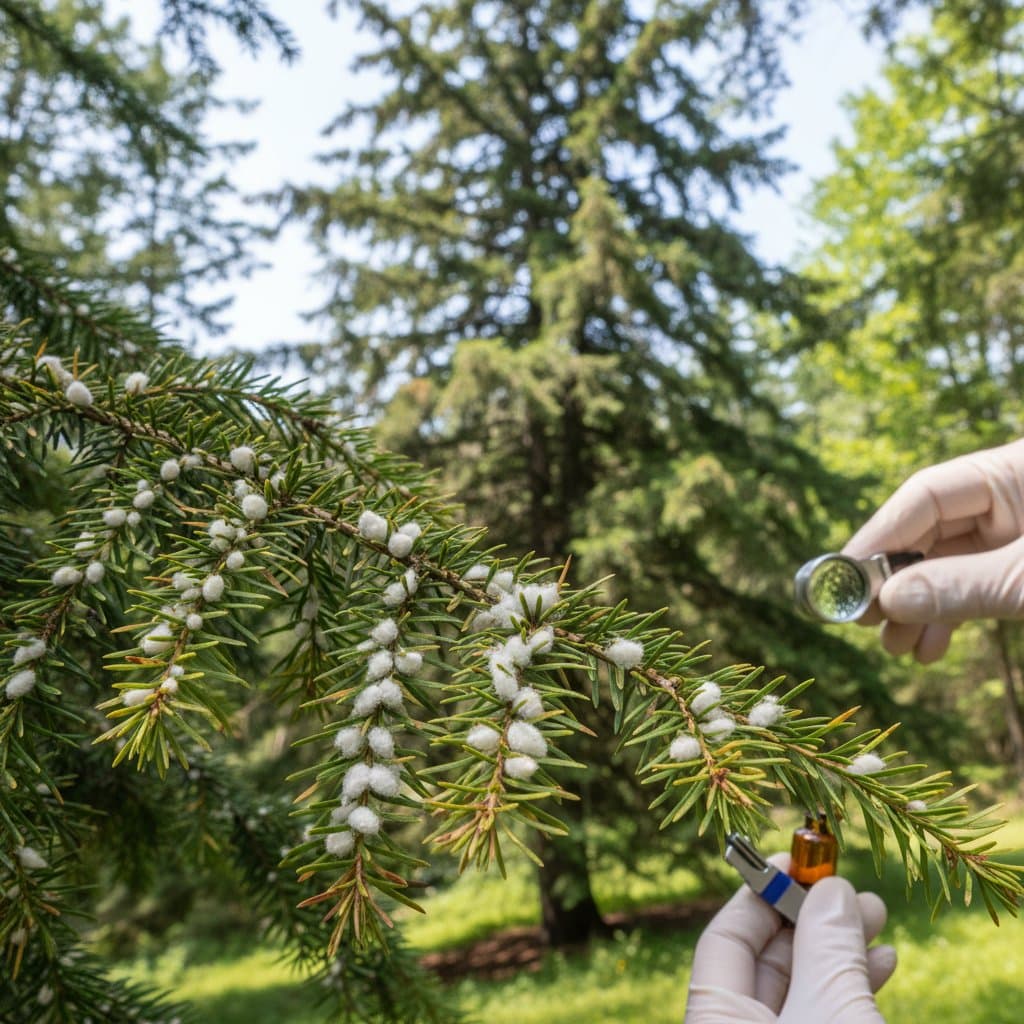
This minuscule, sap-feeding insect clings to hemlock needle bases. It encases itself in white, cottony masses resembling tiny wool clusters. The adelgids extract stored nutrients from the tree, leading to gradual starvation. Needles eventually gray, drop, and impair photosynthesis. Untreated trees succumb within several seasons.
Look for these key indicators: woolly ovisacs at needle twig joints, especially on lower branches; needle fading from deep green to dull gray; branch tip dieback starting at the base; and sparse foliage with premature needle shed. Early detection hinges on close examination during cooler months when woolly covers stand out against evergreen needles.
Average Hemlock Treatment Costs
Treating a hemlock for woolly adelgid infestation typically costs between $120 and $1,200 per tree. Factors such as tree dimensions, infestation intensity, and selected approach influence the price. The national average stands at approximately $450 per tree for routine chemical applications.
| Tree Size | Average Cost Range |
|---|---|
| Small (under 20 ft) | $120 - $250 |
| Medium (20-40 ft) | $250 - $600 |
| Large (over 40 ft) | $600 - $1,200 |
Expenses fluctuate with site access, tree quantity, and inclusion of preventive applications. Owners managing several hemlocks frequently benefit from reduced per-tree rates offered by certified arborists.
Factors Affecting Hemlock Treatment Costs
Tree Size
Mature hemlocks demand greater volumes of treatment materials and extended labor efforts. Methods like soil drenches and trunk injections scale pricing to trunk diameter at breast height, elevating costs for established trees compared to saplings.
Tree Condition
Vigorous yet infested trees respond well to single insecticide rounds. Heavily compromised specimens with substantial defoliation often necessitate repeated applications or outright removal, thereby raising overall expenditures.
Tree Species
Eastern and Carolina hemlocks suffer the greatest vulnerability to adelgid harm. Certain hybrid or ornamental varieties exhibit enhanced resistance, yet they still warrant vigilant oversight and routine preventive measures.
Location and Accessibility
Proximity to pathways or structures simplifies treatment logistics. Sloped terrains or obstructed positions demand additional time, specialized gear, and personnel, inflating labor charges.
Time of Year
Optimal application windows align with seasonal nutrient uptake, enhancing efficacy while potentially stabilizing costs. Soil and systemic treatments prove most potent from early spring through late fall.
Urgency
Requests for immediate action amid advanced decline or widespread infestation incur premium fees. Swift professional engagement minimizes future outlays by averting neighbor tree involvement.
The Hemlock Treatment Process
Certified specialists employ a methodical, evidence-based protocol to eradicate pests while sustaining tree vitality and containing dispersal.
-
Inspection and Assessment
Arborists scrutinize for woolly ovisacs, needle discoloration, and crown thinning. They gauge infestation scope and viability for recovery. -
Treatment Recommendation and Quote
Experts propose tailored strategies, including soil drenches or injections, accompanied by detailed cost breakdowns. -
Permitting and Environmental Review
Local regulations may mandate approvals for applications near aquatic zones. Applicators manage compliance paperwork. -
Treatment Application
Mild cases receive horticultural oil sprays to suffocate pests. Advanced infestations involve soil or trunk delivery of systemic insecticides that target feeding adelgids via the tree's transport system. -
Follow-up and Monitoring
Reinspections occur within subsequent months to verify pest elimination and foliage renewal. Yearly checks safeguard against reinfestation and protect adjacent hemlocks. -
Preventive Maintenance
Retreatments every two to three years align with product longevity and regional pest densities.
DIY Versus Professional Woolly Adelgid Control
When DIY Suits
For minimal outbreaks on compact trees below 15 feet, owners may apply horticultural oils or insecticidal soaps. Thorough branch coverage smothers visible adelgids. Success depends on confined, accessible infestations caught early.
When Professionals Excel
Engage experts for sizable trees, evident decline, or clustered infections. They possess requisite tools for safe systemic applications and navigate pesticide restrictions, particularly proximate to water bodies. Self-treatment of expansive trees risks inefficacy, safety hazards, and regulatory violations.
| Situation | DIY Possible? | Professional Recommended? |
|---|---|---|
| Small hemlock, light infestation | Yes | Optional |
| Large or tall hemlock | No | Yes |
| Heavy or spreading infestation | No | Yes |
| Trees near boundaries or water | No | Yes |
Steps to Hire a Tree Service
Selecting a competent provider ensures thorough hemlock defense. Adhere to this sequence for optimal selection.
-
Verify Certification and Licensing
Seek International Society of Arboriculture credentials or regional affiliations. Chemical handling requires state-licensed applicators. -
Inquire on Adelgid Expertise
Confirm the firm's track record with hemlock-specific pest management. -
Demand Insurance Documentation
Require evidence of liability and workers' compensation policies to shield assets and staff. -
Solicit Multiple Quotes
Obtain at least two itemized proposals to assess value across techniques and assessments. -
Evaluate the Treatment Outline
Insist on clear explanations of agents, mechanisms, and post-care protocols.
Frequently Asked Questions
How Much Does Treatment Cost for a 50-Foot Hemlock?
Expect $600 to $1,200 for comprehensive care on a 50-foot specimen, modulated by infestation degree and site challenges.
Is Treatment Cheaper Than Removal?
Preservation via treatment proves more economical than extraction. Large hemlock removal ranges from $800 to $2,000, whereas average treatment at $450 retains the tree's ecological and aesthetic contributions.
What Is the Optimal Treatment Season for Woolly Adelgid?
Systemic options thrive during active growth periods for nutrient translocation. Dormant-season oil applications succeed in temperate conditions above freezing.
Does Homeowners Insurance Cover Adelgid Damage?
Standard policies exclude pest-induced harm absent structural impacts from fallen limbs. Owners bear responsibility for proactive defenses.
Can Infested Hemlocks Recover?
Early intervention yields recovery in trees showing moderate needle loss. Regrowth resumes over seasons following pest control and consistent irrigation.
Safeguard Hemlocks Through Vigilant Action
Woolly adelgid infestations demand decisive response to avert self-perpetuation. Prompt professional evaluations upon spotting woolly clusters on branches preserve trees and curb community-wide threats. Implement routine inspections and cultural practices like mulching and watering to bolster resilience against future incursions.