
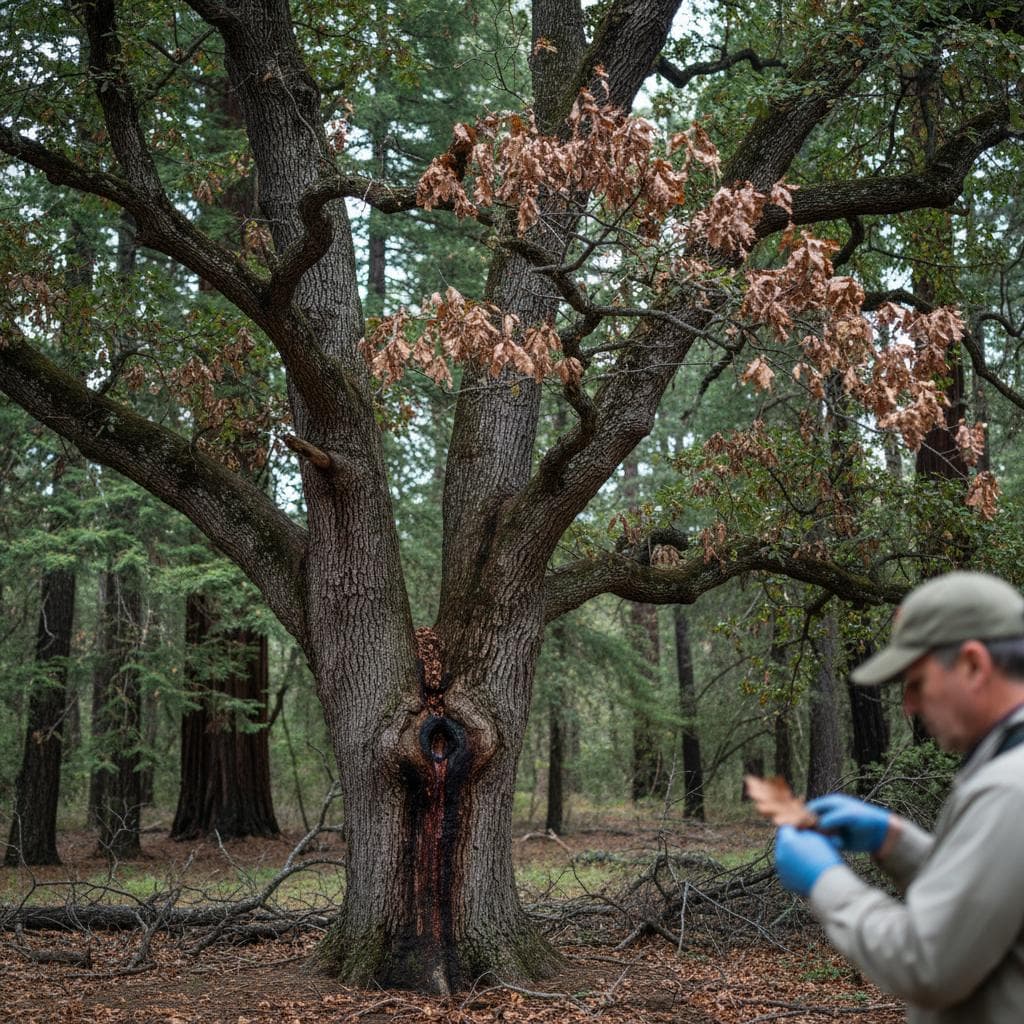
Sudden Oak Death Expands to Three New States
Sudden Oak Death, a destructive tree disease triggered by the pathogen Phytophthora ramorum, has appeared in three additional states. This development alarms property owners, landscapers, and forestry professionals responsible for oak and tanoak stands. Infected trees deteriorate swiftly, resulting in widespread canopy die-off, dangerous dead branches, and heightened wildfire hazards.
This pathogen's expansion underscores the urgency for heightened awareness and preventive measures. Homeowners and land managers need to grasp transmission methods, symptom indicators, and the value of consulting certified arborists. Prompt identification and targeted management can curb the disease's momentum and safeguard adjacent trees.
Understanding Sudden Oak Death
Sudden Oak Death stems from a water mold known as Phytophthora ramorum, which invades bark and foliage on vulnerable trees. The pathogen flourishes in cool, moist settings and disperses via rain splash, tainted soil, contaminated nursery stock, and even on footwear or vehicle tires. Upon entry, it interrupts nutrient and water transport, ultimately encircling the trunk and causing host death.
Primary targets encompass coast live oak, tanoak, black oak, and various ornamental shrubs including rhododendron and camellia. The disease may not terminate the host right away, yet bark cankers and oozing sap signal a grim outlook.
Key Factors Influencing Sudden Oak Death Spread
The dissemination of Phytophthora ramorum hinges on environmental and human elements. Recognizing these aids homeowners and experts in mitigating infection risks.
- Moisture and humidity: The pathogen proliferates in wet conditions. Regions with extended rainfall or inadequate drainage foster spore proliferation.
- Temperature: Temperate climates accelerate its development. Extended heat waves or intense freezes may hinder progress, though they fail to eradicate it.
- Host density: Areas with clustered oaks face accelerated transmission.
- Human activity: Transporting contaminated soil, mulch, or plants propels the pathogen to distant sites.
- Monitoring gaps: Infrequent checks allow infections to advance undetected.
When these elements align, the disease surges through wild forests and urban yards alike.
Identifying Symptoms in Oaks and Host Plants
Early recognition of Sudden Oak Death proves vital for containment. Indicators differ across species, yet reliable markers assist detection by homeowners.
- Bleeding cankers: Dark, viscous sap trails emerge on trunks, often beneath bark. These lesions might emit odors and draw pests.
- Leaf discoloration: Affected foliage darkens from edges inward. Shrubs exhibit leaf spots and stem blight.
- Canopy reduction: Blocked nutrients lead to sparse crowns and limb mortality.
- Swift deterioration: Girdling prompts death within one growth cycle post-symptom onset.
Since these manifestations mimic other ailments or stresses, professional verification via arborist or lab analysis remains essential prior to intervention.
Impacts of Sudden Oak Death on Landscapes and Ecosystems
Sudden Oak Death's repercussions surpass single trees, reshaping entire habitats. Mass oak mortality disrupts soil hydration, promotes invasive flora, and disrupts acorn-dependent wildlife. Fallen trees amplify combustible materials, elevating blaze intensity risks.
In neighborhoods, hazards blend ecological and structural concerns. Unstable trees near homes or paths pose collapse threats. Expenses for clearing numerous mature oaks mount rapidly, frequently surpassing thousands of dollars. Proactive maintenance and timely infected-tree excision minimize these ongoing costs.
Step-by-Step Management of Sudden Oak Death
No definitive cure exists for Sudden Oak Death, yet comprehensive strategies aid containment. Property owners benefit from this systematic plan.
- Inspection and diagnosis: Engage a certified arborist to evaluate oaks and host vegetation. Initial sampling and laboratory tests verify Phytophthora ramorum presence.
- Sanitation measures: Excise and dispose of infected parts securely. Refrain from on-site storage or composting, as spores endure in remnants.
- Chemical applications: Select fungicides shield healthy trees when applied preemptively to bark. Professionals manage reapplications for optimal results and safety.
- Water control: Minimize trunk-base wetness. Modify sprinklers to prevent flooding and enhance drainage as feasible.
- Quarantine steps: Disinfect tools, gear, and footwear post-contact with suspect zones. Prohibit soil or firewood relocation from affected areas.
Integrating vigilance, cleanliness, and precise treatments halts progression and preserves key assets.
Weighing DIY Efforts Against Professional Assistance
Homeowners might consider self-managing Sudden Oak Death, but misidentification and flawed handling carry substantial dangers. Specialized equipment and disposal expertise prove necessary for diseased specimens. Unauthorized pruning or shredding risks airborne or soil-bound spore release.
Certified arborists deliver precise diagnostics, therapies, and extractions. They adhere to rigorous hygiene standards and deploy restricted fungicides. Initial consultations cost from basic fees to several hundred dollars, scaled by site extent and tree count.
For verified cases, removal fees span hundreds to thousands per tree, influenced by size, girth, and site access. Such investments pale against fallout from toppled branches or unchecked spread.
Selecting a Competent Tree Care Expert
Choosing an adept professional ensures robust disease mitigation. Prioritize candidates exhibiting these attributes:
- Certification: Affiliation with accredited arborist bodies.
- Oak disease proficiency: Familiarity with Phytophthora ramorum biology and protocols.
- Insurance coverage: Confirmation of liability and employee protections.
- Client endorsements: Requests for prior project samples and testimonials.
- Transparent dialogue: Detailed explanations, documented quotes, and forthright projections.
Thorough evaluation guarantees dependable aid and sound tree guidance.
Essential Questions for Tree Service Providers
- How do you verify Phytophthora ramorum infection in my trees?
- What tailored treatments or removals suit my landscape?
- Do you enforce sanitation to avert disease transmission?
- Is salvaging wood for fuel or ground cover advisable, or must it depart entirely?
- What timeline applies for adjacent healthy trees' stabilization?
- How frequently do follow-up checks occur?
- Which interim safeguards can I enact?
Frequently Asked Questions
Which trees face the greatest Sudden Oak Death risk?
Oaks and tanoaks rank highest in susceptibility, yet the pathogen impacts understory species like bay laurel and rhododendron. These intermediaries relay spores to oaks despite minimal visible effects.
Does Sudden Oak Death transmit to non-oak yard plants?
Affirmative. Though oaks suffer most, ornamental shrubs serve as vectors, including camellias, viburnums, and certain maples. Vigilant health maintenance in these curbs spread.
Is relocating firewood from infected sites safe?
Negative. Spores linger in wood for extended periods. Procure local supplies and avoid interstate movement from quarantined regions.
Exist resistant oak types?
Studies indicate partial tolerance in select species, but full immunity eludes all. Diversifying with natives and non-hosts dilutes outbreak severity.
How to determine high-risk property status?
Vulnerable sites often include humid niches, thick oak clusters, and water proximity. Local arborist or forestry consultations yield accurate evaluations.
Will Sudden Oak Death subside naturally?
Probable not. The pathogen endures in residues for years. Sustained oversight and hygiene remain imperative for suppression.
What if a neighbor's tree shows infection?
Address it courteously and urge professional consultation. Joint efforts among properties thwart mutual threats.
Safeguarding Oaks Through Vigilant Action
Protecting oaks demands consistent monitoring and swift response. Implement routine inspections, adopt sanitation routines, and collaborate with experts to fortify landscapes against Sudden Oak Death. These steps preserve tree health, enhance safety, and sustain community greenery for generations.