
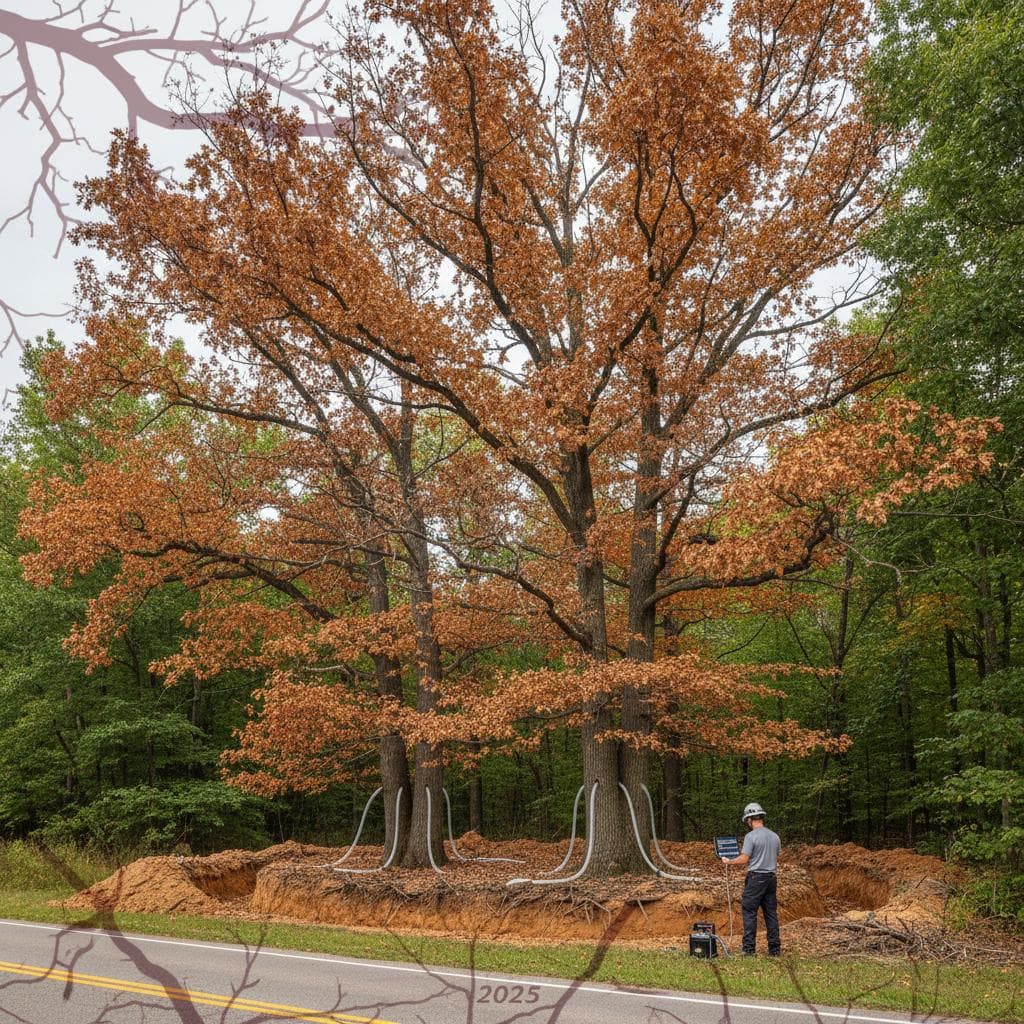
Oak Wilt Advances Along I-40: Act Within Critical Deadlines
Oak wilt spreads rapidly along the I-40 corridor. Without intervention, this disease can eliminate entire groups of oak trees in just a few months. Homeowners and property managers in affected areas must respond promptly, as the fungus travels through root networks and insect vectors.
Immediate prevention and treatment protect irreplaceable trees and maintain landscape integrity. This guide covers transmission methods, disease risks, and precise steps for containment. Professional assistance combined with swift action preserves oak health for the long term.
Understanding Oak Wilt and Its Spread
Oak wilt stems from the fungus Bretziella fagacearum, which blocks water movement in trees. Transmission occurs both aboveground and underground. Sap-feeding beetles transport spores from diseased trees to open wounds on healthy ones. Underground, the fungus exploits fused root systems among adjacent oaks.
Red oaks succumb within weeks of infection. White oaks resist better and decline more slowly, though prolonged exposure proves fatal. The pathogen favors warm, humid conditions, with risks escalating from pruning injuries or storm damage that expose vascular tissue.
Primary Transmission Routes
-
Root Graft Spread
Oaks frequently develop interconnected roots for resource sharing. This natural fusion enables direct fungal passage between trees. Underground movement covers extensive distances, often devastating clusters during one season. -
Insect Vector Activity
Nitidulid beetles, known as sap feeders, visit oozing wounds. They acquire spores from infected sites and deposit them on nearby healthy trees. Pruning during active beetle seasons heightens vulnerability, underscoring the need for wound care protocols.
Factors Driving Oak Wilt Expansion
Multiple elements dictate the disease's pace across landscapes. Awareness of these guides effective protective measures.
- Species Vulnerability: Red oaks face highest mortality; white oaks offer moderate tolerance.
- Stand Density: Dense plantings with shared roots amplify transmission risks.
- Soil Characteristics: Loose, well-drained soils promote extensive root grafting.
- Climatic Influences: Elevated temperatures and moisture boost beetle mobility and spore viability.
- Anthropogenic Impacts: Ill-timed cuts, firewood relocation, and postponed responses accelerate outbreaks.
Such variables converge to propel swift regional advances, imperiling both suburban groves and expansive woodlands.
Identifying Oak Wilt Symptoms
Prompt recognition separates recoverable scenarios from irreversible decline. Indicators differ by oak type but share core patterns.
- Foliar Changes: Leaves shift to muted green, then bronze or brown, veining from margins inward.
- Seasonal Defoliation: Trees drop foliage prematurely, exposing limbs mid-growth.
- Progressive Dieback: Crown sections perish first, advancing stemward.
- Mats and Odors: Red oaks develop under-bark spore layers with fruity scents drawing insects.
- Accelerated Mortality: Red varieties perish in weeks; white ones linger but weaken steadily.
Suspected symptoms warrant instant arborist consultation for accurate assessment.
Step-by-Step Oak Wilt Treatment Protocol
Management integrates isolation, disruption of pathways, and chemical defenses. Speed proves paramount, as symptoms lag behind internal progression.
Step 1: Expert Confirmation
Certified arborists perform on-site evaluations, supplemented by lab analysis if required. This step verifies oak wilt, averting misdirected efforts on unrelated issues.
Step 2: Severing Root Connections
Mechanical trenching interrupts subsurface spread by slicing roots linking infected and uninfected zones. Cuts reach 4 feet deep, encircling outbreak foci to quarantine the pathogen.
Step 3: Vascular Fungicide Delivery
Prophylactic injections shield proximate, uninfected high-value trees. Propiconazole-based solutions enter the sap stream, conferring up to 24 months of defense against invasion.
Step 4: Removal and Secure Disposal
Irrecoverable trees demand swift excision to curb spore release. Process wood via chipping, incineration, or sheeting to deter beetle access. Prohibit relocation of raw material to avert distant introductions.
Step 5: Vigilant Follow-Up
Post-intervention surveillance detects nascent threats. Reassess adjacent trees routinely, prioritizing those near treated sites.
Weighing DIY Efforts Against Professional Services
Basic upkeep suits some tasks, yet oak wilt demands specialized intervention. Errors in execution compound damages.
Suitable Homeowner Actions
- Raking debris post-treatment to minimize litter.
- Dressing minor cuts with sealant outside peak risk windows.
- Supporting tree vigor through irrigation and organic mulching.
Essential Professional Engagements
- Symptom verification upon observation.
- Multi-tree evaluations during suspected epidemics.
- Execution of trenching, injections, or extractions.
- Pruning calendar audits for compliance.
Experts deploy calibrated tools and adhere to protocols, fulfilling regulatory mandates on containment and waste handling.
Selecting a Competent Arborist
The choice of specialist influences outcomes profoundly. Prioritize these credentials:
- Accreditation: Seek board-certified status from arboricultural bodies.
- Specialization: Favor firms versed in fungal pathogens like oak wilt.
- Coverage: Confirm comprehensive insurance for operations and personnel.
- Proof of Success: Review case studies or solicit regional testimonials.
- Documentation: Insist on itemized bids detailing scope, pricing, and schedules.
Reputable providers extend advice on enduring safeguards, including plant spacing and debris protocols.
Key Inquiries for Tree Service Providers
Probe potential hires to affirm competence and alignment:
- Which techniques confirm oak wilt diagnosis?
- What specifications define trench dimensions?
- Which fungicide formulations and regimens do you apply?
- Outline your infected wood handling procedures.
- Describe post-treatment support and checks.
Responses reveal expertise depth and service reliability.
Frequently Asked Questions
How rapidly does oak wilt propagate?
Subterranean advance reaches feet daily in optimal settings. Aerial dispersal relies on beetle flights to wounds. Unchecked, it claims groves in one cycle.
Is pruning advisable amid outbreaks?
Restrict cuts to dormant phases with minimal insect presence. If essential, apply sealant promptly to wounds, repelling vectors.
What are typical treatment expenses?
Injections cost $100 to $500 per tree, scaling with diameter. Trenching and removals escalate totals, yet prevent costlier replacements.
Can infected oaks rebound?
Early white oak interventions yield recoveries; red oaks seldom do. Proactive measures fortify neighbors effectively.
Is infected wood usable safely?
Post-processing only: strip bark, season thoroughly, or destroy. Fresh logs risk fungal export.
What preventive measures apply?
Align trims to low-risk seasons, shield from mechanical harm, source firewood locally. Bolster resilience via soil care and inspections.
What risks attend neglect?
Widespread mortality ensues, with mounting abatement costs. Spillover to adjacent lands complicates containment.
Secure Your Oaks Through Proactive Defense
Delay invites irreversible spread. Properties along I-40 or in confirmed zones require urgent assessments.
Initiate inspections now, followed by targeted trenching and injections. These strategies halt oak wilt, preserving your environmental assets.