
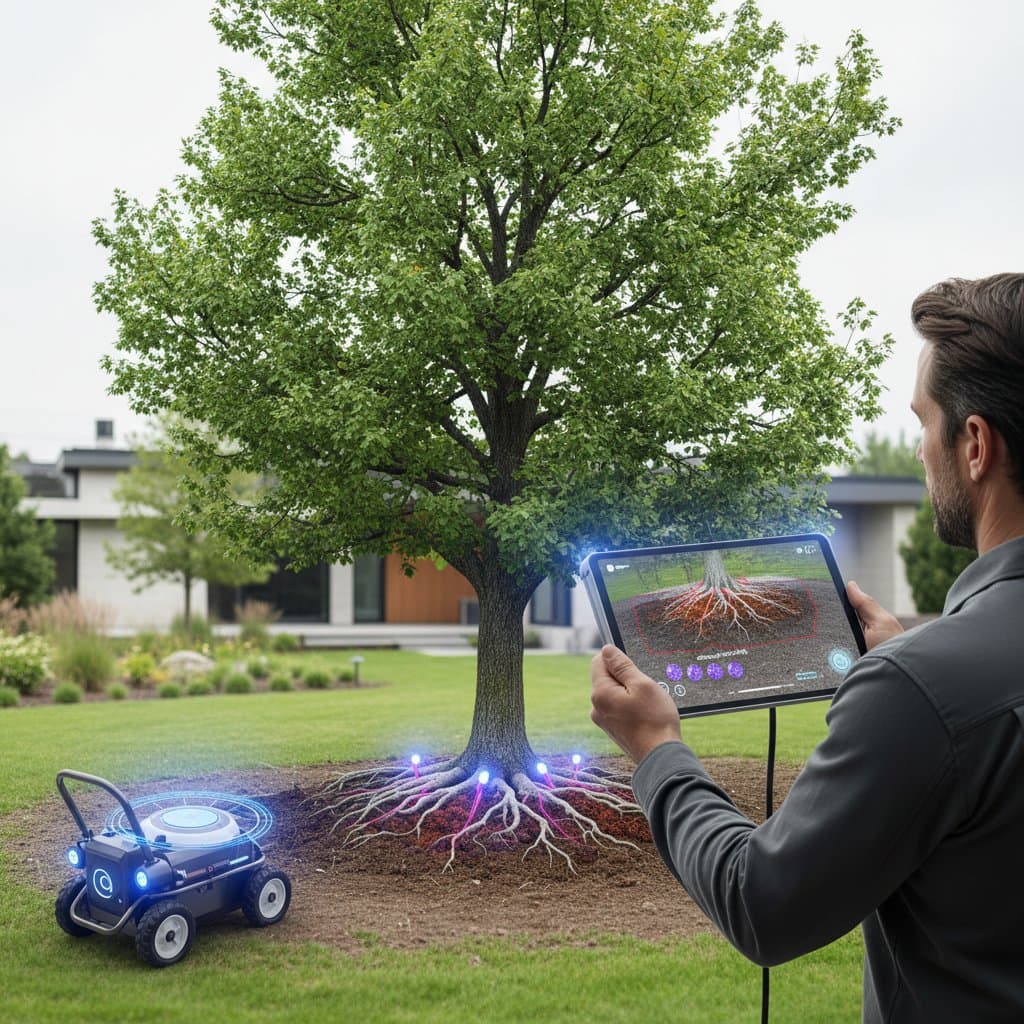
Early Root Rot Detection Technology Saves Trees from Hidden Decline
Healthy trees enhance landscapes with shade, aesthetic appeal, privacy, and ecological advantages unmatched by other elements. Even robust species like oaks and maples face threats from root rot, a condition that progresses undetected underground until severe damage emerges. Recent advancements in detection technology now reveal these issues early, enabling timely interventions that preserve trees and safeguard investments.
This resource details the mechanics of contemporary root rot detection methods, associated expenses, and strategies for landscape protection. Readers gain insights into symptoms, remedies, and protocols for sustaining tree vitality over time.
Root Rot Detection Expenses
National Average Expenses
Professional root rot detection fees fluctuate based on property scale, tree quantity, and employed technology. Homeowners generally allocate $300 to $800 for thorough evaluations. Elementary assessments via manual probes or surface observations incur lower charges, whereas sophisticated imaging or sensor diagnostics command higher prices yet deliver superior precision.
Expenses by Project Scope or Category
- Individual Tree Evaluation: The most economical choice, applied when a single tree exhibits decline indicators.
- Comprehensive Property Examination: Suited for expansive properties or estates featuring numerous mature trees. This approach deploys soil sensors, drones, or imaging devices, yielding elevated costs alongside a holistic health assessment.
- Continuous Surveillance Subscriptions: Services resembling subscriptions facilitate ongoing data gathering through embedded sensors, issuing alerts for anomalies prior to surface manifestations. These entail monthly or yearly charges.
Principal Expense Influences
- Technology Variant: Infrared imaging, soil moisture sensors, and microbial DNA examinations each present distinct pricing structures.
- Tree Reachability: Proximity to buildings, inclines, or dense soil necessitates additional effort.
- Regional Labor Variations: Arborist charges and testing services vary geographically.
- Damage Severity: Pronounced deterioration might demand extraction, soil remediation, or substitution, inflating overall outlays.
- Subsequent Remedies: Applications of fungicides, aeration, and soil rejuvenation factor into enduring costs.
Categories of Root Rot Detection Technology
Detection methodologies have advanced from rudimentary probing to sophisticated evaluations. Each technique offers particular benefits tailored to specific scenarios.
Moisture and Soil Sensors
These instruments gauge soil water levels and oxygen concentrations. Root rot flourishes in waterlogged environments, so pinpointing surplus moisture signals environments conducive to fungal proliferation.
Advantages:
- Enables perpetual real-time oversight
- Involves minimal intrusion and straightforward setup
- Supplies irrigation optimization data
Disadvantages:
- Demands precise calibration for reliability
- Fails to directly identify established fungal presence
Ground-Penetrating Radar (GPR)
GPR employs radio waves to generate subsurface imagery. It discloses root deterioration, cavities, and soil density shifts indicative of pathology.
Advantages:
- Yields intricate visualizations
- Remains non-intrusive and expeditious
- Proves valuable for sizable or prized trees
Disadvantages:
- Necessitates costly apparatus and skilled personnel
- Data analysis requires specialized proficiency
Spectral and Thermal Imaging
Infrared and multispectral imaging devices record canopy and soil temperature and hue discrepancies. Compromised roots alter water conduction, manifesting as observable leaf temperature and coloration anomalies.
Advantages:
- Identifies distress preceding overt signs
- Accommodates rapid multi-tree surveys
- Integrates with drones for broad-area application
Disadvantages:
- Ambient factors may compromise precision
- Often requires validation through tangible specimens
Microbial DNA Testing
This approach scrutinizes soil or root specimens for pathogens like Phytophthora, a prevalent root rot agent.
Advantages:
- Pinpoints precise disease-causing entities
- Informs focused chemical or biological interventions
Disadvantages:
- Entails lab-based handling
- Delivers outcomes after delays
Self-Directed Versus Expert Assistance
Property owners may conduct preliminary reviews, yet intricate detection typically warrants certified arborists or plant pathologists.
Self-Directed Root Rot Inspections:
- Inspect trunk bases for yielding, mushy timber or acidic scents.
- Observe foliage yellowing, canopy sparsity, or retarded development.
- Monitor for pooled water in root areas post-precipitation.
Such self-reliant techniques prove cost-free and foster initial vigilance, though they cannot verify subsurface infection scope or nature.
Engaging Experts:
- Specialists deploy analytical instruments to uncover concealed degradation.
- They analyze findings with accuracy and propose targeted solutions.
- Numerous providers extend guarantees on managed trees or subsequent evaluations for progress tracking.
For significant or aged trees, expert involvement represents a prudent expenditure. Tree loss expenses, encompassing removal and renewal, surpass detection and remediation fees substantially.
Procedures for Identifying and Addressing Root Rot
Contemporary detection merges technological applications with established arboricultural expertise. The sequence below delineates professional protocols from evaluation to restoration.
-
Preliminary Evaluation:
Initiate with ocular review of foliage, bark, and terrain. Note distress markers like pigmentation shifts, drooping, or branch mortality. -
Soil and Hydration Analysis:
Quantify soil dampness and runoff characteristics. Densely packed or inundated soils frequently incite fungal activity. -
Technological Application:
Implement suitable devices, including GPR or sensors, to isolate impacted roots. Outputs frequently appear on digital interfaces for instantaneous review. -
Specimen Gathering:
Obtain minor root or soil portions for lab identification of agents. Phytophthora and Armillaria rank among frequent offenders. -
Remediation Strategy:
With confirmation, formulate a plan encompassing:
- Terrain ventilation or runoff enhancement
- Fungicide infusion or saturation
- Excision of tainted roots or refuse
- Deployment of advantageous microbes for soil revitalization
-
Oversight and Upkeep:
Sustain tree condition surveillance via sensors or periodic checks. Modify watering routines to uphold equilibrium. -
Prophylactic Actions:
Bolster soil composition with organics, optimize slopes, and eschew excess hydration. Preemption constitutes the foremost safeguard.
Strategies for Maintaining Tree Health and Preventing Rot
- Regulate Watering: Refrain from routine applications that sustain root saturation. Infrequent, profound irrigation fosters resilient root networks.
- Enhance Runoff: Incorporate natural mulches and ventilate firm soils to promote circulation and fluid dynamics.
- Conduct Routine Checks: Vigil for nascent alerts, particularly following deluges or root-zone disruptions.
- Preserve Root Integrity: Excavations or conduits near trees risk fungal entry points.
- Select Tolerant Varieties: For new plantings, opt for species resilient to moist conditions and root afflictions.
Common Inquiries
What Triggers Root Rot in Trees?
Fungal entities like Phytophthora or Armillaria primarily induce root rot. These flourish in damp, inadequately draining soils, impairing root nutrient and water uptake.
How to Recognize Tree Root Rot?
Indicators encompass leaf yellowing or sagging, sparse growth, untimely shedding, and sluggish expansion. Trunk bases may reveal softened or altered wood alongside earthy aromas.
Is Root Rot Reversible After Onset?
Prompt measures frequently rescue affected trees. Timely applications of ventilation, fungicides, and drainage adjustments halt progression. Severe cases, however, necessitate extraction for security.
Do Specific Trees Face Greater Root Rot Risks?
Indeed, oaks, citrus, and azaleas prove especially prone in sodden or drainage-deficient settings. Knowledge of species hydration needs aids in averting outbreaks.
In What Manner Does Emerging Technology Identify Root Rot Prematurely?
Innovative setups leverage sensors, radar, and optics to assess soil states and root alterations prior to aboveground evidence. This facilitates preemptive responses well ahead of decline.
Does Investing in Root Rot Detection Justify the Expense?
Certainly. Mature tree forfeiture costs, including clearance and substitution, eclipse evaluation outlays. Proactive identification upholds asset worth and curtails future upkeep.
Sustaining Tree Vitality Through Proactive Monitoring
Root rot formerly evaded notice until trees neared collapse. Current technological integrations empower property stewards to detect and mitigate threats at inception. Commitment to periodic expert consultations and tool-assisted vigilance ensures enduring tree robustness and landscape prosperity.
For suspected issues or preventive planning, seek arborists proficient in electronic diagnostics. This synergy of knowledge and innovation maximizes tree longevity and performance.