
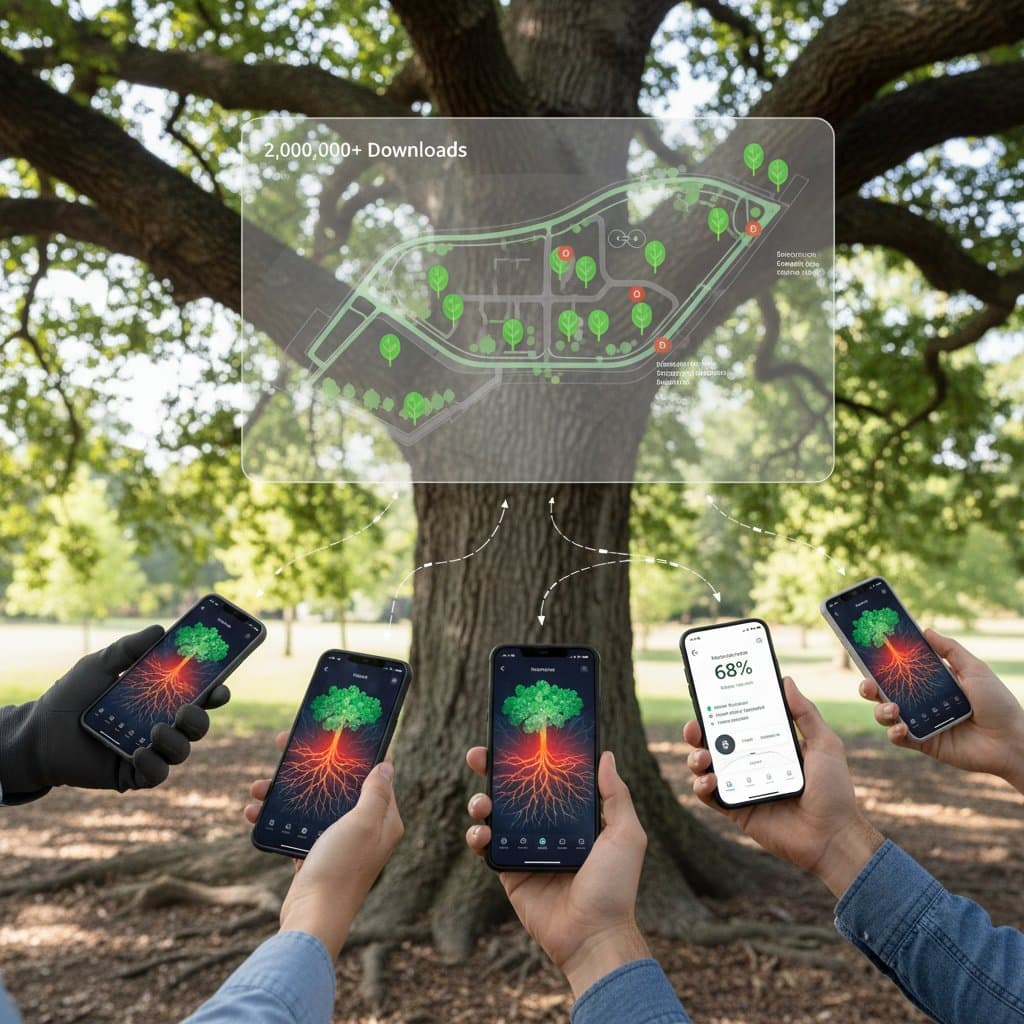
Over 2 Million Downloads: Root Rot Detection Apps Transform Tree Care
Root rot detection apps change the way homeowners and arborists spot and address tree diseases. These tools use image recognition, soil data analysis, and diagnostics supported by experts to identify early signs of root decay. Such signs often remain hidden until severe stress appears above ground. More than two million downloads across platforms demonstrate their value in sustaining healthy trees and landscapes.
This popularity reflects growing recognition of root rot risks. Pathogens like Phytophthora and Armillaria drive root rot, which lurks underground until trees show advanced decline. Artificial intelligence combined with mobile devices allows users to assess problems in minutes. Quick action prevents permanent harm and supports long-term landscape health.
Root Rot Explained: Causes and Consequences
Root rot stems from fungal infections or excess water that damage tree roots and block nutrient absorption. Common culprits include Phytophthora cinnamomi, Armillaria mellea, and Pythium species. These thrive in waterlogged, compacted soils with limited oxygen.
Affected roots lead to broader tree distress. Leaves turn yellow, growth slows, and the tree risks death. Underground origins mean owners often overlook initial phases, allowing spread to nearby plants. Timely identification saves trees, and detection apps fill this critical gap.
Beyond individual trees, root rot threatens ecosystems. In urban settings, it weakens shade providers and property stabilizers. Early intervention preserves biodiversity and reduces replacement costs, which can exceed thousands per mature specimen.
Essential Features in Root Rot Detection Apps
Modern apps blend cutting-edge technology with user-friendly designs. Key elements boost speed and accuracy in diagnostics.
- AI-Driven Image Analysis: Capture photos of leaves, bark, or exposed roots. The app compares them to a vast database of disease patterns to signal possible root rot.
- Soil Condition Evaluation: Connect to sensors or input data manually to check moisture levels and drainage. This identifies conditions that invite fungal growth.
- Location-Based Environmental Insights: Pull in data on local humidity, recent rainfall, and temperatures. Such factors reveal risks specific to your area.
- Access to Expert Advice: Share findings directly with certified arborists through the platform for tailored recommendations.
- Personalized Treatment Plans: After analysis, receive step-by-step guidance on fixes like improving soil airflow, applying targeted fungicides, or adjusting irrigation schedules.
These features turn complex science into simple actions. Users gain confidence in managing tree health without advanced training.
How Root Rot Apps Work: Step-by-Step Process
Apps operate through an efficient sequence that combines user details with intelligent processing. This approach delivers reliable results quickly.
- Gather Basic Information: Provide details on tree type, age, and any visible issues to refine the assessment.
- Upload Photos: Submit high-resolution images of affected areas. Algorithms scan for patterns linked to root rot based on thousands of trained examples.
- Incorporate Site Data: Access weather history and soil readings from your location or attached devices.
- Generate Diagnosis: Calculate likelihoods of root rot versus other problems, such as pests or dry conditions.
- Provide Next Steps: Outline clear actions, from scheduling a soil test to starting preventive care.
This method bridges everyday observation with professional-level analysis. Regular use builds a history of your trees' health for ongoing monitoring.
Signs That Signal the Need for App Assessment
Tree distress varies, but specific symptoms point to root rot. Check these to decide when to use an app.
- Wilting foliage even with consistent watering
- Yellow discoloration beginning at lower branches
- Bark cracks or sap leaks near the trunk base
- Soft, discolored roots visible just below soil
- Sparse canopy or branch die-off without clear cause
- Unusual odors, like decay, emanating from the ground
Address these promptly to avoid full tree loss. Simple app checks cost little compared to professional removal, which involves heavy equipment and disposal.
Combining App Tools with Arborist Knowledge
Apps empower homeowners for quick scans, but they work best alongside expert input. This partnership maximizes effectiveness.
Benefits of Self-Diagnosis:
- Get feedback immediately, bypassing appointment waits
- Access free or low-cost basic tools
- Monitor changes over time with saved records
Value of Professional Review:
- Confirm results via soil samples or direct examinations
- Implement advanced treatments, such as root barriers
- Pinpoint exact pathogens to guide precise interventions
Start with the app to narrow issues, then consult specialists for confirmation. This strategy cuts unnecessary expenses while ensuring thorough care.
Shifts in Tree Management from App Adoption
These tools redefine proactive tree oversight. Homeowners move from reactive fixes to ongoing vigilance, using apps for daily or weekly checks.
Professionals streamline operations by collecting client data digitally. This speeds up consultations and tracks treatment outcomes. In disaster recovery, such as after heavy rains, apps help triage damaged sites efficiently.
For larger operations, like parks or commercial lots, apps enable scalable monitoring. Map entire areas to spot patterns early, preventing widespread losses and supporting sustainable practices.
Cost Structures and Ease of Access
Most apps offer free entry-level features, with upgrades for deeper analysis or expert links. Basic scans require no payment, while premium access might involve a modest monthly fee or single purchase.
This model suits budget-conscious users. Perform routine evaluations at home, reserving arborist visits for verified problems. Over time, this approach lowers overall maintenance costs by catching issues early.
Choosing the Right Root Rot App
With many choices available, focus on these factors for the best fit.
- Proven Performance: Look for high ratings and verified success stories from users.
- Comprehensive Data Libraries: Select apps with broad collections of disease images for accurate matches.
- Built-In Expert Networks: Choose those that connect easily to qualified professionals.
- Field-Ready Functions: Ensure offline mode for use in remote or low-signal areas.
- Security Measures: Confirm strong protections for your photos and location details.
Test a few free versions to match your needs, whether for a single tree or a full yard.
Frequently Asked Questions
What Triggers Root Rot in Trees?
Root rot develops from fungal activity in overly wet soils that starve roots of air. Pathogens like Phytophthora multiply rapidly in such environments.
How Accurate Are These Apps?
Reputable apps achieve 85 percent or higher accuracy with clear inputs. Always follow up with on-site verification for certainty.
Can Apps Detect Beyond Root Rot?
Several models cover additional issues, including fungal spots on leaves, stem cankers, and mineral deficiencies.
Do They Work for Large-Scale Properties?
Absolutely; features like site mapping handle multiple trees or fields, suiting farms and estates.
What Devices Support These Apps?
A standard smartphone camera works well; pair with optional probes for precise soil data on moisture and acidity.
What Actions Follow a Positive Detection?
Improve site drainage, reduce irrigation frequency, and apply recommended fungicides. Regular soil loosening prevents recurrence.
Should You Trust App Results Alone?
Use them for initial alerts, but seek expert confirmation to avoid missteps. Respond quickly to potential threats.
Build Lasting Tree Resilience with Smart Detection
Root rot apps deliver the knowledge needed for effective tree protection. They turn hidden dangers into manageable tasks, supporting vibrant outdoor spaces.
Strong roots anchor healthy trees that boost safety, aesthetics, and property worth. Apply these tools alongside expert care to defend against root rot and future challenges, ensuring trees thrive for years.