
Urgent Action Needed: Protect Hemlocks from Hemlock Woolly Adelgid in 2025
The hemlock woolly adelgid represents a stealthy threat to one of North America's cherished evergreen species. Property owners value hemlocks for their dense foliage that offers privacy screens, aesthetic appeal, and vital ecological roles such as habitat provision and soil stabilization. This minuscule pest feeds on sap and can lead to the demise of a full-grown tree in as little as four to six years. The following sections detail recognition strategies, treatment alternatives, and proactive measures to halt the infestation's progression.
Understanding the Hemlock Woolly Adelgid
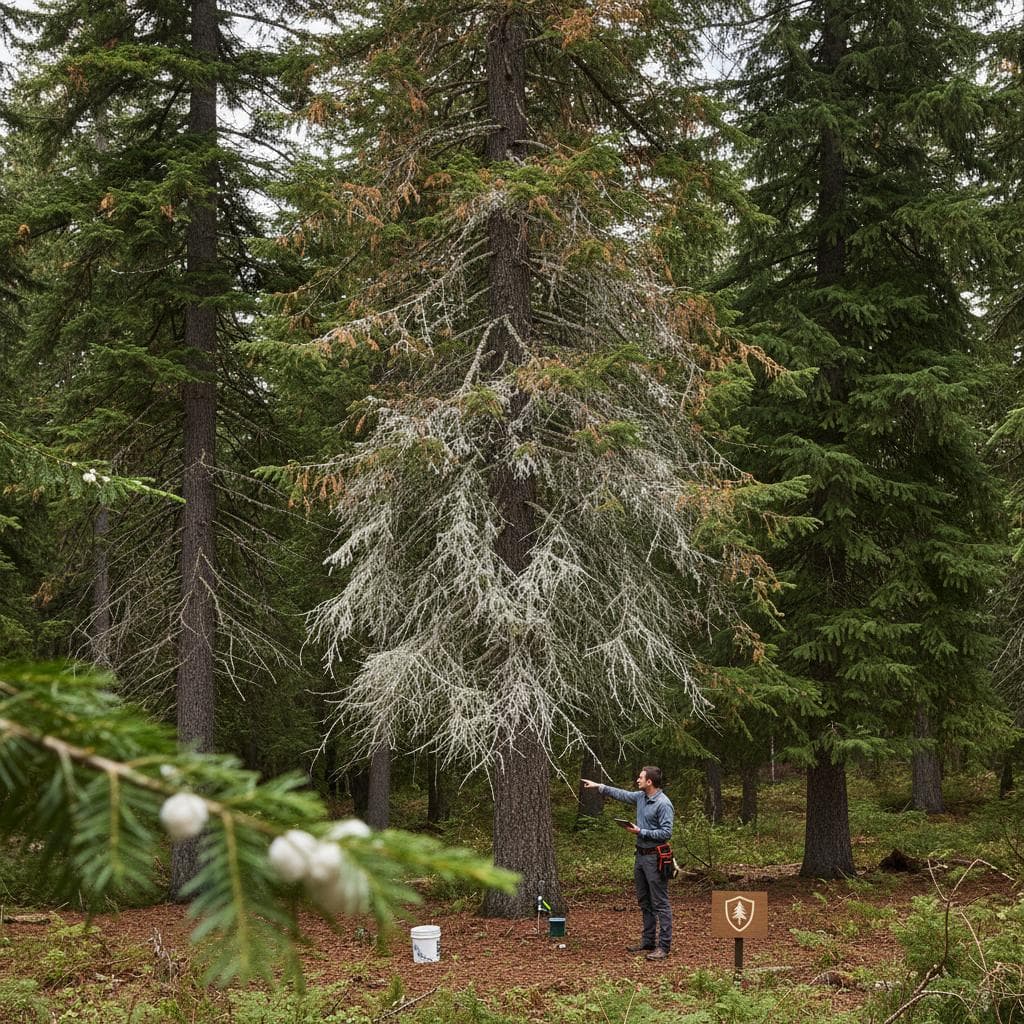
This pest consists of tiny, aphid-like insects that target eastern and Carolina hemlock varieties. The adelgids attach themselves to the base of needles, secreting a protective white, woolly covering resembling bits of cotton or frost. Their feeding depletes the tree's essential nutrients, resulting in yellowing needles, thinning crowns, and progressive branch mortality. Many individuals overlook initial symptoms, confusing them with environmental stress like drought or winter damage, which permits the population to multiply rapidly.
To identify an infestation, examine the undersides of needles during cooler months when the white ovisacs become prominent. Look for grayish branches and sparse foliage as advanced indicators. Early vigilance prevents widespread damage, as the pest spreads via wind, birds, or contaminated equipment.
Treatment Cost Overview for Hemlock Woolly Adelgid
Professional services for addressing hemlock woolly adelgid typically range from $100 to $1,500 per tree. Factors such as tree dimensions, infestation extent, and selected approach influence the final price. Initial preventive applications for young trees prove more economical than remedial efforts on mature, severely affected specimens.
| Tree Size | Typical Cost Range |
|---|---|
| Small (under 20 feet) | $100 - $250 |
| Medium (20 - 40 feet) | $250 - $600 |
| Large (over 40 feet) | $600 - $1,500 |
These estimates encompass common techniques including soil applications, trunk injections, and foliar treatments. Additional expenses may arise from repeated applications or diagnostic visits.
Key Influences on Hemlock Woolly Adelgid Treatment Expenses
Tree Dimensions
Specimens with greater height and canopy spread demand larger volumes of treatment materials and extended labor hours. For tall trees, crews employ aerial lifts or climbing gear, elevating operational costs.
Infestation Intensity
Mild cases allow for straightforward interventions with minimal product use. Severe conditions, marked by widespread needle drop and skeletal limbs, necessitate intensive protocols like repeated systemic applications.
Site Accessibility
Hemlocks positioned on uneven terrain, adjacent to buildings, or in thick woodlands complicate equipment deployment. Such challenges extend preparation time and require enhanced safety protocols.
Chosen Treatment Technique
Ground-based drenches and surface sprays suit modest trees and incur lower fees. Injection methods, while pricier, offer extended efficacy and suit sensitive areas like riparian zones.
Specialist Qualifications
Engaging licensed arborists with pest management expertise commands premium rates. Their precision in application and adherence to regulations often yields superior outcomes, preserving valuable trees.
Step-by-Step Professional Treatment Protocol
Experienced arborists adhere to a methodical sequence for optimal results:
-
Initial Evaluation
Inspect needle bases for woolly masses and assess overall vigor to gauge infestation scope. -
Customized Proposal
Receive a comprehensive report detailing strategies, projected efficacy, and maintenance schedules. -
Regulatory Compliance
Secure necessary approvals for applications near aquatic environments; professionals manage this paperwork. -
Precise Delivery
Administer treatments via soil absorption, direct trunk infusion, or needle coating. Agents like imidacloprid circulate internally to target pests at their feeding sites. -
Ongoing Surveillance
Conduct follow-up examinations after 6 to 12 months; plan recurring treatments every 2 to 5 years based on monitoring results.
Evaluating DIY Approaches Against Professional Assistance
Scenarios for Self-Management
- Addressing compact landscape hemlocks below 10 feet in height
- Utilizing insecticidal soaps or dormant oils for surface control
- Trimming affected sections to enhance airflow and reduce pest harbors
Indications for Expert Intervention
- Managing specimens exceeding 15 feet or proximate to edifices and water bodies
- Addressing pronounced decline or dense pest populations
- Implementing vascular treatments or coordinated multi-tree programs
Professionals guarantee regulatory adherence and utilize restricted formulations, minimizing risks to health and surroundings.
Selecting a Reliable Service Provider for Adelgid Management
-
Verify Certifications
Select providers holding International Society of Arboriculture credentials, along with insurance coverage and applicator licenses. -
Review Client Feedback
Consult references or digital testimonials to assess dependability and effectiveness. -
Solicit Competitive Bids
Obtain detailed estimates from at least three firms to benchmark local rates. -
Demand Specificity
Require outlines of methodologies, formulations, quantities, and inspection timelines. -
Prioritize Eco-Protection
Inquire about runoff mitigation and safeguards for adjacent flora and fauna. -
Establish Routine Checks
Arrange yearly evaluations to detect and counter potential reintroductions.
Common Inquiries About Hemlock Woolly Adelgid
What is the expense for treating a 50-foot hemlock?
Expect $700 to $1,500 for such a specimen, varying with pest density and access. Injections prevail for their targeted delivery and reduced environmental impact.
Does treatment prove more economical than tree removal?
Yes, remediation generally costs less than extraction, which ranges from $1,000 to $3,000 for sizable trees. Retention maintains ecological services like shading and slope reinforcement.
How frequently do treatments occur?
Systemic options endure 3 to 5 years, with annual visual checks recommended. Prompt identification streamlines future efforts.
Do insurance policies address adelgid-related harm?
Coverage seldom extends to pest damage alone; claims arise only from resultant structural impacts. Proactive care falls to owners.
When does treatment yield the best results?
Apply in late winter or early spring prior to pest activity peaks, or autumn for certain systemics, aligning with the tree's dormant phase for maximal uptake.
Sustaining Hemlock Health Through Vigilant Care
Beyond ornamental roles, hemlocks bolster biodiversity and prevent erosion in vulnerable landscapes. Swift responses to woolly adelgid threats safeguard individual properties while contributing to broader conservation. Initiate inspections promptly, adhere to tailored regimens, and commit to consistent oversight for enduring tree vitality.