
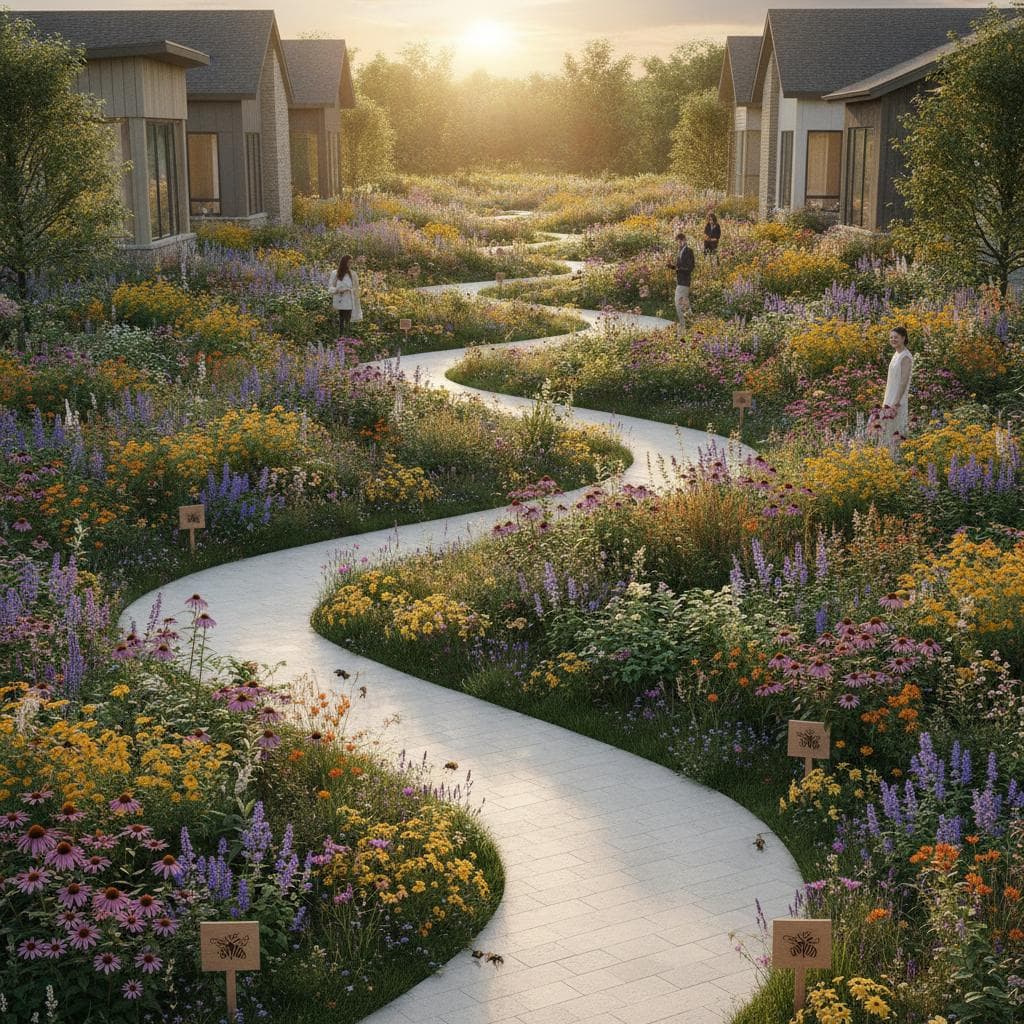
HOA Rules Changing: Lawns to Pollinator Pathways in 2026
Homeowners associations have long prioritized uniform green lawns as a sign of neighborhood quality. Growing awareness of pollinator decline and the environmental impact of turf has prompted many communities to update standards. New rules now favor sustainable designs called pollinator pathways.
This guide covers what the changes mean for homeowners, the reasons behind them, and steps to prepare a compliant yard. Readers will find definitions, sample rule structures, cost details, and a clear conversion process.
What Are Pollinator Pathways?
A pollinator pathway uses native flowering plants, shrubs, and trees to supply food and nesting sites for bees, butterflies, and hummingbirds. These designs replace sections of turfgrass with connected plantings that link yards and green spaces.
The approach restores habitat, cuts water use, and supports biodiversity. Associations adopt it to meet sustainability goals while preserving visual order.
Average Costs to Convert a Lawn to a Pollinator Pathway
Conversion expenses depend on yard size, plant choices, and whether work is completed by the owner or a contractor. Most homeowners spend between 1200 and 5000 dollars for a complete project, while small areas begin at 300 dollars.
| Project Size or Factor | Average Cost Range |
|---|---|
| Small area (under 500 sq ft) | 300 - 1000 |
| Medium area (500-1500 sq ft) | 1200 - 2500 |
| Large yard (over 1500 sq ft) | 2500 - 5000 |
| Professional landscape design | 800 - 2000 |
| DIY seed-based conversion | 150 - 400 |
Costs cover soil work, plants, mulch, and first-season care. Established pathways need less water and mowing, which lowers ongoing expenses.
Factors Affecting the Cost of a Pollinator Pathway
Several elements determine final price. Yard size and layout influence material quantities and labor needs. Slopes or shade may require extra preparation.
Plant selection affects budget because native perennials cost less than mature specimens. Soil testing and amendment improve survival rates and reduce later inputs. Professional design adds upfront cost but prevents repeated purchases.
Maintenance planning and irrigation choices also matter. Drip systems or rain gardens raise initial investment yet simplify care. HOA review fees can appear if plans require formal submission.
The Process of Converting to a Pollinator Pathway
Successful conversion follows a sequence that ensures both ecological value and rule compliance.
- Research current and upcoming HOA guidelines for native plant allowances and approval steps.
- Assess sunlight, soil, drainage, and existing plants to identify suitable conversion zones.
- Select native species that bloom in sequence, such as milkweed, lavender, and coneflower.
- Remove turf through sheet mulching or solarization, then loosen soil and add compost.
- Install plants at proper spacing and apply mulch to retain moisture.
- Water consistently during the first season and remove weeds promptly.
- Reduce inputs after establishment and consider registering the yard with local habitat programs.
DIY vs. Hiring a Professional for Pollinator Pathway Installation
Owners can complete small beds themselves when they have gardening experience. Larger areas or strict HOA review benefit from professional planning that meets visual standards.
| Option | Best For | Key Considerations |
|---|---|---|
| DIY | Small garden beds or partial conversions | Lower cost but requires time and plant knowledge. |
| Professional Installation | Full-yard conversions or HOA-reviewed designs | Higher cost yet reduces errors and speeds approval. |
How to Work with Your HOA on Landscape Changes
Clear communication improves approval chances.
Read the full landscaping section for any height, edging, or uniformity clauses. Prepare a simple site sketch that shows plant groupings and borders. Note water savings and habitat gains that align with community sustainability targets. Include a written maintenance schedule that lists trimming and weeding tasks. Discuss the plan with neighbors to build support for connected corridors.
Frequently Asked Questions
What happens if my HOA bans native plant gardens?
State laws in many areas now protect the right to install water-wise and habitat plantings. Submit a variance request with supporting information on pollinator benefits and request a rules review.
How much does it cost to replace a full lawn with native plants?
Professional installation for a typical suburban lot averages 3000 dollars. Smaller DIY efforts can stay under 1000 dollars depending on soil condition and plant size.
What are the best plants for pollinator pathways?
Reliable choices include black-eyed Susan, purple coneflower, bee balm, milkweed, aster, goldenrod, and little bluestem grass. A seasonal mix supports continuous nectar sources.
Will a pollinator pathway attract pests or unwanted wildlife?
Native plantings draw beneficial insects. Regular trimming and proper spacing limit issues, and pesticides are rarely needed.
Can I keep part of my lawn and still qualify as pollinator-friendly?
Yes. Many yards combine limited turf with flowering beds. The goal is reduced chemical use and added habitat diversity.
Does this type of landscaping increase property value?
Buyers increasingly seek lower-maintenance, sustainable yards. Native gardens can distinguish a property through reduced upkeep costs.
Is it expensive to maintain pollinator gardens long-term?
After the first year, costs decline sharply. Drought-tolerant natives need minimal fertilizer or mowing compared with turf.
Planning Your First Conversion Section
Begin with one manageable area to test plant performance and gain HOA familiarity. Choose hardy natives that provide successive blooms and maintain defined edges for a tidy appearance. Track results through the first season to guide further expansion.