
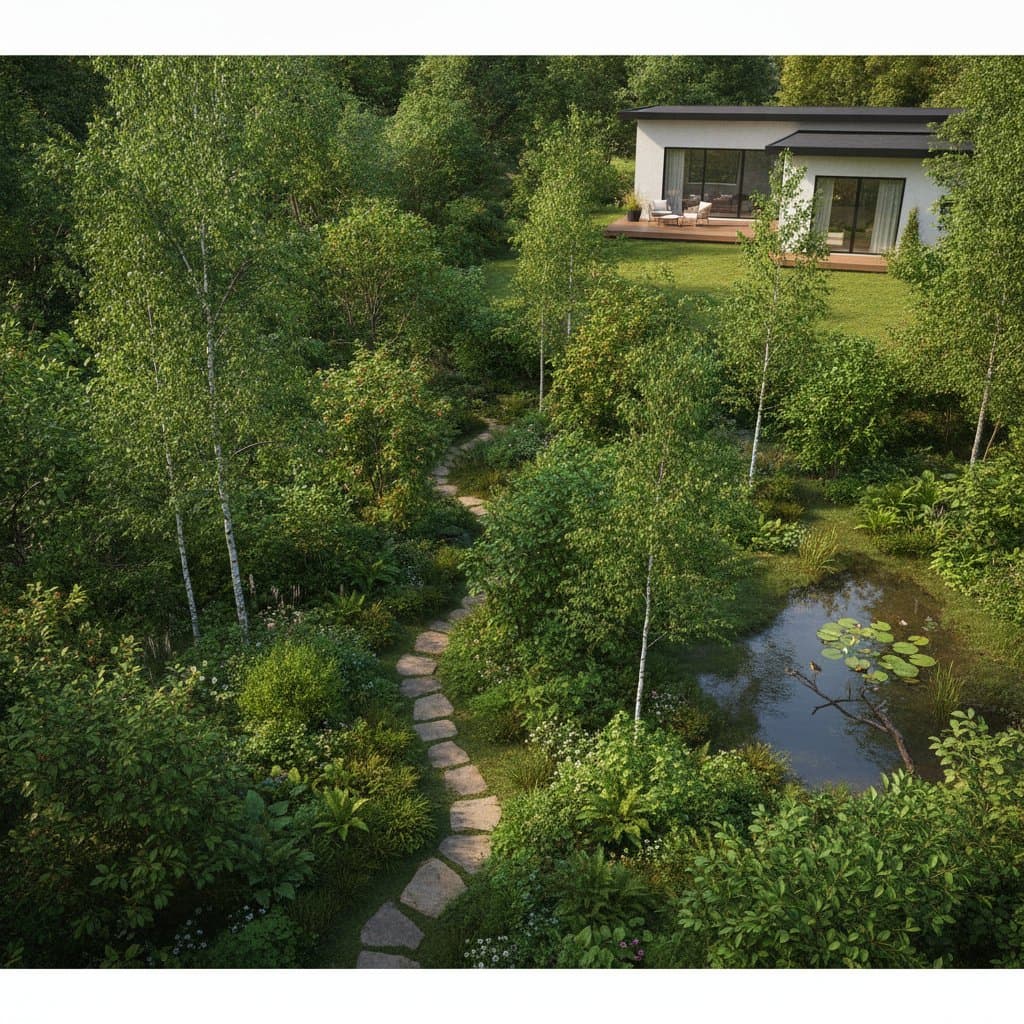
Backyard Micro-Forests Boost Suburban Biodiversity
A backyard micro-forest increases biodiversity, reduces maintenance, and builds a thriving ecosystem. Homeowners plant dense mixes of native trees, shrubs, and groundcovers in limited spaces. This approach replicates natural forest functions and restores suburban environments depleted of native plants.
The Miyawaki method guides many such projects. It supports rapid growth through close planting of native species. Even small areas, from a few hundred square feet upward, deliver shade, cleaner air, and habitat for wildlife.
Core Principles of Micro-Forests
A micro-forest replicates the layered structure of larger woodlands in a compact form. Native species interact to create self-sustaining conditions that mature faster than conventional plantings. This method replaces high-maintenance lawns with resilient habitats.
Site assessment comes first. Soil tests reveal nutrient levels and pH balance. Selection of indigenous plants follows to match local conditions and support regional wildlife.
Planning Elements for Success
Homeowners evaluate several conditions before planting.
- Sun exposure and drainage patterns determine suitable species.
- Soil preparation involves loosening and adding organic matter.
- Dense spacing of three to five plants per square meter promotes quick canopy formation.
- Mulch application conserves moisture during establishment.
- Early weeding prevents competition from invasives.
These steps lead to faster maturity and greater resilience.
Advantages for Homeowners and Nature
Micro-forests deliver measurable gains.
- Native plantings draw pollinators and birds while providing shelter.
- Root networks improve soil structure and microbial activity.
- Tree cover moderates temperatures and captures carbon.
- Leaf litter and roots reduce stormwater runoff.
- Reduced mowing and watering lower long-term costs.
- Seasonal changes create visual interest and a sense of connection to nature.
The shift encourages viewing yards as extensions of local ecosystems.
Steps to Establish a Micro-Forest
Follow this sequence for reliable results.
- Map sunlight, drainage, and existing features.
- Amend soil with compost to support root growth.
- Design four vegetation layers: canopy, subcanopy, shrubs, and groundcovers.
- Source native plants suited to the region.
- Install plants at high density to encourage competition.
- Spread mulch to protect soil and retain water.
- Irrigate regularly for the first two seasons.
- Remove weeds as needed until the canopy closes.
Establishment typically occurs within three to five years.
Options for Implementation
Small projects suit DIY efforts. Larger sites or challenging conditions benefit from expert input. Professionals provide soil analysis and proper species matching.
DIY offers cost savings and direct involvement. Professional services ensure optimal layout and plant quality. Properties with poor drainage or compaction warrant consultation to avoid setbacks.
Selecting an Experienced Specialist
Verify credentials such as arborist certification. Confirm familiarity with regional ecology. Request detailed quotes and references from prior clients. Confirm adherence to safety standards during installation.
Common Questions on Micro-Forests
Minimum viable size
Plots as small as 100 square feet support basic functions. Larger areas increase species diversity.
Timeline to maturity
Growth appears in the first year. Full canopy development requires three to five seasons.
Wildlife interactions
Beneficial species predominate. Careful plant choice limits nuisance animals.
Planting over existing turf
Remove sod, aerate soil, and apply compost. Mulch suppresses grass regrowth.
Long-term water needs
Irrigation ends after establishment except during extreme drought.
Recommended species
Region-specific natives such as oaks and dogwoods perform well. Consult local sources for pollinator support.
Integration with other features
Micro-forests complement rain gardens and meadows effectively.
Building Sustainable Yards
Homeowners gain lasting ecological and personal rewards through these plantings. The approach fosters resilience and reduces resource demands over time.