
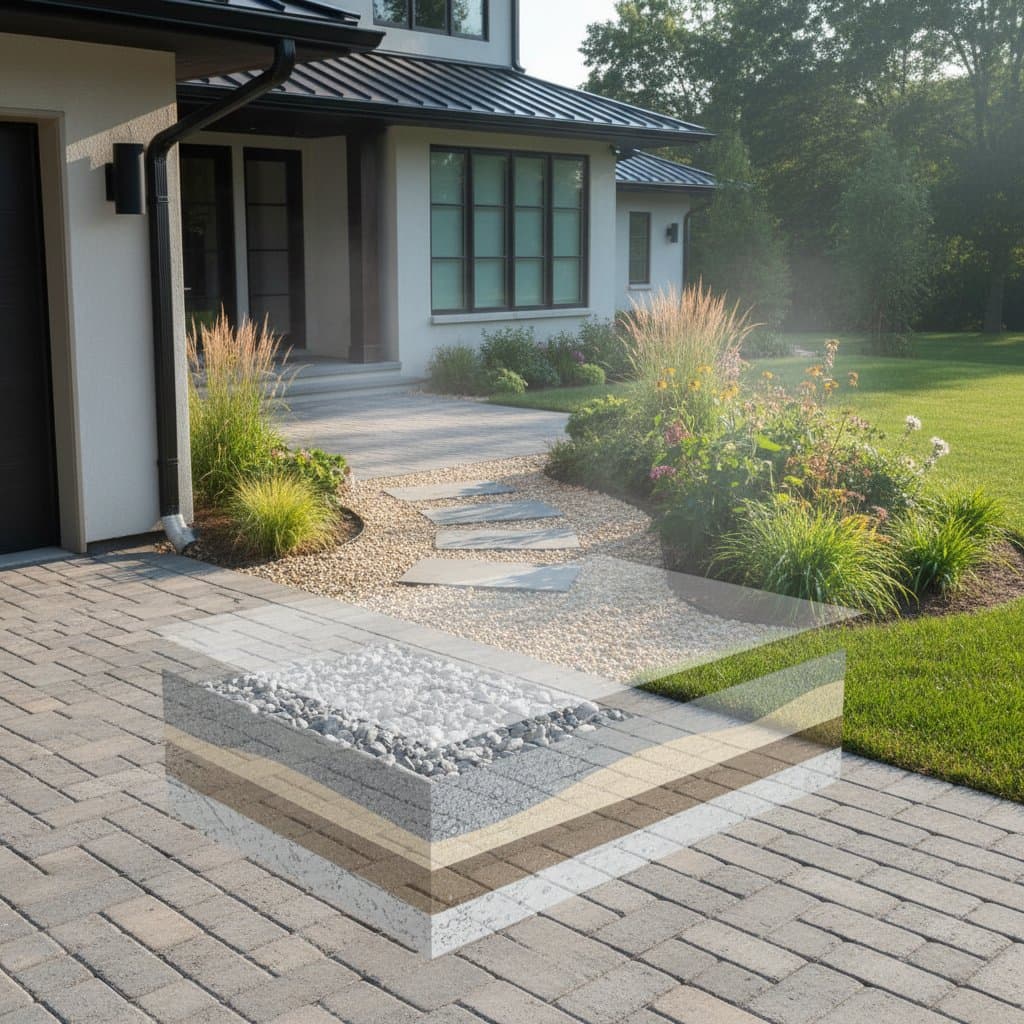
Permeable Hardscapes Reduce Flood Risk by Up to 65 Percent
Intense downpours and sudden floods transform meticulously planned yards into waterlogged zones, eroding soil and endangering structures. Permeable hardscapes offer a reliable solution. These innovative surfaces permit water to infiltrate rather than pool and rush away, potentially decreasing flood risk by as much as 65 percent. The result includes more secure and environmentally conscious outdoor areas. This guide details the mechanics of permeable hardscapes, associated expenses, and strategies for installation and upkeep to achieve enduring effectiveness.
Understanding Permeable Hardscape Costs
National Average Pricing
The expense for installing a permeable hardscape generally falls between 10 and 25 dollars per square foot, influenced by selected materials and project intricacies. This figure encompasses site excavation, foundational layers, and expert labor. While the initial outlay exceeds that of conventional concrete or asphalt, substantial savings emerge over time through minimized needs for drainage fixes and flood damage restoration.
Pricing Variations by Scale and Category
Projects on a modest scale, like pathways through gardens or connecting walkways, typically range from 1,500 to 3,000 dollars. Expansive applications, such as driveways or expansive patios, might span 5,000 to 15,000 dollars or beyond. Choices in materials significantly impact the budget; permeable pavers command premium prices yet deliver superior aesthetics and resilience, whereas gravel setups prove more economical but demand frequent attention.
Primary Influences on Expenses
Several elements determine the total investment:
- Material selections, including pavers, gravel, or porous concrete variants
- Preparatory work, such as precise grading, digging, and soil fortification
- Regional labor rates and the expertise level of hired contractors
- Customized drainage configurations to optimize water entry and manage excess flow
- Ongoing maintenance obligations that shape future expenditures
Exploring Types of Permeable Hardscapes
Permeable Pavers
These pavers mimic the appearance of standard bricks or natural stones, featuring broader spacing or integrated voids that facilitate water passage. They deliver a refined, contemporary aesthetic alongside proficient stormwater management.
Advantages:
- Superior capacity for water drainage
- Extended service life when maintained appropriately
- Diverse options in hues and patterns
Disadvantages:
- Elevated upfront expenditure
- Necessitates skilled installation to maximize performance
Porous Concrete
This concrete variant incorporates reduced fine aggregates, creating minute openings that capture rainfall. It suits driveways or parking zones where visual appeal takes a secondary role to functionality.
Advantages:
- Robust and long-wearing composition
- High tolerance for weight and traffic
- Effective minimization of surface runoff
Disadvantages:
- Prone to obstruction without routine care
- Restricted choices in stylistic elements
Gravel Systems
Gravel represents a straightforward and budget-conscious permeable option. Positioned atop a reinforced foundation, it enables rapid water absorption into the subsoil.
Advantages:
- Minimal financial and installation demands
- Organic visual integration with surroundings
- Reliable water percolation
Disadvantages:
- Susceptible to material displacement or erosion
- Calls for periodic addition of fresh gravel
Permeable Asphalt
Resembling traditional asphalt, this version employs coarser aggregates to enhance porosity. Contractors favor it for driveways and low-traffic roadways.
Advantages:
- Conventional look that blends seamlessly
- Even, vehicle-friendly texture
- Strong water retention properties
Disadvantages:
- Comparatively shorter operational duration versus pavers
- Requires scheduled vacuuming to avoid pore blockage
Weighing DIY Installation Against Professional Services
Homeowners might handle a compact gravel installation independently, provided they possess fundamental skills. Larger expanses or intricate water management systems, however, warrant professional involvement. Novices frequently overlook the critical role of the underlying base, resulting in inadequate percolation or structural compromise.
Experts guarantee appropriate base thickness, thorough compaction, and optimal gradients for sustained reliability. They navigate regulatory approvals and harmonize the setup with current yard features. Individuals equipped with essential implements and prior know-how can manage minor undertakings, yet expansive driveways and patios thrive under specialized oversight.
Step-by-Step Guide to Installing Permeable Hardscapes
- Plan and Design the Layout
Identify the precise site and dimensions. Evaluate natural water patterns on the property and pinpoint zones susceptible to standing water. Sketch a design that aligns with landscape goals and local regulations.
- Prepare the Site Thoroughly
Dig to a depth of 8 to 12 inches, tailored to soil type and load requirements. Clear away roots, rocks, and organic matter to create a clean foundation.
- Construct the Base Layer
Introduce layers of angular crushed stone or gravel, each 4 inches thick, to promote water movement. Compact firmly with a plate compactor after every addition to ensure solidity.
- Apply the Permeable Surface Material
Position pavers in a staggered pattern, pour the porous concrete mix, or distribute gravel uniformly. Maintain consistent spacing in joints or voids to support unimpeded flow.
- Secure Edges and Complete Finishing Touches
Install durable borders using metal, plastic, or stone to contain the materials. For paver systems, brush polymeric sand into gaps without fully sealing them.
- Verify Drainage Functionality
Simulate rainfall with a garden hose and observe infiltration rates. Adjust slopes or clear obstructions if water lingers longer than a few minutes.
Strategies for Ensuring Longevity
Regular upkeep preserves the system's efficiency. Schedule sweeps or rinses monthly to dislodge leaves and sediment from pores. Refrain from applying sealants, as they impede natural absorption. Following storms, examine for sediment buildup and address promptly. For gravel installations, top up displaced stones annually. Engage professionals for yearly inspections of pavers or porous surfaces to sustain peak condition.
Common Questions About Permeable Hardscapes
In What Ways Do Permeable Hardscapes Mitigate Flooding?
These surfaces channel rainwater directly into the soil, bypassing rapid runoff toward sewers. This process diminishes pooling on impervious areas and lowers overall flood potential across the site.
Does Installation of Permeable Pavers Require a Specialized Foundation?
Indeed, a multi-tiered foundation of washed, angular aggregates is essential. Proper compaction prevents settling while allowing water to filter downward effectively.
Can These Surfaces Withstand Heavy Vehicular Traffic?
Correctly engineered permeable pavers and porous concrete accommodate standard automobiles and vans. For substantial loads like delivery trucks, select high-strength variants certified for commercial use.
Do Local Regulations Mandate Permits for Such Installations?
Requirements differ by jurisdiction; many areas exempt small-scale permeable projects from permits. Consult municipal offices regarding stormwater rules and setback distances prior to starting.
What Is the Expected Lifespan of Permeable Hardscapes?
Pavers endure 20 to 30 years or longer with diligent care. Porous concrete and asphalt typically require renewal after 10 to 15 years, though they remain cost-effective over time.
Safeguard and Enhance Your Outdoor Spaces
Adopting permeable hardscapes not only fortifies your property against water threats but also promotes ecological balance. These solutions recharge groundwater, support native plants, and reduce urban heat. By investing in this technology, homeowners secure resilient landscapes that withstand weather extremes while adding lasting value to their homes.