
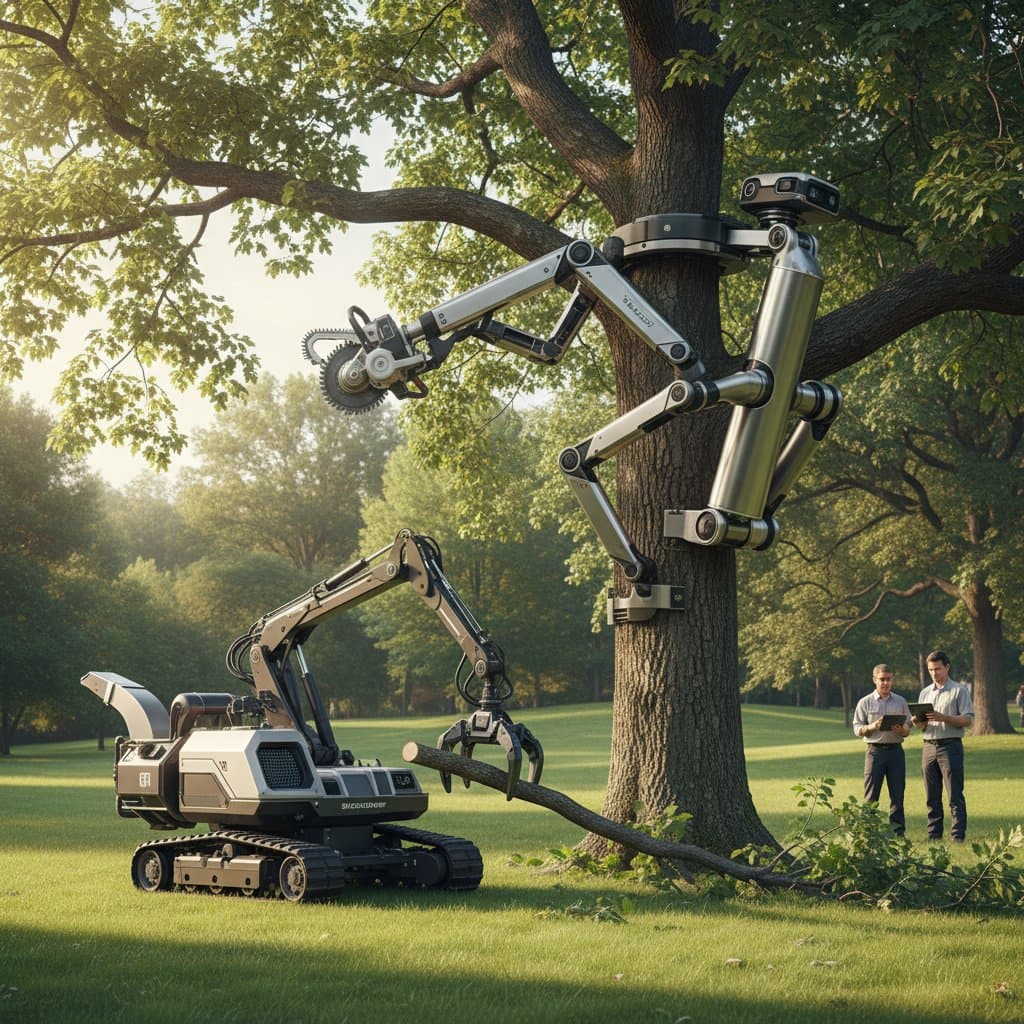
Tree Services Reduce Labor Costs by 60 Percent Using Robotic Climbers
Homeowners and property managers observe a significant transformation in tree care practices. Robotic climbers change the approach to trimming, pruning, and removing trees. These automated systems lower labor costs by up to 60 percent, enhance safety, and increase efficiency. Individuals responsible for extensive landscapes or urban trees benefit from knowledge of robotic climber operations and advantages when planning maintenance and budgets.
This guide details robotic tree climbers, their cost reductions, available types, and situations that require professional services. It provides steps for selecting service providers and strategies for sustaining tree health over time.
Tree Service Costs
National Average Costs
Tree trimming or removal expenses vary based on tree size, access challenges, and project complexity. Traditional methods lead to higher costs through climbing demands, safety equipment, and cleanup efforts. Robotic climbers substantially decrease these expenditures. Homeowners experience average savings of up to 60 percent on robotic-assisted projects versus manual crews, as automation enables fewer personnel to manage more trees in shorter periods.
Costs by Project Size or Type
- Small trees or light pruning: Conventional services charge moderate fees, yet robotic options often cost half as much due to reduced setup and climbing time.
- Medium to large trees: Savings prove greater for extensive tasks. A complete removal that demands several climbers now relies on one ground-based operator directing a robotic unit.
- Emergency removals: Robotic tools reach compromised or dangerous trees swiftly, minimizing time and risk surcharges typical in storm recovery.
Key Cost Factors
Multiple factors determine robotic tree service pricing:
- Tree height and structure: Elevated or intricate branches extend duration, although robotic units ascend efficiently irrespective of elevation.
- Accessibility: Restricted yard entry might necessitate some manual support, modestly raising expenses.
- Debris removal: Cutting proceeds rapidly, but transportation and disposal align with conventional processes.
- Equipment and operator fees: Units demand skilled technicians, yet their productivity offsets equipment expenses.
- Regional pricing: City environments feature elevated rental rates, but percentage reductions stay uniform.
Types of Robotic Tree Climbers
Cable-Assisted Climbers
These systems employ tensioned cables and pulleys to navigate trunks and branches. Integrated cameras and sensors guide their path.
Advantages:
- Suited for tall, linear trunks
- Provide stability under substantial weight
- Consume less power
Disadvantages:
- Progress slowly through thick or uneven canopies
- Demand time for cable installation
Wheel-Based Climbers
These robots utilize rotating treads or wheels to grasp bark. They adapt to changing trunk widths during ascent.
Advantages:
- Achieve quick speeds and conform to diverse tree forms
- Involve little preparation
- Excel in pruning or minor trimming
Disadvantages:
- Restrict use to trunks of moderate girth
- Face difficulties on exceptionally slick bark
Modular Robotic Climbers
Advanced designs integrate wheels, tracks, and clamping arms for movement. They shift smoothly from trunks to limbs without interruption.
Advantages:
- Offer broad applicability for trimming, pruning, and evaluation
- Support remote control via cameras and sensors
- Eliminate requirements for several devices per task
Disadvantages:
- Incur greater upfront costs
- Necessitate specialized operator instruction
Drone-Assisted Climbing Systems
Certain firms test drones that transport compact cutting tools to upper branches, further simplifying ground preparations.
Advantages:
- Grant rapid entry to remote areas
- Suit inspections and minor interventions
- Exert negligible disturbance on nearby terrain
Disadvantages:
- Possess constrained cutting capacity
- Endure brief operational durations due to battery limits
DIY Approaches Versus Professional Services
Robotic tree climbers remain tools for experts, not general consumers. Effective use demands targeted training, safety measures, and upkeep expertise. Renting such equipment for personal projects risks personal injury or harm to vegetation through improper handling.
Engaging a professional robotic tree service yields clear benefits:
- Safety: Operators manage all actions from the ground, avoiding climbs or unstable ladders.
- Efficiency: Units ascend rapidly and execute precise cuts, completing work in less time than manual teams.
- Quality: Experts apply techniques that promote both aesthetic appeal and tree vitality through proper shaping.
- Insurance and liability: Certified firms maintain coverage for assets and personnel.
Property owners opt for professionals when trees exceed one story in height, proximity to electrical lines exists, or indications of illness or instability appear. Manual methods suffice for minor pruning, but elevated or hazardous scenarios warrant expert intervention.
Steps to Schedule a Robotic Tree Service
- Evaluate requirements. Inspect the property to pinpoint trees needing trimming, thinning, or extraction. Document potential dangers like tilted trunks or fractured branches.
- Obtain several estimates. Reach out to at least three providers specializing in robotic or automated care. Request detailed breakdowns covering cutting, removal, and disposal.
- Confirm equipment and expertise. Ensure the firm possesses or collaborates with validated robotic tools and that staff complete required safety training.
- Review coverage and feedback. Demand evidence of liability and workers compensation policies. Examine customer evaluations for dependability and courtesy standards.
- Time the appointment wisely. Arrange during favorable weather to secure firm footing and simplify debris management.
- Ready the area. Relocate automobiles, outdoor items, and delicate vegetation from the operational space. Indicate buried utilities if excavation or stump removal occurs.
- Oversee progress. Remain present throughout to grant access to electricity or address queries on particular trees.
- Examine outcomes. After completion, assess the results to verify thorough debris clearance and balanced, vigorous tree appearances.
Strategies for Sustaining Tree Health and Achieving Savings
- Plan routine pruning. Yearly upkeep maintains tree sizes and averts costly later extractions.
- Identify disease indicators early. Changes in color, sap leakage, or lifeless limbs signal issues prior to widespread effects.
- Prevent excessive pruning. Limit foliage removal to under one-third of the total to avoid plant stress.
- Apply mulch correctly. Position a 2- to 3-inch layer at the base to conserve water and shield roots without blocking airflow.
- Select adapted species. Regional natives demand minimal care and withstand area-specific threats effectively.
Frequently Asked Questions
How much do robotic tree climbers save?
These systems lower service expenses by approximately 50 percent or greater, varying with task intricacy. Reductions stem from accelerated timelines, diminished staffing, and lessened safety gear demands.
Do robotic tree services benefit trees?
Affirmative. Precision instruments and detection features in robotic setups reduce bark injury and avoid excess incisions. Often, they impose milder impacts than spikes from human ascents.
Can robots manage complete tree removals?
Contemporary climbers address full extractions by segmenting trunks from summit to base securely. Substantial jobs might incorporate cranes or ground teams for transport, but ascent and severance proceed automatically.
Are permits required for robotic tree work?
Local rules dictate needs, particularly for safeguarded trees or those adjacent to communal areas. Service providers should verify permit obligations prior to starting.
How do robotic tree climbers navigate irregular or tilted trees?
Sophisticated versions incorporate balance sensors and flexible holds to stabilize on sloped surfaces. They traverse uneven terrains more securely than human workers in numerous cases.
What occurs during a robotic malfunction?
Trained operators maintain reserve tools and manual controls. Should failure arise, the unit descends without incident, allowing repairs that spare the tree and surroundings.
Advance Your Tree Care with Robotics
Robotic climbers expand capabilities in contemporary arboriculture. They conserve funds, mitigate hazards, and produce reliable outcomes that preserve landscape excellence. Selecting a trusted provider with this technology ensures robust trees and reduced upkeep expenses annually.
For properties requiring attention through trimming, pruning, or removal, solicit bids from automated service specialists promptly. Evaluate their approaches, tools, and protocols, then partner with those blending robotic innovation and established arborist knowledge. Such choices safeguard finances and enhance property aesthetics enduringly.