
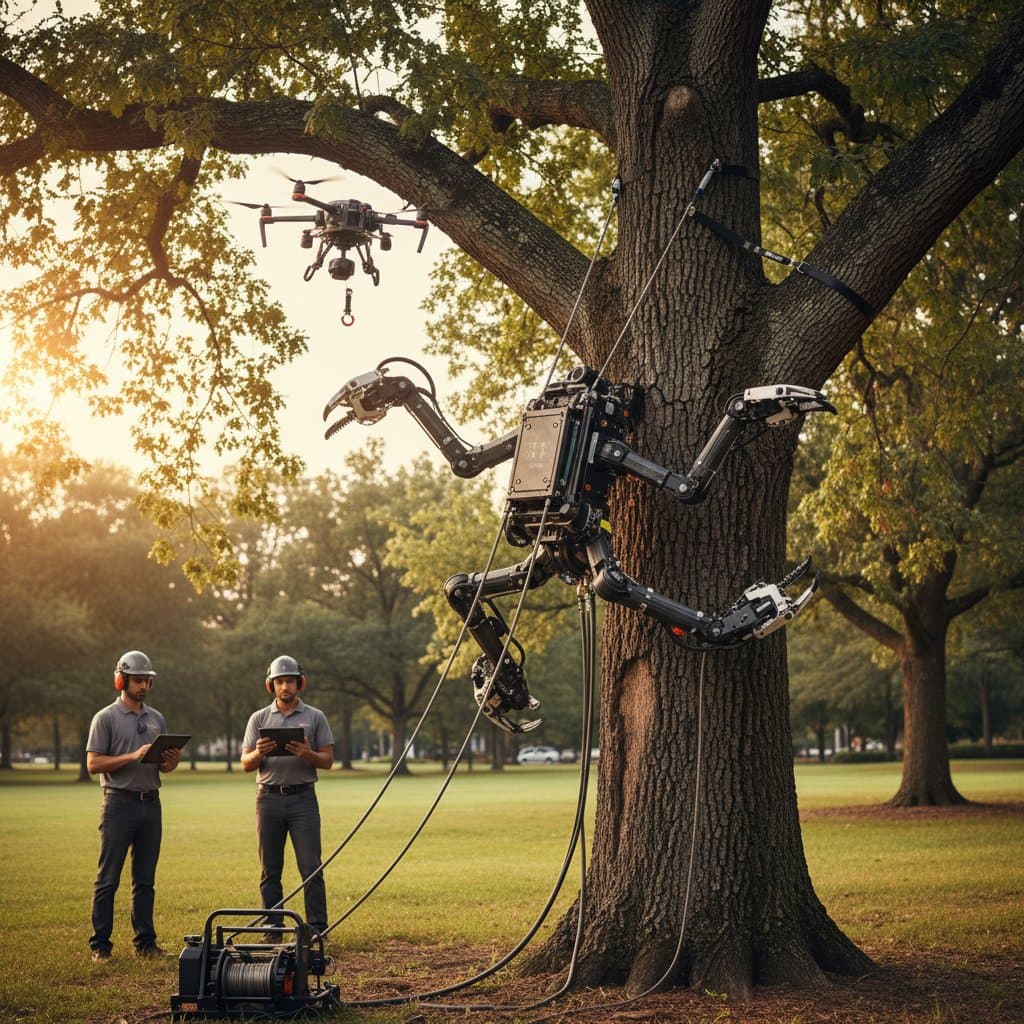
How Robotic Climbers Are Halving Tree Service Costs
Tree maintenance ranks among the most demanding and costly aspects of property upkeep. Tasks such as climbing, pruning, and removing mature trees demand experienced arborists, robust gear, and rigorous safety measures, all of which elevate expenses. Robotic climbers now reshape this landscape by slashing costs by approximately 50 percent, while elevating safety standards and streamlining workflows.
This article details the mechanics of robotic tree climbers, the sources of their economic benefits, and strategies to evaluate their suitability for specific property requirements.
Understanding Tree Service Expenses and the Robotic Shift
Typical Cost Savings
Conventional tree services incur steep fees from hands-on labor, elevated climbing hazards, and comprehensive insurance coverage. Robotic climbers substantially lower these burdens. Service providers frequently document reductions of up to 50 percent in overall project expenses. Such economies arise from shortened labor durations, smaller team sizes, and diminished risk-related expenditures.
Savings Across Project Categories
- Pruning Operations: Robotic climbers finish trimming assignments in about half the duration required by manual teams, thereby reducing hourly wage outlays.
- Tree Extraction: In cases of lofty or perilous trees, robots obviate the necessity for elaborate rigging systems and elevated platforms.
- Ongoing Upkeep: Automated devices facilitate regular servicing intervals with reduced preparation efforts, which decreases charges per session.
Influential Cost Elements
Several variables influence pricing in tree care projects:
- Dimensions and elevation of the tree
- Intricacy of limb arrangements and foliage thickness
- Local wage standards for labor
- Accessibility of specialized machinery
- Duration for transit and installation
- Regulatory approvals and waste handling charges
Categories of Robotic Tree Climbers
Cable-Supported Models
These devices employ taut cables and winch mechanisms to navigate tree trunks vertically. They excel in managing substantial trees and intensive cutting tasks.
Advantages:
- Capable of supporting substantial implements and limb weights
- Provides superior steadiness on broad trunks
Disadvantages:
- Demands time for cable installation
- Performs less effectively on diminutive or asymmetrical trees
Traction-Based or Clamping Climbers
Compact units of this type utilize clamping limbs or traction wheels to ascend trunks independently. Their agility makes them suitable for domestic landscapes.
Advantages:
- Enables rapid initiation of operations
- Features reduced weight and ease of transport
- Adapts to diverse tree configurations
Disadvantages:
- Restricted in load-bearing strength
- Operates on shorter power reserves
Hybrid Drone-Robotic Systems
Certain configurations integrate aerial drones with terrestrial robots. Drones offer navigational and severance assistance, as the primary unit maintains equilibrium and manages refuse.
Advantages:
- Delivers exact incisions with limited collateral harm
- Ideal for inaccessible tree positions
Disadvantages:
- Involves elevated upfront capital
- Necessitates proficient handling personnel
Evaluating Self-Managed Versus Expert Services
Robotic climbers impress with their capabilities, yet they remain industrial-grade tools rather than items for casual use. Operation involves technical programming, precise adjustments, and vigilant safety protocols. While rental options exist for property owners, the steep expertise barrier and inherent dangers render such approaches unfeasible for the majority.
Engaging a specialist firm equipped with robotic climbers yields optimal performance. These teams merge human knowledge with mechanical precision to achieve expedited, secure, and uniform results. For elevated or afflicted trees, expert supervision guarantees adherence to protective guidelines and botanical best practices.
Operational Process for Robotic Tree Services
The workflow for robotic interventions follows a structured sequence:
- Site Evaluation: Specialists examine the tree's condition, framework, and entry routes.
- Robot Placement: The climber secures to the trunk and initiates upward movement via clamps or cables.
- Severance and Shaping: Mechanized appendages or affixed blades execute accurate divisions, directed by sensory inputs or operator commands.
- Debris Retrieval and Descent: The apparatus methodically descends limbs to ground level for subsequent clearing.
- Verification and Validation: The operator reviews the outcome to confirm the tree's vitality and equilibrium.
Strategies for Effective Robotic Tree Upkeep
To maximize benefits from robotic applications, consider these approaches:
- Arrange periodic assessments to avert excessive proliferation.
- Select providers employing accredited arborists versed in robotics and plant physiology.
- Solicit photographic documentation of pre- and post-service states for verification.
- Inquire regarding guarantees on mechanical reliability and service consistency.
- Integrate robotic procedures with conventional methods to foster sustained tree wellness.
Common Inquiries About Robotic Tree Climbers
Do Robotic Tree Climbers Ensure Safety?
Yes, these systems markedly enhance safety profiles. By minimizing human exposure to heights and unstable branches, robots reduce accident risks. Integrated sensors detect instabilities, and remote operation allows supervisors to intervene without direct peril. Professional services further bolster safety through compliance with industry regulations and routine equipment checks.
What Is the Initial Cost of Robotic Services?
Entry-level robotic trimming starts around standard manual rates but yields long-term savings through efficiency. Full removal projects for large trees may range higher initially due to technology deployment, yet overall reductions of 40 to 50 percent materialize from labor efficiencies. Consult providers for customized quotes based on site specifics.
Can Robotic Climbers Handle All Tree Types?
Most models accommodate common species, but adaptations vary by design. Cable systems suit straight-trunked hardwoods, while gripping variants manage contorted shapes. For exotic or fragile trees, hybrid drone options provide gentle handling. Arborists assess compatibility during initial consultations to avoid unsuitable applications.
How Long Does a Robotic Service Take?
Timelines depend on tree scale and task complexity, but robots typically complete jobs 30 to 50 percent faster than manual methods. A standard pruning session might span two to four hours, compared to a full day for crews. Factors like access and weather influence durations, with professionals providing estimates upfront.
Embracing Automation for Sustainable Tree Management
Adopting robotic climbers positions property owners and managers for cost-effective, secure tree care. These innovations not only trim expenses but also preserve landscapes with precision and minimal disruption. As technology advances, integrating robotics with expert guidance promises enduring benefits for urban and rural settings alike.