
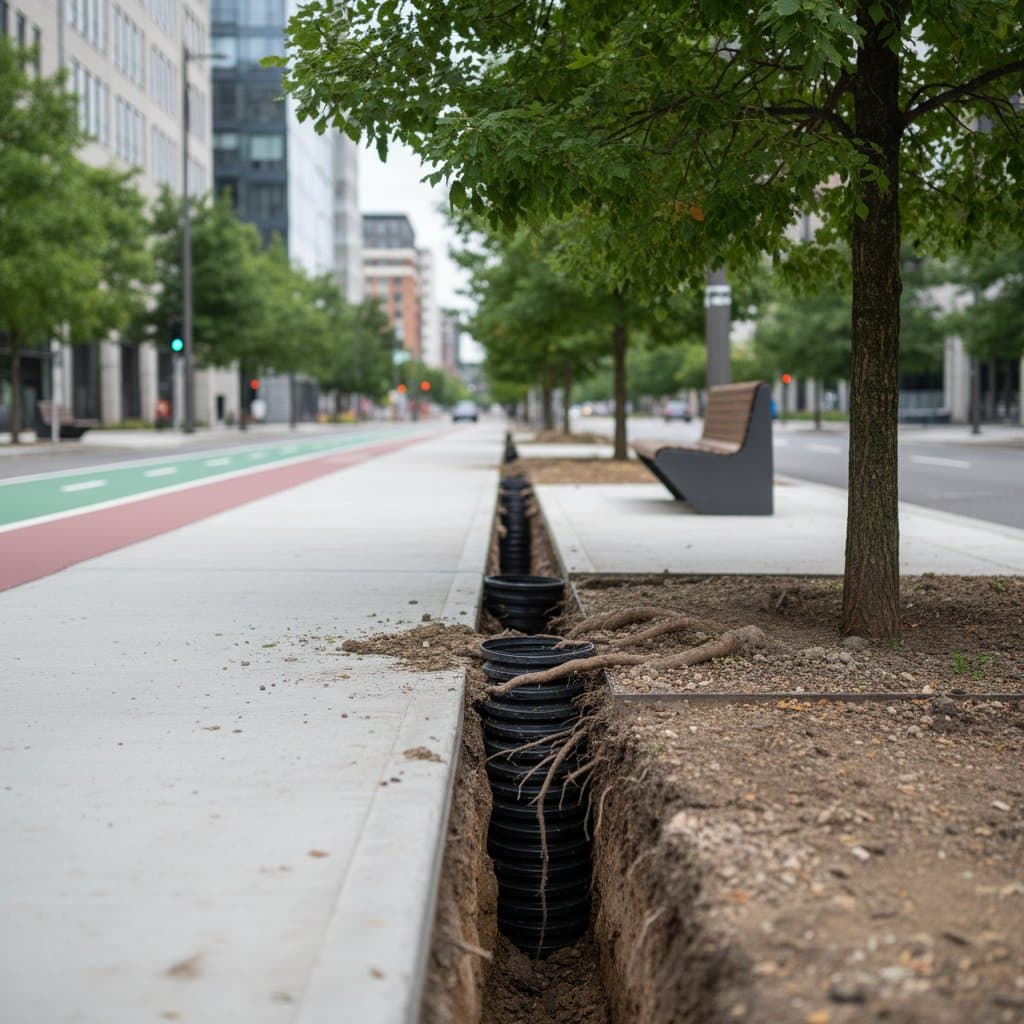
Root Barriers End Costly Sidewalk Damage Lawsuits
Tree roots often cause cracked sidewalks, lifted pavement, and expensive property disputes. Installing a root barrier redirects root growth away from hard surfaces, preventing these problems. Homeowners and municipalities benefit from this approach, as it safeguards trees and infrastructure while minimizing legal risks associated with sidewalk damage.
Healthy trees enhance shade, beauty, and property value, yet unmanaged roots pose significant hazards. As roots expand under sidewalks or driveways, they lift concrete slabs and create tripping risks. Property owners face liability for accidents resulting from such damage. A well-installed root barrier resolves these concerns by promoting tree health alongside public safety and legal safeguards.
Why Tree Roots Damage Sidewalks
Tree roots expand outward to access water, nutrients, and oxygen. In dense urban soil, they frequently follow paths just below sidewalks or paved areas. As roots thicken over years, they exert upward pressure that cracks or elevates concrete slabs by several inches.
Some tree species pose greater risks due to their root habits. Fast-growing types, such as silver maple, sweetgum, and willow, develop extensive surface roots. Mature oaks and elms extend roots well beyond their canopy, threatening nearby pavement. Factors like soil composition, moisture availability, and planting proximity influence root behavior, but without intervention, damage remains inevitable.
What Is a Root Barrier and How Does It Work?
A root barrier consists of a vertical structure in the soil that blocks roots from encroaching on restricted zones. Contemporary barriers use robust plastic or composite materials resistant to punctures and degradation. Certain designs incorporate coatings or fabrics to steer roots downward rather than laterally.
Proper installation alters root direction without compromising tree vitality. The barrier creates a wall, typically 18 to 36 inches deep, positioned between the tree and vulnerable areas like sidewalks, foundations, or utilities. Roots then penetrate deeper soil layers, enhancing tree anchorage and limiting surface interference.
Common Types of Root Barriers
- Solid Plastic Panels: Constructed from high-density polyethylene, these offer seamless, enduring protection suitable for sidewalks and driveways.
- Permeable Barriers: Fabric or mesh variants permit water and air flow while guiding roots, ideal for areas with drainage challenges.
- Chemical Barriers: These integrate growth-inhibiting agents to curb root expansion in targeted zones, necessitating expert application.
Selection depends on local soil, tree variety, and structural closeness.
Key Benefits of Installing Root Barriers
Root barriers deliver multifaceted advantages that surpass mere sidewalk preservation.
- Protects Infrastructure: Shields sidewalks, driveways, and foundations from root-induced upheaval.
- Reduces Liability: Lowers chances of slip-and-fall incidents and ensuing litigation.
- Supports Tree Health: Fosters deeper roots for better stability and resilience against drought.
- Saves Money Over Time: Avoids recurring repair expenses for damaged concrete.
- Protects Neighboring Property: Stops roots from invading adjacent lots and utilities.
Municipalities use root barriers to oversee street trees effectively. Homeowners gain assurance and sustain property appeal through this measure.
The Root Barrier Installation Process
Effective root barrier placement demands expertise in tree physiology and soil dynamics. Though minor tasks suit skilled homeowners, professional arborists ensure optimal outcomes for most scenarios.
Step 1: Site Assessment
Experts evaluate the tree's dimensions, maturity, and root extent. They measure distances to sidewalks, analyze soil properties, and note prior damage. This informs barrier positioning and depth.
Step 2: Excavation
A trench forms between the tree and protected feature, reaching 18 to 36 inches deep to align with the root zone. Workers avoid severing critical support roots that maintain tree integrity.
Step 3: Barrier Placement
Materials insert vertically into the trench, with panels overlapped or sealed to eliminate root pathways. The upper edge extends slightly above ground level to block overhead growth.
Step 4: Backfilling and Finishing
Soil refills the trench, compacted to secure the setup. The site restores to its prior state, followed by tree monitoring for vitality indicators.
Step 5: Inspection and Maintenance
Post-installation checks verify barrier efficacy and root redirection. Ongoing care might involve pruning or soil amendments to bolster growth.
DIY vs. Professional Installation
Root barrier projects appear simple but carry hazards when mishandled. Excessive root severance risks tree toppling in high winds. Shallow or distant placement diminishes effectiveness.
Professional arborists mitigate these issues through specialized knowledge. They discern safe pruning limits and optimal depths, tailoring materials to site specifics. Reserve DIY for minor plantings; engage experts for established trees near key structures.
Cost Considerations
Root barrier expenses vary from several hundred dollars for compact trees to thousands for expansive installations. Variables include tree scale, barrier span, soil characteristics, and site access. A 20-foot sidewalk barrier, for instance, may total $800 to $1,500 with materials and labor.
These costs pale against ongoing repairs or legal fees. Tree removal and replanting surpass thousands, while injury claims escalate further. Root barriers prove cost-effective for risk aversion and tree retention.
How to Choose a Qualified Tree Specialist
Partnering with a skilled professional secures durable results. Seek certified arborists versed in urban forestry and barrier systems. Verify insurance coverage and client testimonials. Reputable providers furnish detailed quotes outlining approaches and components.
Essential inquiries include:
- Which barrier material suits this soil profile?
- What depth will ensure containment?
- Must significant roots undergo pruning?
- What is the projected barrier lifespan?
- What post-installation tree care do you advise?
Clear dialogue fosters safe, proficient execution.
FAQ
Can a root barrier harm my tree?
Correct installation redirects roots without detriment, enabling sustained growth while safeguarding structures.
How long do root barriers last?
Premium plastic or composite units endure decades, influenced by soil, installation, and material quality.
Do I need a permit to install a root barrier?
Local rules may mandate approvals for public or street-adjacent work; consult authorities prior to proceeding.
Safeguarding Landscapes for the Long Term
Root barriers integrate tree preservation with infrastructure resilience. By addressing root encroachment early, property stewards avert disruptions and foster enduring urban green spaces. This strategy aligns environmental benefits with practical protection, benefiting communities for generations.