
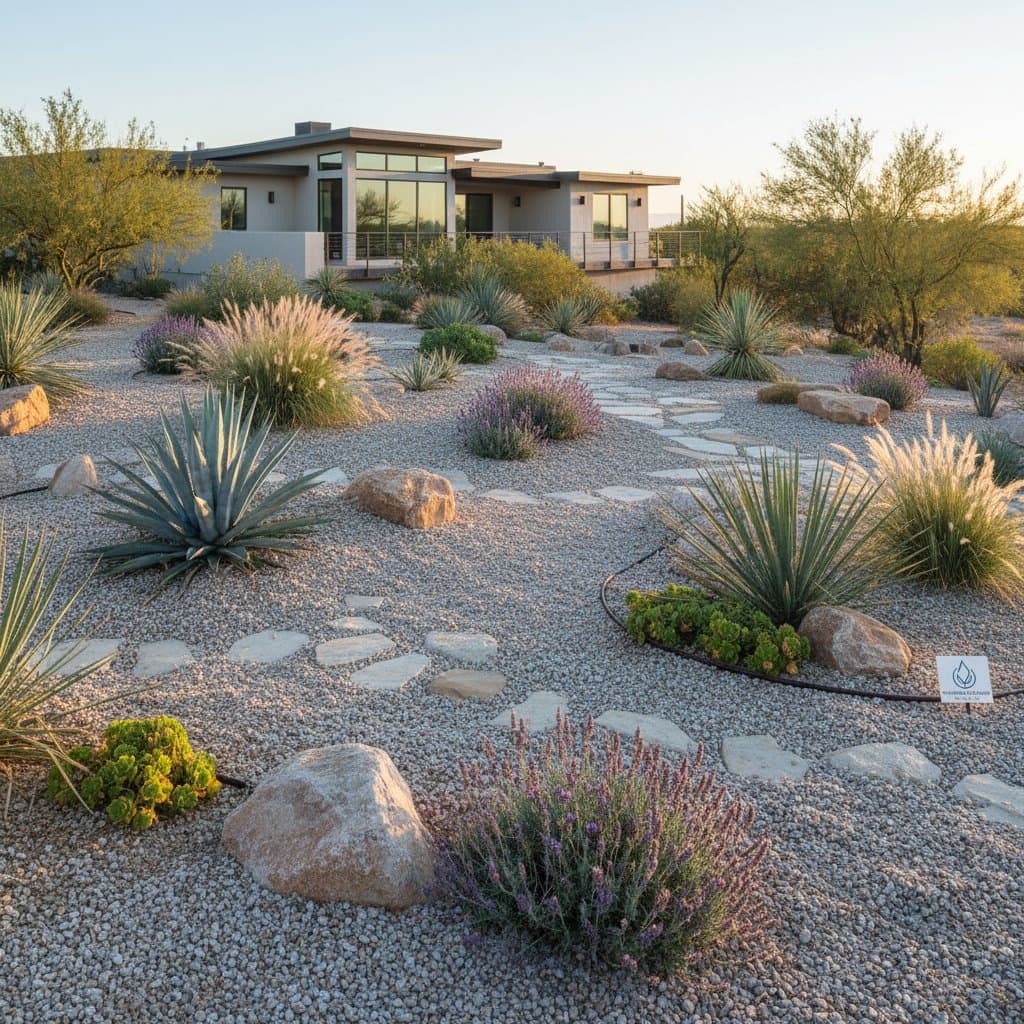
Gravel Gardens: The Sustainable Alternative to Mulch for Cost and Water Savings
Traditional gardens with lush lawns and mulch often demand substantial water and ongoing care. As water prices increase and dry spells become more common, property owners seek efficient alternatives. Gravel gardens deliver a resilient, elegant design that replaces water-intensive features with durable, low-effort elements while preserving visual appeal.
This resource defines gravel gardens, outlines their expenses, describes gravel varieties, and provides design and maintenance guidance. Readers gain insight into gravel's advantages over mulch and practical steps to develop a landscape that flourishes with limited irrigation.
Gravel Garden Expenses
National Average Expenses
Installation expenses for a gravel garden vary from moderate to elevated based on design intricacy and material choices. Basic setups with gravel and edging typically cost $3 to $6 per square foot. Elaborate versions incorporating plant pockets, subtle irrigation, and premium stones may exceed $10 per square foot. Over time, gravel gardens prove more economical than sod or mulch installations due to reduced needs for water, nutrients, and labor.
Expenses by Project Scale or Category
- Compact Gravel Areas: Suitable for entry paths or border accents, these require modest gravel volumes and minimal vegetation, keeping costs under $500 for 100 square feet.
- Moderate-Sized Gardens: These encompass broader planting zones or partial lawn replacements and often include site leveling and drainage enhancements, with budgets from $1,000 to $3,000.
- Complete Property Overhauls: Converting an entire yard demands significant initial investment, often $5,000 or more, yet yields substantial reductions in ongoing water bills and maintenance time.
Primary Expense Influences
- Gravel Variety and Hue: Options like crushed granite, pea gravel, river rock, and decomposed granite differ in cost, ranging from $40 to $100 per ton, and influence the overall aesthetic.
- Site Readiness: Clearing existing vegetation, installing weed barriers, and ensuring proper slope for runoff involve labor that can add 30 to 50 percent to the total.
- Vegetation Choices: Selecting resilient perennials, succulents, or grasses enhances appeal but increases costs by $5 to $20 per plant.
- Border and Containment Elements: Options such as metal strips, natural stone, or concrete pavers secure the gravel and define edges, contributing $2 to $5 per linear foot.
- Professional Labor: Experts charge $50 to $100 per hour for planning, excavation, and precise placement to optimize drainage and integration.
Gravel Varieties for Landscape Applications
The selected gravel shapes the garden's texture, water flow, and visual impact. Each category presents distinct characteristics suited to specific uses.
Pea Gravel
Pea gravel comprises rounded pebbles about 0.25 to 0.5 inches in diameter, offering a gentle surface for high-traffic zones.
Advantages:
- Provides a comfortable feel for pathways and lounging spots.
- Promotes superior water percolation.
- Remains budget-friendly at around $50 per ton and spreads with ease.
Disadvantages:
- Prone to displacement without sturdy borders.
- Susceptible to weed intrusion absent a fabric underlay.
Crushed Granite
Crushed granite delivers an organic, textured finish with particles that interlock for solidity.
Advantages:
- Serves effectively as a pathway foundation or stabilizing layer.
- Forms a secure footing for regular use.
- Comes in diverse natural shades like grays, reds, and browns.
Disadvantages:
- Generates dust in arid conditions.
- Benefits from occasional leveling to sustain uniformity.
Decomposed Granite
Decomposed granite appears as a powdery aggregate that binds into a firm, porous layer when compacted.
Advantages:
- Fits modern patios and sleek designs seamlessly.
- Facilitates groundwater recharge through its permeability.
- Demands little upkeep after initial stabilization.
Disadvantages:
- Vulnerable to washout in intense downpours without binding agents.
- Potential to discolor adjacent materials if uncontained.
River Rock
River rock includes polished, irregular stones from 1 to 4 inches across, ideal for focal points or simulated streams.
Advantages:
- Delivers eye-catching patterns and hues.
- Endures wear without degradation.
- Shields against soil displacement during storms.
Disadvantages:
- Poses challenges in transport and placement due to weight.
- Carries a premium price, often $80 to $120 per ton.
Self-Installation Versus Expert Services
While gravel gardens appear straightforward, effective execution hinges on meticulous site assessment and execution.
Self-Installation Method:
Individuals with gardening experience can manage small-scale projects, such as edging flower beds or crafting simple paths. This approach cuts labor expenses by up to 50 percent and fosters customization. Inaccurate sloping or barrier placement, however, risks water accumulation, invasive plants, or stressed vegetation.
Expert Installation:
Certified landscapers offer specialized knowledge in ground preparation, species compatibility, and spatial arrangement. They guarantee optimal water management and thriving plant communities adapted to local sunlight and moisture levels. Such services encompass demanding tasks like turf removal and border fabrication.
Suggested Path:
Opt for self-installation in limited areas or decorative features. Engage professionals for expansive layouts or uneven terrain to achieve durability and cohesive aesthetics.
Steps to Build a Gravel Garden
1. Outline and Conceptualize
Draw a site plan indicating gravel expanses, vegetation clusters, and circulation routes. Prioritize water-wise plants like lavender, sedum, yucca, or fescue grasses. Align gravel selections with your residence's architecture and botanical companions for harmony.
2. Ready the Ground
Excavate and dispose of current sod, roots, and litter. Sculpt the terrain with a 1 to 2 percent incline to channel runoff from foundations and structures.
3. Deploy a Weed Suppressant
Position breathable geotextile fabric across the prepared earth. This material permits moisture penetration while blocking weed establishment. Steer clear of impermeable liners that hinder root respiration.
4. Set Perimeter Boundaries
Secure edging like galvanized steel, boulders, or brick along the edges. These elements confine the aggregate and preserve sharp lines against encroachment.
5. Distribute the Aggregate
Apply gravel in layers reaching 2 to 3 inches deep, using a wheelbarrow for even coverage. Smooth with a rake for consistency. In trafficked zones, employ a tamper to firm the base against settling.
6. Integrate Vegetation
Slice slits in the fabric for planting pockets and position resilient species in groups of three to five. Allocate 18 to 24 inches between specimens to accommodate maturation and circulation.
7. Irrigate and Stabilize
Apply a gentle soak post-planting to settle the medium. Established flora generally require watering only every two to four weeks in dry climates, focusing on deep root encouragement.
Strategies for Gravel Garden Longevity
- Incorporate Local Flora: Indigenous plants endure regional weather and soil with minimal supplemental hydration.
- Tend to Boundaries: Trim and refill displaced areas quarterly to uphold neatness.
- Address Weeds Promptly: Pull or treat seedlings manually to avert proliferation.
- Level Surfaces Periodically: Gentle raking every few months restores texture and averts rutting.
- Layer Elements: Blend gravel gauges or tones to craft dimension and focal interest.
Common Inquiries
Does a gravel garden require watering systems?
Established gravel gardens rely on natural rainfall, with supplemental deep soaks limited to extended droughts. This method sustains vitality while curbing excess moisture that fosters pests.
Is direct soil application of gravel advisable?
Direct placement invites soil migration and weed penetration. A fabric separator maintains separation and purity.
Which flora suit gravel settings?
Resilient options include agave, rosemary, catmint, and buffalo grass, all favoring quick-draining substrates and sparse care.
What is the lifespan of a gravel garden?
Properly constructed versions endure decades, with occasional gravel replenishment or plant renewal every five to ten years.
How does gravel compare environmentally to mulch?
Gravel avoids decomposition and replenishment cycles, conserving resources. It enhances infiltration, curbing runoff and supporting aquifer recharge.
Do gravel gardens withstand storms?
Well-graded installations with permeable layers absorb precipitation effectively. Strategic sloping and stabilization minimize washout risks.
Implement Your Gravel Transformation
Adopting gravel elevates your yard to a resilient haven that demands scant resources yet radiates sophistication. This change curtails irrigation demands, bypasses mulch renewals, and bolsters plant health through superior drainage.
For refined outcomes, consult xeriscape specialists in your region. They tailor solutions to your environment, ensuring a verdant retreat resilient to aridity.