
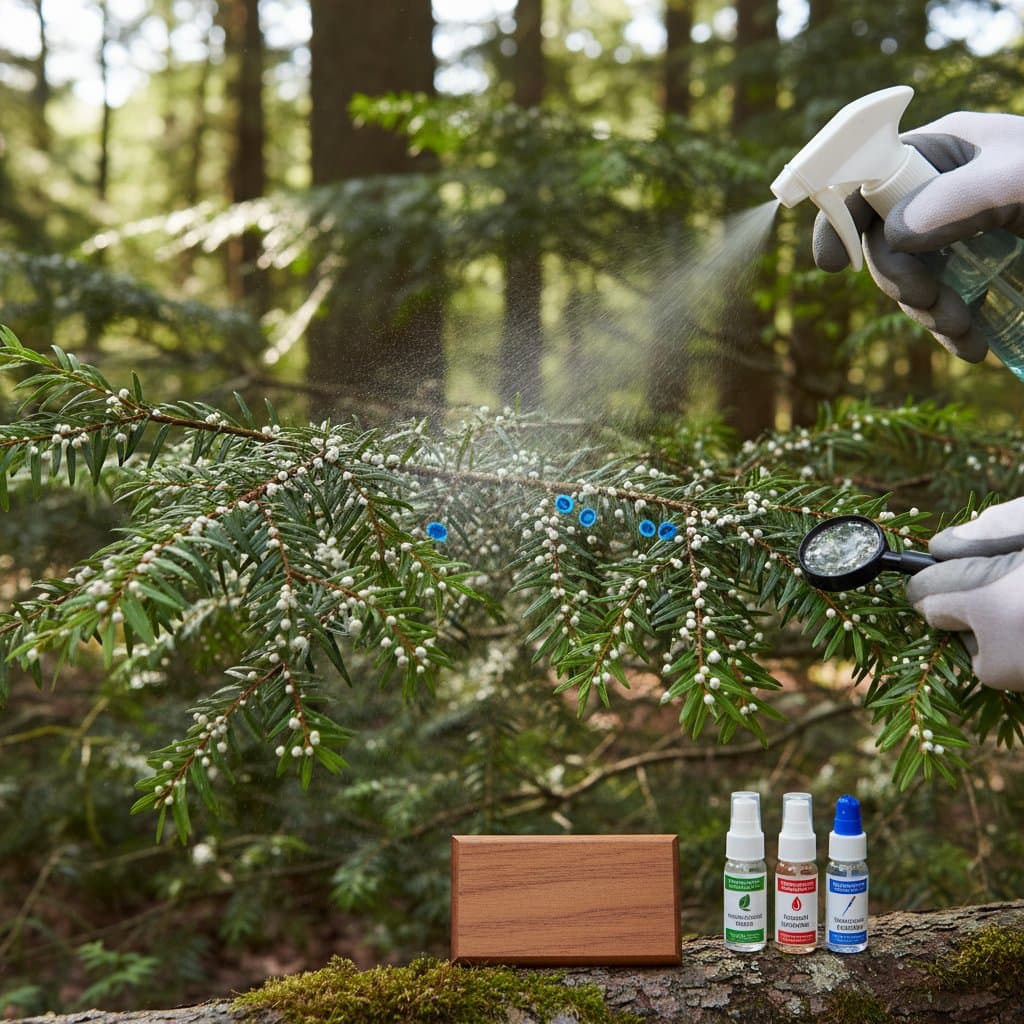
Battling the Hemlock Woolly Adelgid: Spray Treatments for 6 Affected States
Hemlocks in the eastern United States confront a persistent threat from the hemlock woolly adelgid, an invasive insect that weakens and kills these trees. This pest has spread rapidly, prompting urgent action in regions with dense hemlock stands. Homeowners, forest managers, and conservationists rely on targeted spray treatments to halt the damage and restore tree health.
This article details the states most impacted, identification methods, and effective spray options. Readers gain practical knowledge to assess infestations, select treatments, and manage expenses. Protecting hemlocks preserves biodiversity and enhances landscapes for future generations.
Understanding the Hemlock Woolly Adelgid Threat
The hemlock woolly adelgid targets eastern and Carolina hemlock species by feeding on sap from twigs and needles. This process disrupts nutrient flow, leading to yellowing foliage, sparse needles, and branch dieback. Trees decline over three to five years without intervention, transforming vibrant forests into barren areas.
Identification proves straightforward with close inspection. White, woolly ovisacs, about the size of a pinhead, appear at the needle bases on the underside of branches. These sacs house eggs and nymphs, often accompanied by a sooty mold from honeydew excretion.
Spread occurs via wind currents, birds, deer, and contaminated equipment. Early detection in shaded, moist environments allows for timely control, preventing widespread loss in natural and ornamental settings.
States Facing the Greatest Impact
The hemlock woolly adelgid affects hemlock populations across the Appalachians and beyond. Six states report extensive infestations, with state forestry services tracking progress and recommending controls:
- North Carolina: Infestations dominate the Blue Ridge Mountains, threatening national parks and private woodlands.
- Virginia: Widespread damage in the Shenandoah Valley affects timber resources and recreation areas.
- Pennsylvania: Northern forests and state parks battle ongoing outbreaks, with hemlocks comprising key understory species.
- New York: Catskill and Adirondack regions see heavy losses, impacting water quality and wildlife habitats.
- Tennessee: Great Smoky Mountains National Park coordinates large-scale treatments to save iconic hemlock groves.
- Georgia: Southern Appalachian foothills experience rapid spread, endangering rare hemlock ecosystems.
These areas feature ideal conditions for the pest: cool temperatures and high humidity. Collaborative efforts between agencies like the U.S. Forest Service and local extension offices provide resources, yet individual property owners bear responsibility for on-site management.
Estimating Treatment Costs
Average Expenses Nationwide
Professional treatments for hemlock woolly adelgid range from $100 to $300 per tree, depending on size and method. Small-scale projects for one or two trees total under $500, while forest stands exceed $5,000 due to equipment needs. These figures reflect 2023 data from arborist associations and include materials and labor.
Variations by Project Scale
- Single small trees: $50 to $150, ideal for backyard applications using basic sprayers.
- Groups of mature trees: $200 to $500 each, requiring lifts or drones for canopy access.
- Preventive programs: $75 to $200 per tree annually, focusing on early-stage protection.
Curative efforts for advanced infestations add 20 to 50 percent to costs from repeated applications.
Influencing Factors
Tree dimensions dictate spray volume; a 20-foot hemlock demands twice the product of a 10-foot one. Systemic options, such as imidacloprid-based products, cost 30 percent more than contact sprays but offer extended efficacy. Regional labor rates vary, with urban areas charging higher fees than rural sites. Application frequency, typically every one to two years, influences budgets, as does soil type affecting systemic uptake.
Budgeting involves consulting local extension services for cost-saving grants or bulk purchasing. Long-term planning reduces expenses by integrating treatments with cultural practices like mulching.
Overview of Spray Treatment Options
Contact Insecticides
These formulations, including bifenthrin or malathion, directly target exposed adelgids on branch surfaces. Application during dormant seasons maximizes contact with nymphs and adults.
Advantages:
- Immediate mortality within hours of exposure.
- Accessible for homeowner use on trees under 15 feet.
- Minimal soil impact, preserving root health.
Disadvantages:
- No residual protection against reinfestation.
- Demands complete coverage, challenging on dense canopies.
- Annual reapplications, often two to four times.
Systemic Insecticides
Products like dinotefuran or imidacloprid enter the tree via soil drench or trunk injection, circulating through sap to poison feeding adelgids. Timing aligns with root absorption periods in early spring or fall.
Advantages:
- Protection endures one to three years per treatment.
- Penetrates bark and foliage to eliminate concealed pests.
- Lowers overall application frequency and labor.
Disadvantages:
- Effects emerge after two to four weeks.
- Professional certification required for certain formulations.
- Buffer zones needed near waterways to prevent runoff.
Horticultural Oils
Dormant or summer oils coat adelgids, suffocating them by clogging breathing pores. Refined versions minimize phytotoxicity when diluted properly.
Advantages:
- Low toxicity profile benefits bees and birds.
- Targets eggs and crawlers in winter applications.
- Integrates with organic pest strategies.
Disadvantages:
- Optimal use limited to temperatures between 40 and 85 degrees Fahrenheit.
- Potential leaf scorch if mistimed.
- Short-term control necessitates seasonal repeats.
Deciding Between DIY and Professional Services
For trees under 10 feet, DIY kits from garden centers suffice, costing $20 to $50 per application. Follow label rates to avoid under- or overdosing, and wear protective gear during mixing and spraying.
Professionals excel with advanced tools like air-blast sprayers or injection systems, ensuring 90 percent efficacy rates. They assess site-specific risks, such as proximity to edibles or pollinator habitats, and comply with regulations on restricted-use pesticides.
Opt for certified arborists through the International Society of Arboriculture directory. Combining DIY spot treatments with pro oversight balances cost and effectiveness for multi-tree properties.
Step-by-Step Application Guide
1. Assess the Infestation
Scan branches from ground level using binoculars, focusing on lower limbs first. Confirm presence by gently probing woolly masses; active sites release tiny crawlers.
2. Choose Appropriate Treatments
Match products to severity: oils for early detection, systemics for moderate spread, contacts for visible outbreaks. Verify compatibility with local water restrictions.
3. Site Preparation
Water soil evenly 24 hours prior to drench applications. Remove leaf litter to facilitate even coverage and reduce drift.
4. Execute the Treatment
Calibrate sprayers for fine mist, starting at branch bases and working upward. Professionals use tree climbers or aerial devices for heights over 20 feet.
5. Follow-Up Evaluation
Reinspect after 30 days, noting needle retention and new growth. Adjust schedules based on pest cycles, typically peaking in spring and fall.
Strategies for Sustained Hemlock Health
Conduct spring and fall inspections to catch migrants early. Maintain 2 to 4 inches of organic mulch around bases, keeping it away from trunks to deter rodents.
Introduce predators like silver flies or predatory beetles through release programs from suppliers. Remove infested debris promptly and sterilize tools with alcohol between uses.
Adopt integrated approaches: alternate chemical types to prevent resistance, and plant diverse understories to bolster ecosystem resilience.
Common Questions Addressed
How do I confirm a hemlock woolly adelgid infestation?
Search for pear-shaped, white woolly projections at needle attachments. Shake branches over white paper; falling crawlers indicate activity.
Do these treatments harm local wildlife?
Label-compliant use minimizes risks; oils pose the least threat. Delay applications during bird nesting seasons.
What is the ideal treatment frequency?
Systemics suffice every 18 to 36 months; contacts require biannual efforts. Annual monitoring guides adjustments.
Is high-pressure water effective alone?
It removes surface pests temporarily but fails against eggs or internals. Pair with sprays for lasting results.
What are the consequences of inaction?
Trees lose vigor within two years, succumbing fully by year five. Infestations cascade to adjacent vegetation, amplifying regional losses.
Safeguarding Hemlocks Through Proactive Care
Implementing these measures not only saves individual trees but also contributes to broader conservation. Healthy hemlocks filter water, stabilize soils, and support diverse wildlife. Commit to regular vigilance and expert guidance to ensure these majestic trees endure.