
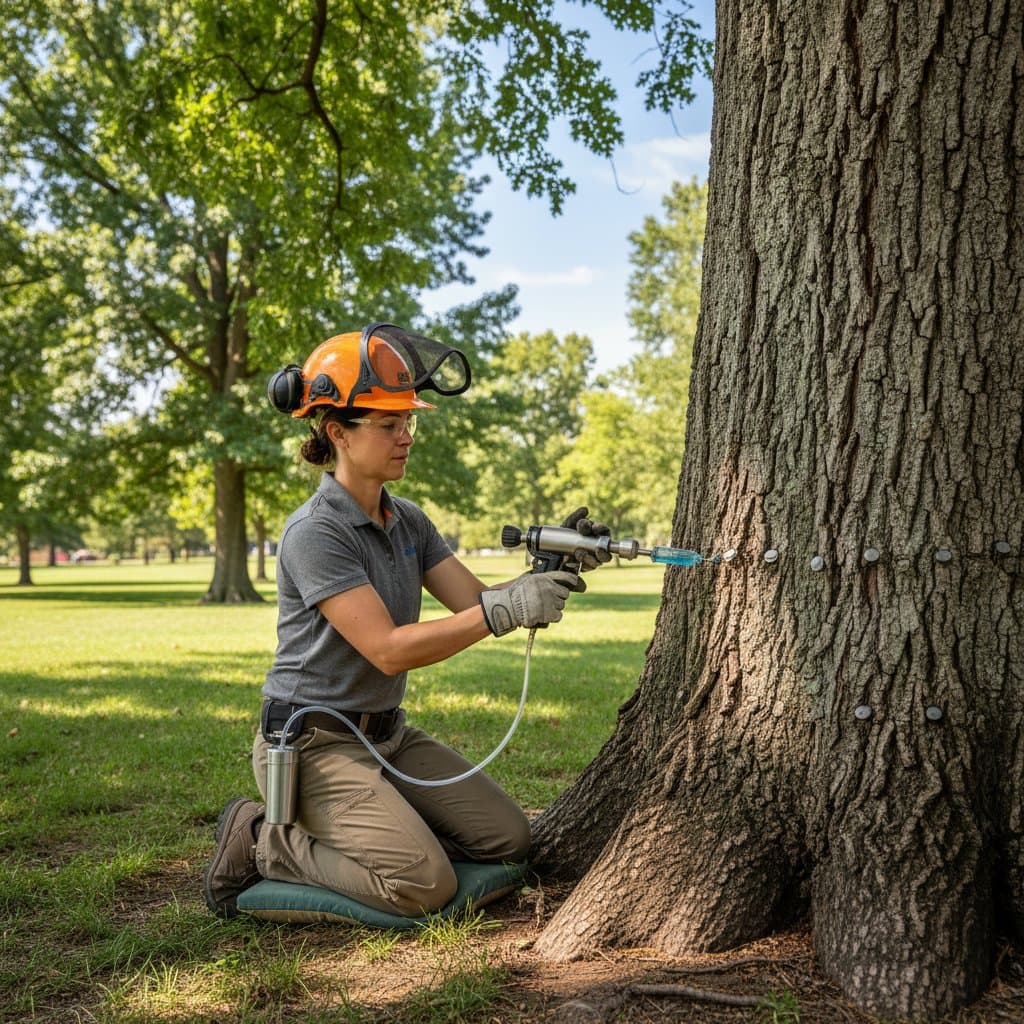
Effective Trunk Injections Halt Oak Wilt's Rapid Spread
Targeted trunk injections represent a proven strategy for combating oak wilt, a fungal disease that threatens oak trees across landscapes. Certified arborists administer these treatments to deliver fungicide directly into the tree's vascular system, stopping the pathogen's advance and preserving mature specimens. Property owners who recognize early symptoms and engage professionals promptly avoid extensive damage and reduce long-term expenses associated with tree removal and replacement.
Oak wilt devastates oak populations by disrupting water flow within the tree, leading to wilting foliage and eventual death. This article explores the disease's mechanics, treatment efficacy, and practical steps for protection. Knowledge of these elements empowers homeowners to safeguard their trees effectively.
The Nature of Oak Wilt and Its Transmission
Oak wilt arises from the fungus Bretziella fagacearum, which infiltrates the xylem vessels responsible for transporting water and nutrients. Once established, the pathogen produces toxins that clog these vessels, resulting in leaves that curl, discolor from the edges inward, and fall ahead of schedule. Transmission occurs primarily through sap-feeding beetles that carry fungal spores from infected trees to fresh wounds, or via interconnected root grafts between nearby oaks.
Red oaks succumb rapidly, often within four to six weeks of infection, while white oaks exhibit a more gradual decline over one to two years. Regional surges in cases, sometimes exceeding 300 percent in affected areas, underscore the urgency of intervention. Urban forests and rural woodlots alike suffer losses that alter ecosystems and property values.
Elements Determining Treatment Outcomes
Success in treating oak wilt depends on multiple interconnected factors that arborists evaluate during initial assessments. Addressing these ensures the fungicide reaches critical areas without compromising tree vitality.
- Species variation: Red oaks demand swift action due to their susceptibility, whereas white oaks may allow a brief window for response while maintaining viability.
- Intervention timing: Treatments initiated at the onset of symptoms yield higher survival rates; delays permit irreversible vascular blockage.
- Overall tree condition: Vigorous trees with robust root systems absorb and distribute the fungicide more efficiently than those weakened by drought or prior stress.
- Site-specific influences: Adequate soil hydration and moderate temperatures facilitate upward movement of the treatment solution through the tree's tissues.
- Application precision: Accurate placement of injection sites, calibrated dosages, and immediate wound closure prevent secondary infections and maximize therapeutic impact.
Homeowners benefit from discussing these aspects with their arborist to align strategies with local conditions.
The Mechanics of Trunk Injection Therapy
Trunk injection introduces systemic fungicides, such as propiconazole, straight into the tree's circulatory network, bypassing external barriers that limit foliar sprays. Arborists drill shallow ports at the trunk base, typically spaced evenly around the circumference, and use low-pressure devices to infuse the solution. The tree's transpiration process then carries the fungicide to all vascular tissues, targeting the fungus at its source.
The procedure unfolds in structured phases:
- Initial evaluation: Arborists inspect for symptom severity, measure trunk diameter, and confirm species to customize the approach.
- Site preparation: Ports, no larger than pencil-width, penetrate just beyond the cambium layer without harming structural integrity.
- Solution delivery: Fungicide flows under controlled pressure, filling the xylem until uptake stabilizes, usually within minutes per tree.
- Wound management: Ports receive biodegradable sealants to shield against pests and pathogens during healing.
- Post-treatment observation: Scheduled checks track symptom regression and vascular recovery over subsequent months.
This method provides protection lasting one to three years, with re-treatments advised in endemic zones to sustain defenses.
Recognizing Indicators of Oak Wilt Infection
Vigilant monitoring reveals oak wilt before it escalates. Homeowners should examine trees biweekly during spring and summer, focusing on canopy changes and bark anomalies.
Key symptoms manifest as:
- Veinal necrosis where leaf veins brown while surrounding tissue stays green, progressing from tips to bases
- Unseasonal defoliation, with 50 percent or more leaves dropping by midsummer
- Vascular streaking visible upon bark removal, forming dark, fan-like patterns in the sapwood
- Progressive crown thinning, starting with upper branches and expanding downward
- Pressure-induced mats under bark, releasing spore-laden ooze with a fermented scent
Upon observing these signs, schedule an arborist consultation without delay. Prompt isolation of affected trees curtails underground spread through root systems.
Weighing DIY Attempts Against Expert Intervention
Temptation exists to handle oak wilt treatments independently, but such efforts often fall short due to technical demands. Professional involvement guarantees compliance with best practices and regulatory standards.
Benefits of expert administration:
- Access to calibrated injectors that maintain uniform distribution and minimize tissue trauma.
- Tailored fungicide selection based on lab-confirmed diagnostics and regional resistance patterns.
- Adherence to protocols that seal wounds effectively, fostering rapid recovery.
- Comprehensive aftercare, including soil amendments and pest monitoring to bolster resilience.
Hazards of self-treatment:
- Over- or under-dosing risks fungicide inefficacy or phytotoxicity, accelerating decline.
- Improper port placement invites decay fungi or borers, compounding damage.
- Potential misidentification of symptoms, such as confusing wilt with drought stress, leads to ineffective applications.
Entrust this specialized task to licensed professionals for reliable results.
Financial Considerations for Oak Wilt Management
Expenses for trunk injections vary from $200 to $800 per tree, influenced by dimensions and infection stage. This investment pales against removal costs, which can exceed $1,500 for large specimens, plus replanting and aesthetic restoration.
Primary cost drivers include:
- Caliper measurement: Trees over 20 inches in diameter necessitate additional ports and volume.
- Site logistics: Elevated or clustered trees demand scaffolding or specialized access, elevating labor fees.
- Infection extent: Curative protocols for symptomatic trees involve higher dosages than preventive measures.
- Regional premiums: Urban settings incur surcharges for traffic control and disposal compliance.
Obtain multiple estimates, verifying inclusions like diagnostics and warranties, to secure value.
Selecting a Competent Arborist for Oak Care
The choice of service provider directly impacts treatment success and tree longevity. Prioritize firms with demonstrated proficiency in fungal disease management.
Essential qualifications encompass:
- Professional credentials: Membership in bodies like the International Society of Arboriculture signals adherence to industry standards.
- Track record: Inquire about recent oak wilt interventions and success metrics in comparable environments.
- Communication clarity: Expect detailed breakdowns of methodologies, timelines, and potential outcomes.
- Hygiene protocols: Confirmation of sterilized tools and decontamination routines prevents cross-contamination.
- Client validation: Review testimonials and site visits to past projects for assurance.
A strategic partnership with a skilled arborist fortifies your landscape against recurring threats.
Essential Inquiries for Arborist Engagement
- Which fungicide formulations do you apply for oak wilt, and what supports their efficacy?
- What duration of protection does the injection provide under local conditions?
- Do you include warranties or complimentary follow-ups in your service?
- What protocols ensure no disease transmission during on-site work?
- How do you assess treatment suitability for individual trees?
- What comprises the full pricing structure?
- Can you furnish proof of certifications and liability coverage?
Common Queries on Oak Wilt Interventions
How enduring is protection from a single trunk injection?
One application shields trees for one to three growing seasons, contingent on exposure levels. Arborists in outbreak-prone regions advocate periodic reinforcements.
Can symptomatic trees rebound with injection?
Early-stage white oaks frequently recover, regaining vigor within a season. Advanced red oak infections prove fatal, though treatment safeguards adjacent plants.
Does oak wilt affect non-oak species?
The fungus targets oaks exclusively, but debris from infected trees lures vectors that could indirectly threaten biodiversity. Dispose of wood responsibly.
What measures curb oak wilt propagation on properties?
Prune only in dormant periods, bury or chip fallen branches promptly, and implement barrier trenches to sever root connections.
Does injection inflict lasting harm?
Minimal, as ports scar over seamlessly; experts employ tapered bits to avert splintering and expedite closure.
Is postponing treatment viable?
No; fungal proliferation accelerates, linking infections via roots. Immediate response maximizes salvage opportunities.
How to gauge local oak wilt prevalence?
Consult extension services for outbreak maps or request arborist surveys to identify vulnerabilities.
Sustaining Oak Health Through Proactive Strategies
Long-term oak preservation hinges on integrated practices beyond injections. Integrate mulching to conserve moisture, fertilize judiciously to enhance vigor, and scout for pests annually. Collaborate with arborists to develop customized plans that adapt to evolving threats, ensuring enduring canopy coverage and ecological balance.