
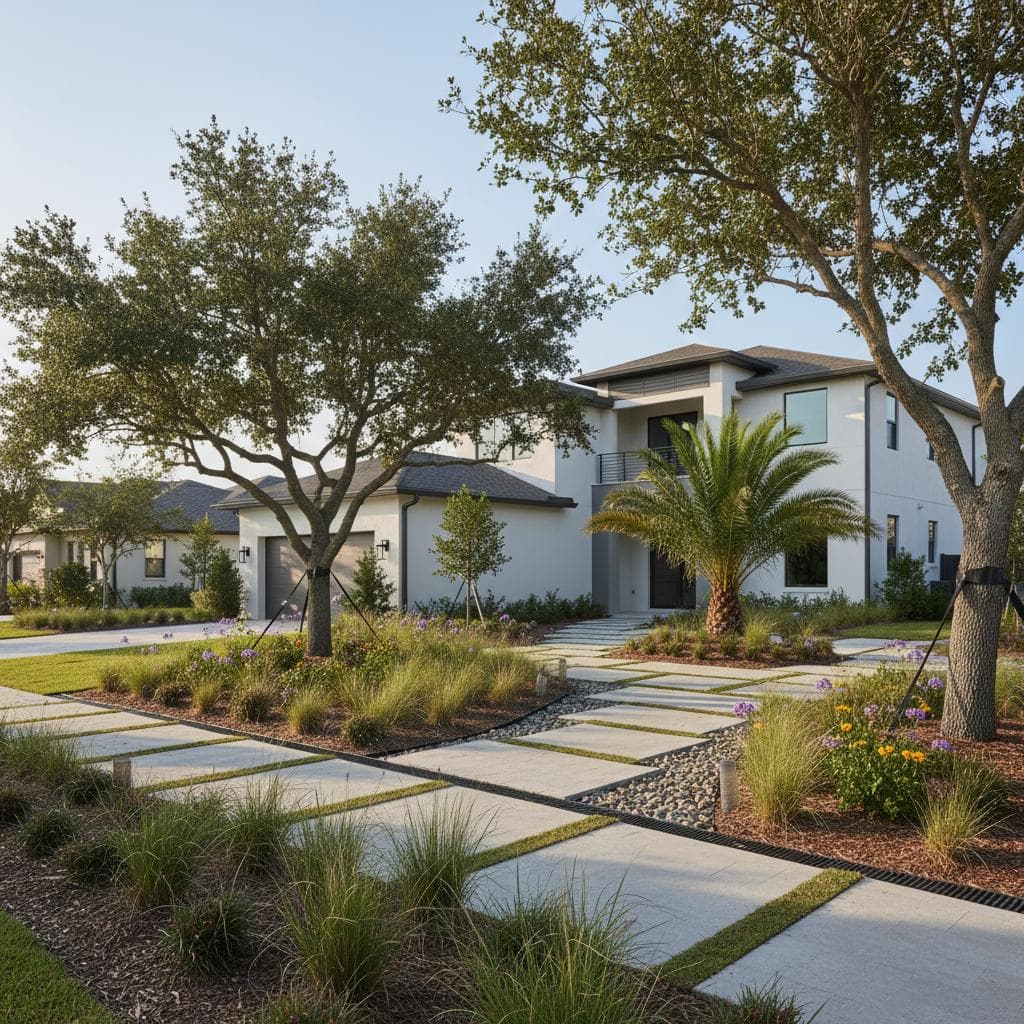
Types of Hurricane-Resistant Trees
Selecting trees that endure high winds begins with understanding their structural advantages. These species feature deep roots, flexible trunks, and balanced canopies that minimize breakage during storms. Homeowners in hurricane-prone regions benefit from planting varieties adapted to local conditions, such as coastal humidity and salty air.
Live Oak
Live oaks stand out for their dense, hardwood construction and broad, horizontal branches that distribute wind loads evenly.
Pros:
- Extensive root networks penetrate deep into soil, providing stability against gusts exceeding 100 miles per hour.
- Thick leaf cover shields ground from erosion and offers cooling shade in summer months.
Cons:
- Substantial limb weight demands regular pruning to avoid structural failure or property impact.
- Growth rate averages one foot per year, requiring patience for full maturation.
Bald Cypress
Bald cypress trees excel in variable moisture environments, from saturated swamps to drier uplands, which suits many flood-vulnerable yards.
Pros:
- Tapered trunks flex without snapping, absorbing shock from sudden wind shifts.
- Buttress roots stabilize soil along waterways, reducing washout during heavy rains.
Cons:
- Knee-like root projections surface up to three feet high, necessitating ample open space around the base.
- Needle drop in winter creates a bare silhouette that some prefer to avoid for year-round greenery.
Sabal Palm
Known as the cabbage palm, this native thrives along shorelines, tolerating brackish conditions common in storm surges.
Pros:
- Fibrous trunk resists splitting from salt-laden winds and prolonged dry spells.
- Fronds shed cleanly in gales, limiting hazardous debris on walkways or roofs.
Cons:
- Slender profile delivers less overhead shelter compared to broader-canopied alternatives.
- Recovery from severe top damage may take two to three years, delaying full vigor.
Southern Magnolia
Southern magnolias maintain integrity in winds up to 80 miles per hour when trained for upright form early in development.
Pros:
- Single, dominant leader stem supports heavy foliage without fracturing.
- Persistent glossy leaves ensure privacy screens and wind buffers throughout seasons.
Cons:
- Surface roots spread widely, requiring consistent moisture to prevent lifting during dry periods.
- Cone-like seed clusters, weighing up to half a pound, pose risks if overlooked in cleanup routines.
DIY vs. Hiring a Professional
Building a landscape that defies hurricanes demands integrated planning beyond mere tree selection. Factors like elevation mapping, water runoff modeling, and exposure to prevailing winds influence overall durability. While basic tasks suit skilled homeowners, intricate elements often benefit from expert intervention to align with regulatory demands.
DIY Approach:
- Reduces expenses by eliminating service fees, potentially saving thousands on smaller projects.
- Empowers customization of plant arrangements and aesthetic elements to match personal vision.
- Carries potential for errors, such as inadequate root zones or blocked drainage, which compromise long-term stability.
Hiring a Professional:
- Guarantees adherence to zoning laws and building permits, avoiding fines or rework.
- Incorporates site-specific analysis, like anemometer readings for wind flow, to optimize positioning.
- Delivers ongoing support, including seasonal care plans and guarantees against transplant failure.
How to Create a Hurricane-Resistant Landscape
Developing a resilient yard follows a systematic process that integrates natural and engineered solutions. Begin with thorough evaluation to uncover hidden risks, then layer in protective features step by step. This approach not only meets code requirements but also enhances property value over time.
- Assess the Site: Map out terrain contours, low-lying areas prone to pooling, and open fetches where winds accelerate unchecked.
- Select the Right Species: Prioritize natives with proven track records, such as those rated for wind zones three or higher by forestry services.
- Plan Tree Placement: Maintain 20 to 30 feet between mature specimens to allow independent swaying and prevent crown entanglement.
- Improve Soil Quality: Incorporate compost at a two-inch depth to boost nutrient retention and permeability, fostering robust anchorage.
- Install Wind-Resistant Features: Incorporate dense, low-growing shrubs for barriers and gravel paths that absorb floodwater without shifting.
- Prune and Maintain: Elevate lower branches to six feet and crown-reduce by no more than 25 percent to lessen sail-like effects.
- Inspect Annually: Probe for heaving roots, leaning postures, or fungal signs that signal vulnerability ahead of peak hurricane months.
Tips for Long-Term Success
Sustaining hurricane readiness involves proactive habits that evolve with your landscape. Focus on establishment phases to build inherent strength, then refine as growth progresses. These practices ensure minimal disruption from seasonal threats.
- Plant Young Trees: Opt for saplings under 10 feet tall, which establish bonds with native soil faster than relocated giants.
- Avoid Overwatering: Apply one inch weekly during the first year, tapering to encourage roots to seek deeper moisture sources.
- Use Mulch Wisely: Apply two to four inches of organic material in rings, pulling back 12 inches from stems to deter moisture buildup.
- Secure Outdoor Structures: Bolt down raised beds and arbors with ground anchors rated for 150-mile-per-hour forces.
- Regularly Reassess Your Layout: Monitor canopy expansion every spring, adjusting understory plants to maintain clear airflow corridors.
Frequently Asked Questions
What makes a tree hurricane-resistant?
Hurricane-resistant trees possess anchored root balls extending beyond the drip line, supple wood that sways without splintering, and pruned profiles that cut wind catch. These traits enable survival in sustained gales, preserving surrounding infrastructure.
Can I retrofit my existing landscape to meet new codes?
Retrofitting proves feasible for most yards through targeted interventions like root barriers or canopy thinning. Engage a landscape architect for a compliance audit to pinpoint priorities without full redesign.
Do new codes apply to every homeowner?
Updated standards govern major alterations, such as new installations over 500 square feet or tree removals exceeding five in number. Routine upkeep, like weeding or light trimming, typically falls outside mandatory oversight.
How often should I prune hurricane-resistant trees?
Annual sessions target hazardous elements, while comprehensive shaping occurs biennially to preserve natural form. Entrust significant work to ISA-certified professionals for safety and precision.
What materials are best for hurricane-resistant hardscapes?
Opt for interlocking stone slabs over loose gravel for patios, composite lumber for fences that flex rather than shatter, and polymer-coated hardware to resist corrosion from saltwater exposure.
Building Storm Resilience Step by Step
Embracing hurricane-resistant landscaping extends beyond visual enhancement to fortify against nature's fiercest tests. It minimizes repair costs, preserves local ecosystems, and strengthens neighborhood bonds in recovery efforts. Evaluate your current setup today, consult resources on code specifics, and implement changes that yield enduring protection.