
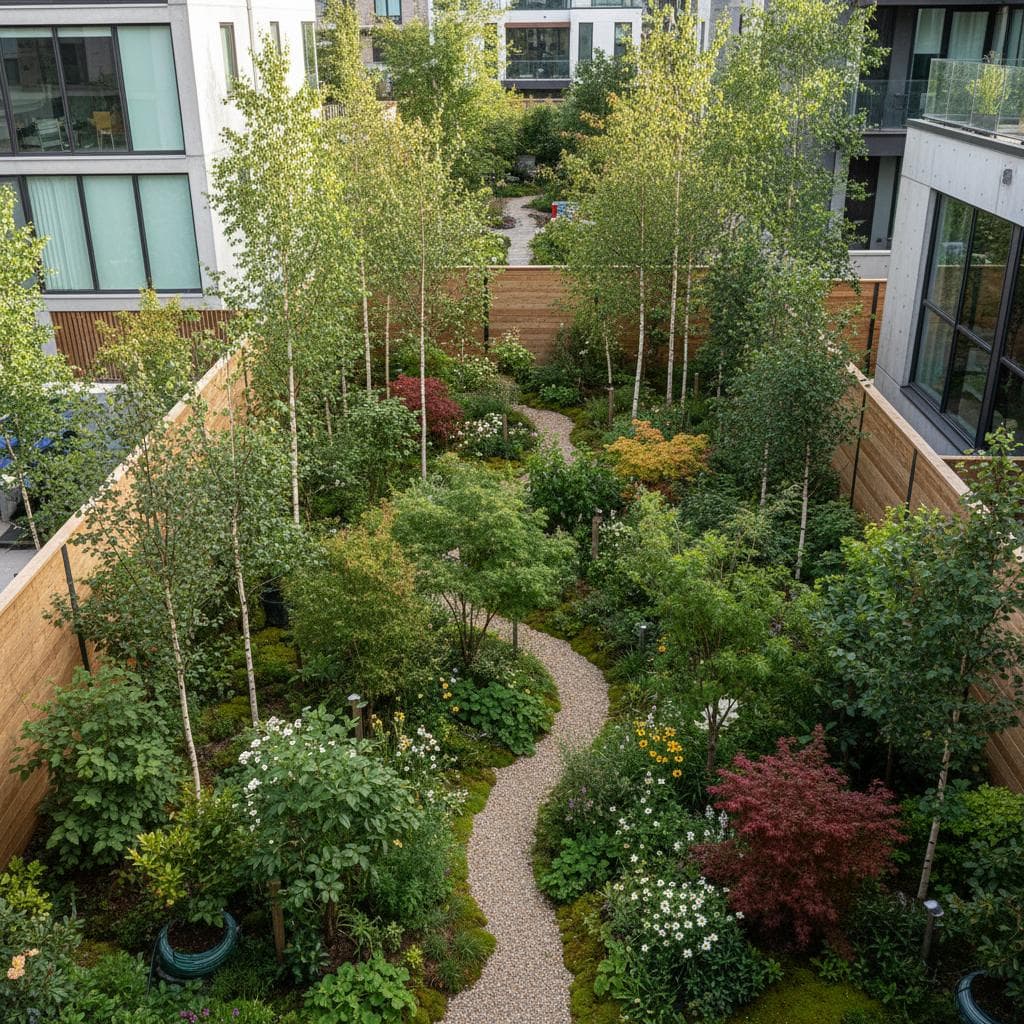
Cultivating 200 Trees in a 600-Square-Foot Yard: The Miyawaki Micro-Forest Revolution
A vast forest requires extensive land, yet a compact yard holds untapped potential for ecological abundance. The Miyawaki method empowers homeowners to establish a dense, self-sustaining micro-forest that accommodates hundreds of trees and supports local wildlife. Within a few seasons, this approach yields a verdant sanctuary that elevates biodiversity, purifies air, and increases property appeal.
The notion of fitting 200 trees into a mere 600 square feet challenges conventional gardening wisdom, but micro-forestry principles demonstrate its feasibility. Dense planting of native species emulates the stratified resilience of ancient woodlands, accelerating maturation in limited space.
Understanding the Miyawaki Method
Developed by Japanese botanist Akira Miyawaki, this reforestation strategy replicates the multilayered architecture of natural forests. It emphasizes dense clusters of diverse native plants to achieve swift development, robust root systems, and independent ecosystems that flourish without synthetic inputs after initial establishment.
A well-designed micro-forest incorporates:
- Canopy trees for overarching shade and enduring framework.
- Sub-canopy species to occupy intermediate layers and enhance structural density.
- Shrubs and ground covers to safeguard soil integrity and sustain hydration levels.
Such stratification enables 200 trees to integrate seamlessly into 600 square feet, contingent on judicious species choices and strategic arrangement.
Key Factors That Influence Micro-Forest Success
Success in micro-forest creation demands precise execution. Consider these essential elements to optimize tree vitality and adaptation:
- Soil preparation: Aerate dense soil thoroughly and incorporate organic compost to stimulate beneficial microbial populations.
- Plant diversity: Select a minimum of 20 native species to build ecological robustness and draw in pollinators and birds.
- Spacing: Position seedlings at intervals of 12 to 18 inches to foster competitive dynamics that drive upward elongation over lateral spread.
- Mulching: Spread a generous layer of organic material to suppress weed emergence and preserve soil moisture.
- Maintenance: Provide consistent irrigation for the initial one to two seasons to encourage deep root penetration.
Proper implementation transforms the micro-forest into an autonomous entity within three to five years, necessitating only sporadic trimming or litter clearance thereafter.
Benefits of a Backyard Micro-Forest
Homeowners increasingly adopt micro-forests for their dual environmental and visual advantages. Key rewards encompass:
- Biodiversity enhancement: Native flora draws avian species, insects, and pollinators, fostering a balanced habitat.
- Climate adaptation: Thick vegetation sequesters carbon dioxide, moderates ambient temperatures, and mitigates flood risks from heavy rains.
- Privacy and aesthetics: Accelerated development forms living barriers and tranquil retreats suitable for city environments.
- Minimal upkeep: Established forests regulate themselves with limited human oversight.
This technique harmonizes restoration ecology with everyday living, proving particularly suitable for urban and suburban properties.
DIY vs. Hiring a Professional Arborist
Embarking on a micro-forest project presents choices between self-directed efforts and expert involvement. For DIY enthusiasts with basic horticultural knowledge, the process begins with sourcing native seedlings from local nurseries and preparing the site independently. Acquire tools such as a shovel, wheelbarrow, and soil testing kit; budget time for research on regional species compatibility. This route suits smaller plots and yields satisfaction from hands-on creation, though it requires patience to avoid errors in planting density or species balance.
Hiring a professional arborist or landscape specialist ensures precision, especially for novices or larger installations. Experts conduct soil analyses, recommend optimized plant palettes, and handle mulching and irrigation setups efficiently. While initial costs range from $1,000 to $5,000 depending on scope, professionals mitigate risks like poor drainage or incompatible selections, guaranteeing long-term viability. Consult certified arborists through local environmental organizations for reliable partnerships.
Common Questions About Micro-Forests
Can one truly plant 200 trees in a small yard?
Yes, the Miyawaki method facilitates dense seedling placement. Mutual competition for resources prompts vertical growth, minimizing sprawl and maximizing space utilization.
How much does a small micro-forest cost to install?
Expenses fluctuate based on site preparation, species procurement, and workforce. Basic DIY setups may total $500 to $2,000, while professional services often span $2,000 to $10,000 for comprehensive projects.
How quickly do the trees mature?
Maturation varies by species and regional climate, yet Miyawaki forests typically form a full canopy in two to four years, far surpassing traditional planting timelines.
Is special equipment necessary?
Standard gardening implements suffice for most installations, including trowels, hoses, and mulch spreaders. Advanced setups might employ soil augers or pH meters, particularly when engaging professionals.
Can fruit trees integrate into the design?
Indeed, provided they align with native or locally adapted varieties. Incorporating fruit-bearing options alongside shrubs and canopy trees bolsters pollinator activity and diversifies the ecosystem.
Steps to Establish Your Micro-Forest Legacy
Initiate your micro-forest journey by assessing your yard's sunlight, drainage, and soil type. Source plants from reputable suppliers emphasizing natives, then map a layered layout to optimize growth dynamics. Follow through with diligent early care to witness your space evolve into a thriving, legacy-defining green asset that benefits generations.