
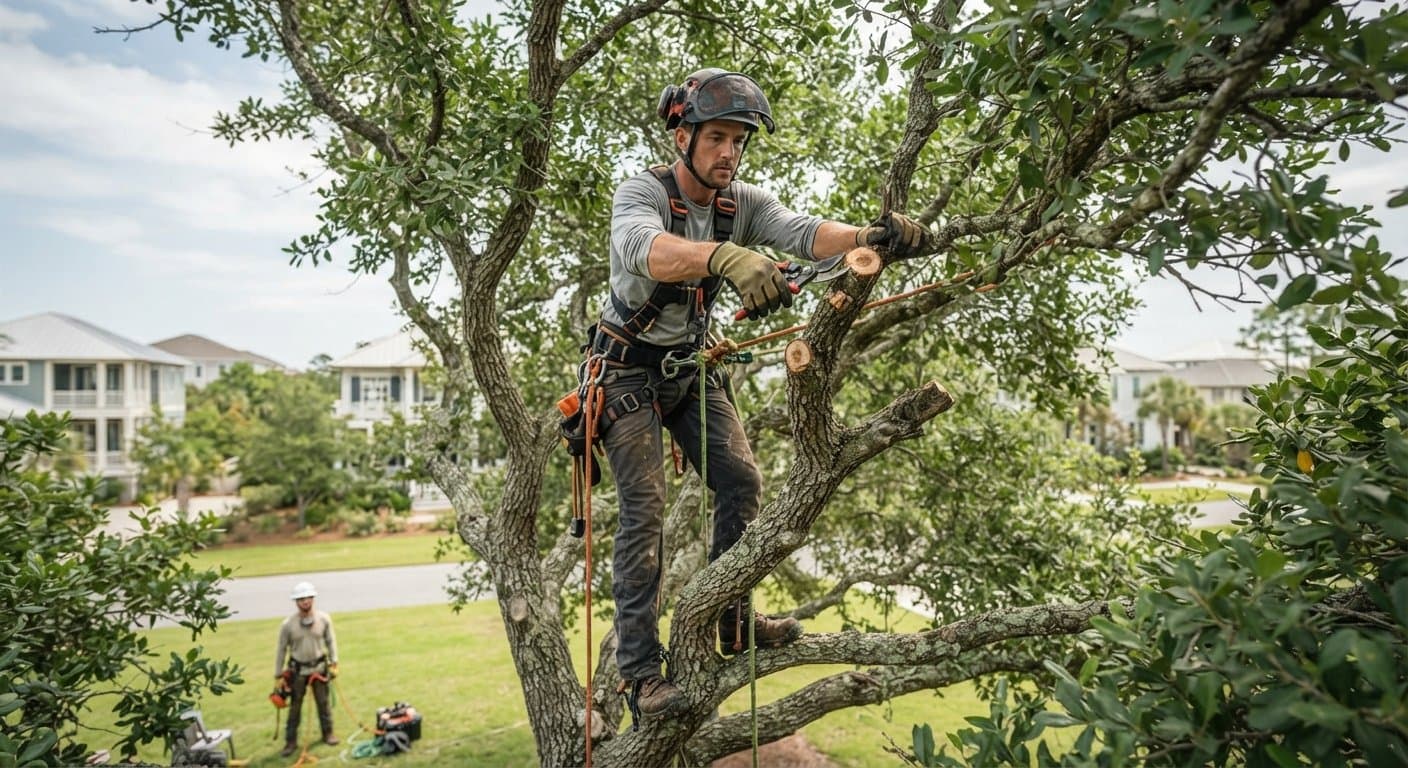
How to Prune Trees Before Hurricane Season
A healthy tree can still become a hazard when wind snaps weak limbs or pushes an unstable trunk toward a home. Hurricane tree pruning helps reduce avoidable risks, but cutting too much or making the wrong cuts can weaken a tree and increase danger.
Careful pruning focuses on dead, damaged, and poorly attached branches, not stripping the canopy. Learn how to assess trees, choose the right cuts, decide when to call an arborist, and plan practical storm damage prevention around your property.
Hurricane Tree Pruning and Cost
Tree pruning prices depend on the tree, the work required, access, and local labor rates. A small ornamental tree with a few reachable dead branches may cost far less to prune than a mature tree near a roof, power line, or neighboring property.
Typical Price Ranges
As a broad national guide, routine pruning for a small tree may cost around $150 to $500. Medium trees often fall between $300 and $900, while large or difficult trees can cost $700 to $2,000 or more. These are estimates, not quotes. Emergency work, specialized equipment, and complicated access can raise the total.
Ask for an on-site assessment and a written estimate. A responsible contractor should describe the work, explain how debris will be handled, and identify any added charges before starting.
Key Cost Factors
- Tree size and condition: Large trees take more time and equipment. Extensive decay or storm damage may require specialized removal techniques.
- Location: Work near structures, fences, driveways, or utility lines needs careful rigging and may require extra crew members.
- Access: Narrow gates, steep slopes, and limited space for equipment can increase labor.
- Scope: Removing a few dead limbs costs less than correcting multiple structural problems.
- Disposal: Confirm whether hauling, chipping, and cleanup are included.
Which Trees and Branches Need Attention?
Pruning can reduce the chance that weak limbs break, but it cannot make a tree storm-proof. The goal is to improve structure while preserving the tree's natural shape and enough foliage to support its health.
Dead or Broken Limbs
Dead branches are more likely to break and can fall without warning. Look for bare limbs during the growing season, cracked bark, missing buds, or branches that have already split. A professional can distinguish deadwood from branches that are simply dormant or stressed.
Weakly Attached Branches
Branches with narrow, V-shaped connections may have included bark, a condition where bark becomes trapped between the branch and trunk. The connection can be weaker than a broad, U-shaped union. A qualified arborist can assess whether selective reduction or removal is appropriate.
Dense Canopies
A crowded canopy may contain crossing branches that rub against each other or limbs growing inward. Selective thinning can improve branch spacing, though removing too much foliage is harmful. Avoid topping, which cuts off upper branches indiscriminately and often encourages weak, rapidly growing shoots.
DIY vs. Hiring a Professional
Homeowners can safely handle small pruning jobs from the ground, such as cutting a narrow, reachable dead branch with a sharp hand pruner. The work becomes hazardous when a branch is heavy, overhead, near a building, or close to electrical wires. Ladders, chainsaws, and falling limbs create serious injury risks.
For larger work, hire a qualified arborist with appropriate insurance and training. Ask for proof of liability coverage and workers' compensation, along with a clear written scope. Check local licensing requirements and request references for similar tree work.
Be cautious of contractors who recommend topping, demand full payment in advance, or offer an unusually low price without inspecting the tree. For branches near power lines, contact the utility instead of approaching or cutting them. Utility crews or their approved contractors handle that risk.
How to Prune Trees for Storm Damage Prevention
- Inspect the tree from the ground. Look for dead limbs, cracks, hanging branches, cavities, leaning trunks, and soil lifted around the roots. Do not stand beneath damaged limbs.
- Identify nearby hazards. Note roofs, vehicles, walkways, fences, overhead wires, and places where people gather. Keep people away from any area beneath a suspect branch.
- Choose the right work. Prioritize deadwood and clearly damaged branches. Ask an arborist to assess major structural concerns, especially on mature trees or trees with a new lean.
- Use clean, suitable tools. Hand pruners and loppers work for small branches within easy reach. Do not use a chainsaw from a ladder or attempt to control a heavy limb alone.
- Make proper cuts. Cut just outside the branch collar, the slightly swollen area where a branch meets the trunk. Avoid flush cuts that damage trunk tissue and stubs that heal poorly.
- Remove heavy branches safely. Large limbs may need several controlled cuts to prevent bark from tearing. Leave this work to trained professionals with proper rigging and protective equipment.
- Clean up and reassess. Remove cut material from paths and drainage areas. If you notice fresh cracks, root movement, or a change in lean, keep clear and request an urgent professional evaluation.
Tips for Safer, Healthier Trees
- Prune before severe weather is forecast. Contractors may be busy during an approaching storm, and wet or windy conditions make tree work less safe.
- Preserve the canopy. Avoid removing large amounts of live foliage at once. Excessive pruning can stress a tree and encourage weak regrowth.
- Protect the trunk and roots. Avoid piling soil or mulch against the trunk, and prevent vehicles or heavy equipment from compacting soil near roots.
- Keep records. Note visible changes and save estimates or inspection findings so you can track recurring concerns.
- Do not treat pruning as a guarantee. Even healthy trees and professionally maintained branches can fail in extreme winds.
Frequently Asked Questions
When should I prune trees to reduce hurricane damage?
Schedule an assessment before severe weather approaches, while conditions are safe and contractors have time to evaluate the tree. The best pruning window depends on the tree species, climate, and health, so ask a local arborist about species-specific timing.
Does trimming trees make them hurricane-proof?
No pruning method can guarantee that a tree will withstand extreme wind. Proper work can remove deadwood and address selected structural weaknesses, which may reduce some risks without eliminating them.
Should I cut branches close to my house?
Remove only small, reachable branches if you can work safely from the ground. For large limbs over a roof or near wires, hire a qualified professional or contact the utility. Never climb a tree or use a ladder to cut a heavy branch.
What is topping, and why should I avoid it?
Topping is the indiscriminate cutting back of a tree's upper branches to stubs. It can leave large wounds, weaken the tree, and trigger clusters of poorly attached shoots that may become future hazards.
How can I tell if a tree is at risk of falling?
Warning signs include a sudden change in lean, cracked soil near the roots, a split trunk, large cavities, or major hanging branches. Keep people away from the area and contact an arborist promptly. If wires are involved, call the utility.
Do I need a permit to prune a tree?
Permit rules depend on your municipality, property type, and the tree's location or designation. Check with your local government before pruning protected trees or trees in public areas, and confirm utility requirements when work is near power lines.
Planning Your Tree Safety Assessment
Effective hurricane tree pruning starts with a careful assessment, not aggressive cutting. Address dead and damaged limbs, protect the tree's natural structure, and leave hazardous work to trained professionals.
Walk your property from a safe distance, note trees near homes and paths, then compare written assessments from insured local arborists. Ask how each proposed cut will improve safety and tree health before approving the work.