
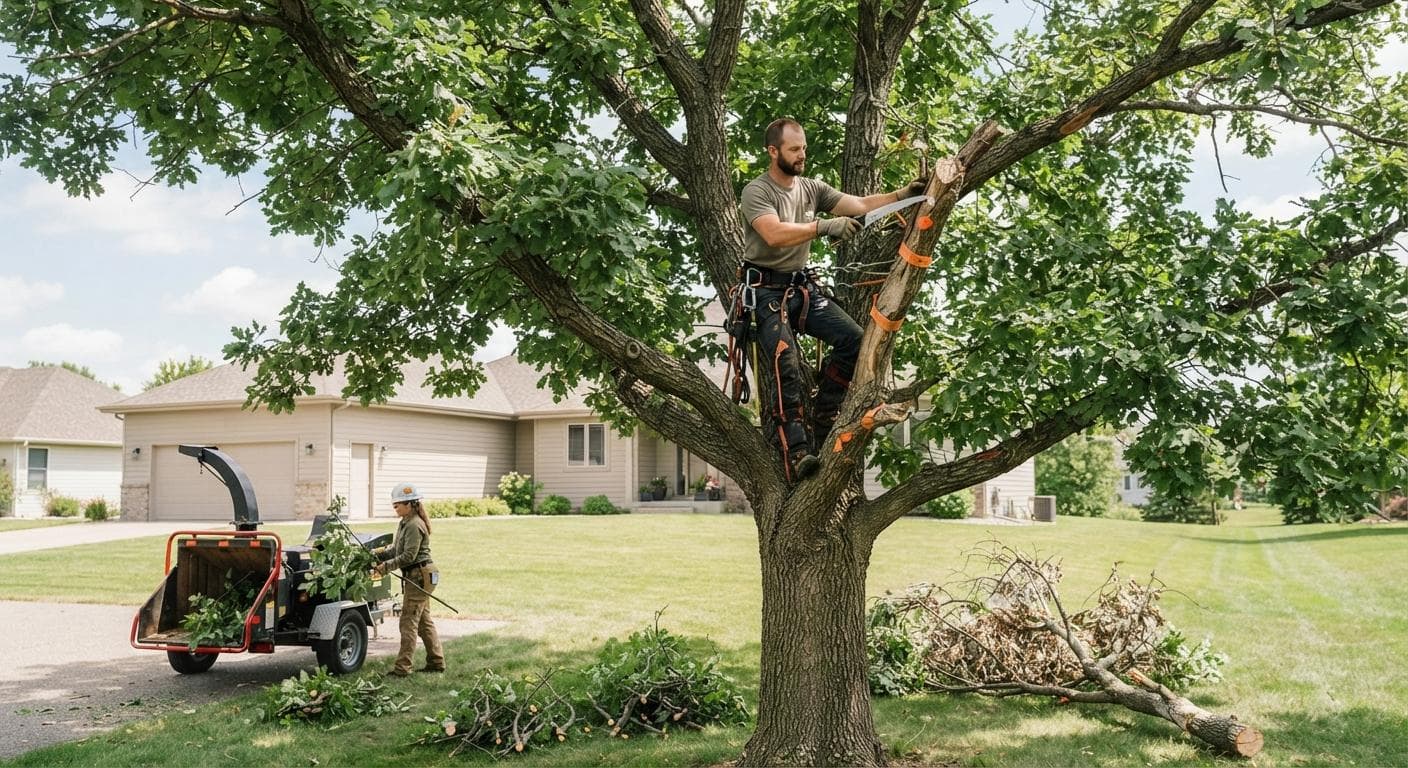
Hurricane-Proof Trees Start With Smart Summer Pruning
Smart summer pruning can reduce the risk of storm damage by removing dead, weak, or poorly attached branches before severe winds arrive. It cannot make a tree hurricane-proof, but a qualified arborist can improve its structure and identify hazards while keeping the tree healthy.
The right work depends on the species, condition, and location of each tree. Pruning too much, cutting in the wrong places, or working near power lines can increase danger instead of preventing it, so careful assessment matters.
How Pruning Helps Reduce Storm Damage
Wind moves through a tree's crown, the leafy upper part formed by branches and foliage. A dense, crowded crown can catch wind, while dead limbs and weak branch connections can break under stress. Selective pruning can reduce these risks and help the tree maintain a balanced structure.
Good hurricane tree pruning focuses on tree health, not severe thinning. An arborist may remove deadwood, crossing branches, damaged limbs, or branches with narrow attachments. The aim is to improve branch strength and spacing without stripping away too much foliage.
Leaves produce energy that trees use to grow and recover. Removing too many at once can weaken a tree, expose bark to sun damage, and encourage fast, poorly attached growth. No pruning plan can guarantee that a tree will withstand a hurricane, since soil saturation, wind direction, tree defects, and nearby structures all affect the outcome.
What to Look for During a Hazard Assessment
Walk your property and look at trees from a safe distance. Do not climb to inspect a canopy or approach a tree that has split, shifted, or become entangled with a power line.
Watch for these potential warning signs:
- Dead branches, hanging limbs, or sections with no leaves during the growing season.
- Cracks in the trunk or major branches, especially near a branch union.
- A pronounced lean that has changed or appears alongside lifted soil.
- Mushrooms or other fungal growth near the trunk base, which can signal decay.
- Roots that are exposed, damaged, or surrounded by soil that has heaved.
- Branches rubbing against a roof, window, utility line, or neighboring tree.
One sign alone does not always mean a tree must come down. A certified arborist is a trained tree care specialist who can assess structural defects, tree health, and site conditions, then recommend pruning, monitoring, or removal as appropriate.
The Best Pruning Work for Storm Preparation
A professional may recommend several types of pruning based on the tree's needs:
- Deadwood removal: Removes dead or dying branches that could fall during high winds.
- Structural pruning: Guides young trees toward strong branch spacing and well-formed attachments.
- Crown cleaning: Removes selected dead, damaged, or crossing branches from a mature tree.
- Crown reduction: Carefully shortens parts of the crown when a tree's size or location calls for it. This requires sound cuts and a clear plan.
- Clearance pruning: Keeps branches away from roofs, paths, or other structures without harming the tree's natural form.
Ask the arborist to explain what each cut will accomplish. Avoid topping, which cuts large branches back to stubs and often triggers weak regrowth. Also be wary of aggressive crown thinning or promises that a specific technique will make a tree storm-proof.
Why Summer Planning Can Help
Arranging an assessment during summer gives homeowners time to identify hazards and schedule suitable work before a storm threatens the property. It also allows an arborist to evaluate leaf coverage, branch condition, and signs of stress.
That does not mean every tree should be pruned in summer. The best timing depends on the species, local climate, pest activity, and the type of work. Some trees respond poorly to pruning during particular growth periods, and large cuts can create additional stress. A professional can recommend a safe schedule for the tree and local conditions.
DIY Pruning or Hiring a Professional
Homeowners can usually handle light pruning of small, reachable branches with hand tools, provided they can work from the ground and avoid overhead hazards. Wear eye protection and gloves, keep people and pets clear, and use sharp, clean tools. Never prune near utility wires.
Leave larger limbs and work above ground level to an insured tree service professional. Ladders, chainsaws, falling branches, and unstable trees create serious injury risks. A professional crew uses trained climbers or specialized equipment, plans the drop zone, and understands how a cut can affect the tree's balance.
Before hiring, confirm that the company carries liability insurance and workers' compensation coverage. Ask whether a certified arborist will inspect the tree, what the pruning plan includes, and how debris removal affects the estimate. Prices depend on tree size, access, condition, equipment, and the amount of work. A straightforward pruning job might cost a few hundred dollars, while work on a large tree or a difficult site can cost considerably more. Request a written estimate that separates pruning from cleanup or stump grinding.
A Safe, Practical Pruning Process
A careful project generally follows these steps:
- Inspect the site: The arborist reviews the tree, nearby structures, access, and possible hazards.
- Explain the plan: You receive recommendations for specific cuts, the reason for each, and any limits on the work.
- Set up protection: The crew establishes a work zone and plans how to lower or remove branches safely.
- Prune selectively: Workers remove targeted limbs while preserving the tree's natural shape and healthy foliage.
- Review and clean up: The crew checks the work, removes agreed debris, and explains any monitoring or follow-up care.
Ask the crew to stop and explain if the work differs from the approved plan. Clear communication helps prevent unnecessary cuts and surprise charges.
Common Questions About Hurricane Tree Pruning
Does pruning guarantee a tree will survive a hurricane?
No. Pruning can address certain defects and reduce some risks, but it cannot control extreme winds, saturated soil, disease, or falling debris from nearby trees.
Should I remove the top of a tree before a storm?
No. Topping removes large sections of the crown and often causes weak regrowth. It can also leave the tree vulnerable to decay and future limb failure.
Can I prune branches near power lines?
No. Contact your utility provider about branches near electrical lines. Do not use a ladder or tools near wires, even if a branch appears small.
Is summer the right season to prune every tree?
No. Suitable timing depends on species, tree condition, climate, and the planned cuts. Ask an arborist to assess the tree before scheduling work.
Should I remove a leaning tree before hurricane season?
A leaning tree requires professional evaluation. The arborist will examine root stability, soil conditions, and lean severity to determine whether monitoring, pruning, or removal offers the safest approach.
What should I do with a tree damaged during a storm?
Contact a certified arborist immediately. Do not attempt to prune or remove storm-damaged trees yourself, especially if they involve power lines, structural damage, or unstable trunks. A professional can assess safety risks and recommend the appropriate next steps.
Plan Your Property Assessment
Walk your property, note trees with warning signs, and arrange a professional hazard assessment before severe weather is imminent. Smart, selective pruning can help protect tree health and reduce preventable hazards, while honest advice helps you decide when monitoring or removal makes more sense.