
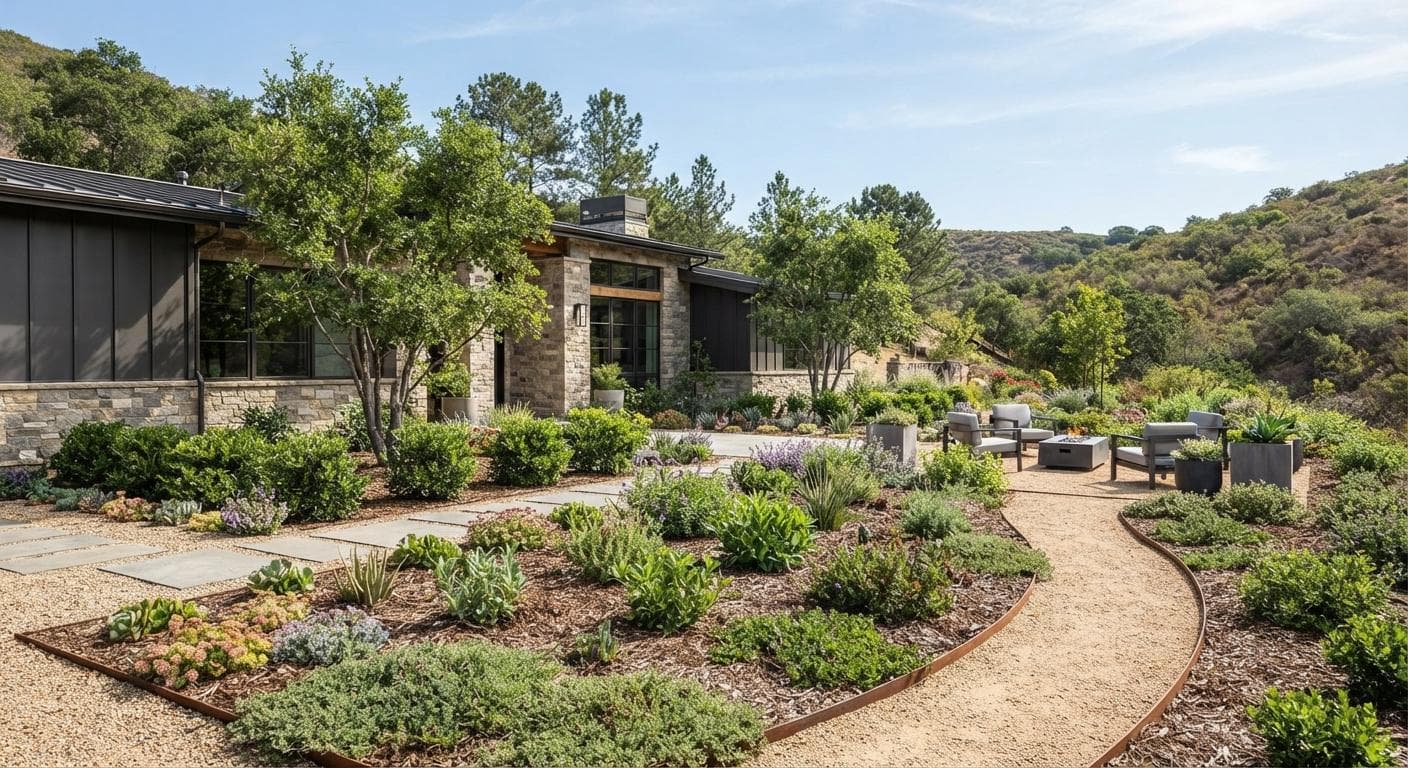
Fire-Safe Landscaping Rules Are Shifting Near Your Home
Fire-safe landscaping rules are changing in many wildfire-prone communities. Local agencies now place greater emphasis on defensible space, ember-resistant construction, and the plants and materials closest to homes. Requirements differ by location, so homeowners should confirm current rules with their local fire department or building office before removing vegetation or starting a landscape project.
Even where formal regulations have not changed, the underlying safety principles remain useful. Reduce dry, combustible material near structures. Separate vegetation into manageable zones. Keep trees maintained. Thoughtful landscaping can lower fire exposure while preserving shade, privacy, and healthy plants.
What Changing Fire-Safe Rules May Mean
There is no single national set of wildfire landscaping rules. States, counties, and municipalities set requirements based on local fire conditions, building codes, and land management plans. Some communities update rules to address ember entry, vegetation clearance, access for firefighters, or the use of combustible materials near buildings.
A rule change may affect new construction, renovations, properties in designated high-risk areas, or all homes within a local jurisdiction. It may also introduce inspection requirements or define which plants and materials are restricted in specific zones. Ask officials for the exact local standards rather than relying on a general online checklist.
Before making changes, find out which properties the rules cover, including rental homes and vacant lots. Determine whether requirements apply to existing landscaping or only new work. Learn how inspectors measure clearance around structures and access routes. Check whether permits or approval are needed to remove protected trees. Identify what deadlines or correction procedures apply.
Build Defensible Space in Practical Zones
Defensible space is the area around a home that homeowners manage to reduce the chance of fire reaching the structure and to give firefighters room to work. Many local programs divide this area into zones, although names and measurements differ. Follow the measurements specified by local authorities.
The area closest to the house deserves the most attention. Keep it free of dry leaves, dead plants, firewood, and other easily ignited materials. Choose low-growing, well-maintained plants where appropriate. Avoid placing shrubs or trees against siding, decks, or windows.
Farther from the building, homeowners can reduce continuous fuels by spacing plants, removing dead branches, and keeping grass trimmed. On larger lots, tree spacing and understory management may also matter. Slopes, wind exposure, vegetation type, and neighboring properties affect what measures are sensible.
Defensible space does not always mean clearing every tree. Healthy trees can provide shade and habitat, but branches that overhang roofs, dead limbs, dense lower growth, and connected shrubs may create paths for fire. A qualified arborist can assess tree health and recommend selective pruning or removal.
Choose Fire-Resistant Plants Carefully
The phrase fire-resistant plants can be misleading. No plant is fireproof. Some plants tend to ignite less readily when healthy and well watered, while dead foliage, dry mulch, and neglected growth can make almost any landscape more combustible.
When planning wildfire landscaping, look for plants suited to the local climate that retain moisture and need manageable upkeep. Avoid species known in your area for oily or resinous foliage, heavy dry litter, or rapid spread. Local extension services or fire agencies may provide regional planting guidance.
Good maintenance matters as much as the plant label. Remove dead leaves and branches. Prune plants to keep them separated. Avoid letting groundcover form an uninterrupted path toward the house. Keep trees and shrubs clear of vents, chimneys, and other openings where embers could collect.
Manage Mulch, Wood, and Outdoor Features
Mulch can conserve water and control weeds, but some materials ignite more readily than others. Dry bark, pine needles, and shredded wood may carry fire toward a structure, especially when piled against a wall or beneath a deck. Ask local officials whether noncombustible ground cover is required near buildings.
Gravel, stone, and well-maintained hardscape can create a less combustible area close to the home. They do not eliminate risk, but they can reduce the amount of burnable material next to walls and foundations. Keep firewood, lumber, patio cushions, and propane equipment in locations that meet local safety guidance.
Check features that collect debris, including roof valleys, gutters, deck corners, and beneath outdoor stairs. Clear leaves and needles regularly. Screen vents as required by building codes. Do not block ventilation openings with improvised materials.
Tree Care and Professional Help
Tree trimming can improve clearance, but improper cuts can weaken a tree or create new hazards. Avoid topping, which removes large portions of the crown and can lead to unstable regrowth. A professional should also handle limbs near power lines, work at height, or trees that lean toward a home.
A certified arborist is a tree care specialist with professional training and credentials in tree assessment and management. Ask whether the arborist has experience with wildfire risk and can explain which recommendations reflect local rules. For removal work, verify insurance, written estimates, cleanup terms, and permit responsibilities.
Costs depend on tree size, access, condition, disposal, and local labor rates. Basic pruning for a small tree may cost a few hundred dollars, while large trees or complex work near structures can cost several thousand. Request more than one written estimate for substantial work. Be wary of pressure to remove healthy trees without a clear reason.
A Homeowner Checklist for Compliance
Use a simple routine to keep the property safer and make rule compliance easier.
- Contact the local fire authority or building department for current requirements.
- Walk the property and note dry vegetation, overhanging limbs, and debris traps.
- Clear combustible material from roofs, gutters, decks, and the area beside the home.
- Prune or remove vegetation according to local clearance standards.
- Keep records of inspections, permits, and completed work.
Do not burn yard waste unless local rules allow it and conditions are safe. For larger cleanups, arrange green waste disposal through an approved service. If you rent, clarify which tasks belong to you and which require the property owner's approval.
Frequently Asked Questions
Are fire-safe landscaping rules the same everywhere?
No. Requirements vary by jurisdiction and may depend on fire hazard zones, property type, and building work. Confirm standards with the local agency responsible for fire safety or permits.
Do fire-resistant plants guarantee that a home will survive a wildfire?
No. Plant selection can reduce some landscape fuels, but wind-driven embers, nearby structures, and building vulnerabilities still pose risks. Combine careful landscaping with home maintenance and local preparedness guidance.
Should I remove every tree near my house?
Usually not. The right approach depends on tree condition, spacing, species, slope, and local clearance rules. An arborist can help distinguish trees that need pruning from those that may need removal.
Is gravel always required next to a home?
Some jurisdictions require noncombustible ground cover within a certain distance of structures. Others allow wood mulch if it is kept moist and separated from buildings. Check local standards before making changes.
Can I prune trees myself?
Homeowners can handle small, low branches on healthy trees with proper tools and safety precautions. Larger limbs, work near power lines, or trees that require climbing should be left to certified professionals.
Protect Your Property Before Fire Season
Start with your local requirements, then focus on practical maintenance. Clear debris. Keep plants healthy and separated. Address tree hazards before fire season arrives. A qualified tree care professional can help you protect valuable trees while reducing avoidable risks around your home.