
Suburban Root Rot Surge: Spot It Before 2025 Damage
Tree health in suburban landscapes faces increasing threats from root rot diseases that develop silently below the soil surface. Homeowners frequently miss initial indicators until trees show clear decline, which often leads to expensive removals or structural damage. Early detection of root rot saves trees, maintains aesthetic appeal, and avoids potential hazards. This guide details identification, diagnosis, and treatment methods to halt root rot before it inflicts major harm on suburban trees.
Root Rot Costs
National Average Costs
Expenses for managing root rot depend on factors such as tree size, site location, and infection severity. Homeowners typically pay from several hundred dollars to thousands for expert diagnosis, soil analysis, and interventions. Removal of large or unstable trees escalates these figures considerably.
Costs by Project Scale or Type
- Small ornamental trees: Interventions or removals remain in the lower cost bracket due to easier access and reduced labor needs.
- Medium landscape trees: Mid-level expenses cover chemical applications, root collar exposure, or selective root renewal.
- Large shade trees: Higher costs arise from the need for advanced arborist tools, soil ventilation, or crane operations for removal.
Primary Cost Influences
- Tree species: Certain varieties exhibit greater resistance to root rot infections.
- Soil drainage: Areas with inadequate drainage foster fungal proliferation and demand more intensive remedies.
- Infection scope: Interventions in early phases cost less than those for severe deterioration.
- Site access and position: Proximity to buildings or underground lines necessitates additional effort and protective measures.
- Expert qualifications: Arborists certified with specialized diagnostic equipment command higher fees than basic landscapers.
Types of Root Rot Diseases
Root rot manifests in various forms, each driven by specific pathogens that generate unique symptoms and advancement rates. Understanding these distinctions aids in choosing appropriate countermeasures.
Phytophthora Root Rot
Phytophthora represents the predominant and most invasive root rot variant in suburban environments. It flourishes in waterlogged zones and disperses readily via watering systems or precipitation.
Advantages for Management:
- Early identification allows effective control.
- Some tree varieties offer resistant strains for replanting.
Challenges:
- Advanced stages destroy roots swiftly.
- Persistent soil spores threaten future plantings for years.
Armillaria Root Rot
Known as honey fungus, Armillaria invades via decomposing organic material and extends through interconnected roots across properties.
Advantages for Management:
- Progression occurs gradually, providing opportunities for early intervention.
- Mushroom formations offer clear diagnostic clues.
Challenges:
- Eradication proves challenging once entrenched.
- It undermines the stability of established trees.
Pythium and Rhizoctonia
These pathogens target young or recently transplanted trees, capitalizing on relocation stress and dense soils.
Advantages for Management:
- Enhanced drainage and soil loosening yield positive results.
- Fungicide soaks effectively curb their spread.
Challenges:
- Untreated cases destroy fresh plantings quickly.
- Symptoms often mimic nutrient shortages, delaying accurate diagnosis.
DIY Approaches Versus Professional Services
Attempting root rot management independently carries risks, particularly for significant or aged trees. Basic techniques like soil enhancements, fungicide use, or branch trimming suit minor instances but fail against profound root issues.
Benefits of DIY Methods:
- Reduced upfront expenses.
- Suitable for modest trees displaying initial distress.
Drawbacks of DIY Methods:
- Absence of advanced diagnostic equipment.
- Possibility of disseminating the pathogen through mishandling.
- Likelihood of incorrect disease identification, resulting in ineffective actions.
Professional arborists provide precision and security. These experts conduct root crown examinations, gather laboratory specimens, and administer systemic remedies without risk. They also determine if a tree presents a collapse danger. Opt for professional assistance when decline becomes evident or affects several trees.
Detecting Root Rot
Early root rot detection involves surface observations and subsurface examinations. These steps help identify issues prior to extensive spread.
-
Monitor Foliage and Canopy Shifts
Examine for sparse leaves, discoloration to yellow, or premature shedding. Such changes frequently start on one tree side. -
Examine the Trunk Base
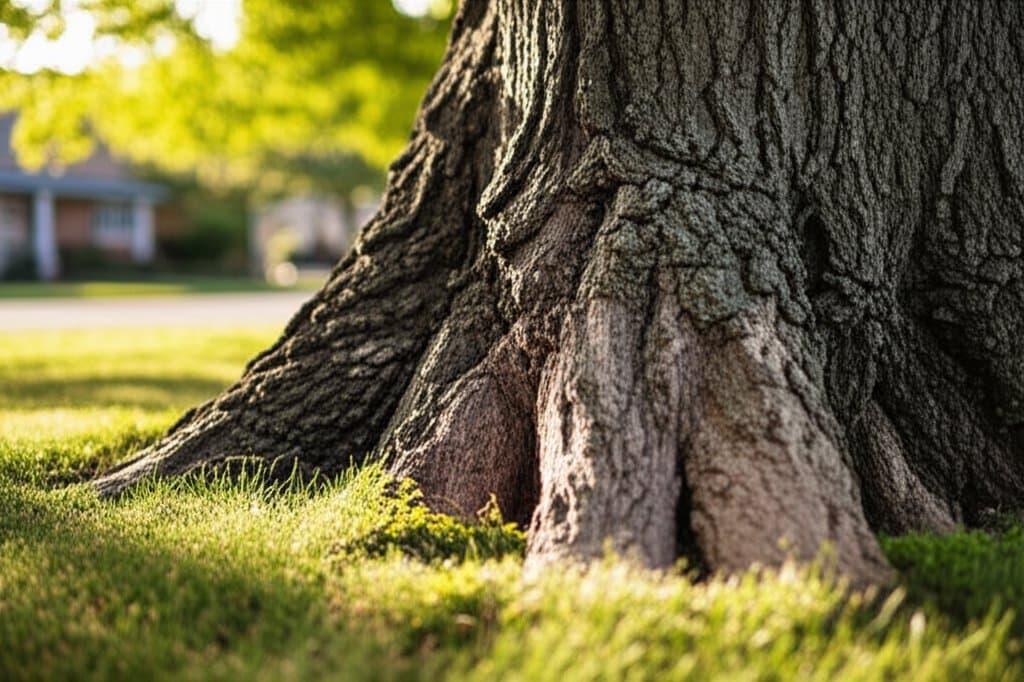
Search for softened, darkened, or fissured bark at ground level, signaling fungal presence. Severe instances may release a pungent, alcohol-like smell. -
Look for Mushrooms or Fungal Structures
Groups of fungi or white thread-like growths at the base point to Armillaria or related decays. -
Explore the Root Area
Carefully excavate near roots using a trowel. Affected roots appear soft and display dark brown or black cores. -
Assess Soil Water Retention
Post-irrigation, note if soil remains saturated. Prolonged wetness favors Phytophthora development. -
Consult Experts for Confirmation
When symptoms overlap with other issues or involve prized trees, arrange a specialist visit for laboratory verification and strategy development.
Strategies for Root Rot Prevention and Control
- Enhance Drainage: Reshape terrain, add French drains, or loosen compacted zones to minimize standing water risks.
- Water Judiciously: Apply deep, occasional irrigation to build resilient roots while curbing pathogen activity.
- Maintain Tool Hygiene: Sterilize cutting and excavation implements to block spore transmission among trees.
- Choose Tolerant Varieties: Select trees bred for endurance in moist conditions during new installations.
- Apply Mulch Appropriately: Layer mulch to 2-3 inches thick, maintaining a 3-inch gap from the trunk to foster airflow.
Frequently Asked Questions
What Indicates Initial Root Rot in Trees?
First indicators encompass leaf yellowing, reduced growth rates, and limb wilting. Progression may involve trunk softening or dark sap leakage at the base.
Does Root Rot Transfer Between Trees?
Affirmative; numerous fungi propagate via soil or root networks. Compacted or flooded ground accelerates transfer from diseased to healthy specimens.
Can Root Rot Receive Treatment?
Early mild infections respond to drainage improvements, precise fungicide applications, and removal of compromised roots. Extensive damage generally defies reversal.
When Must a Root-Rotted Tree Undergo Removal?
Removal becomes essential if stability falters or over half the roots suffer. Arborists evaluate hazards to guide decisions.
Which Tree Species Resist Root Rot Best?
Species such as bald cypress, river birch, and red maple endure wetter soils effectively. Align selections with site hydrology.
Is Immediate Replanting Feasible After Tree Removal?
Direct replanting hazards persist due to lingering soil pathogens. Allow multiple seasons or amend soil fully before introducing resistant types.
Safeguarding Suburban Tree Health
Prompt root rot identification sustains vibrant landscapes and averts substantial financial losses. Regular checks, appropriate irrigation, and soil oversight form robust barriers against subsurface threats. Engage certified arborists promptly upon noticing symptoms or group-wide stress to secure long-term tree vitality, property worth, and resident safety.