
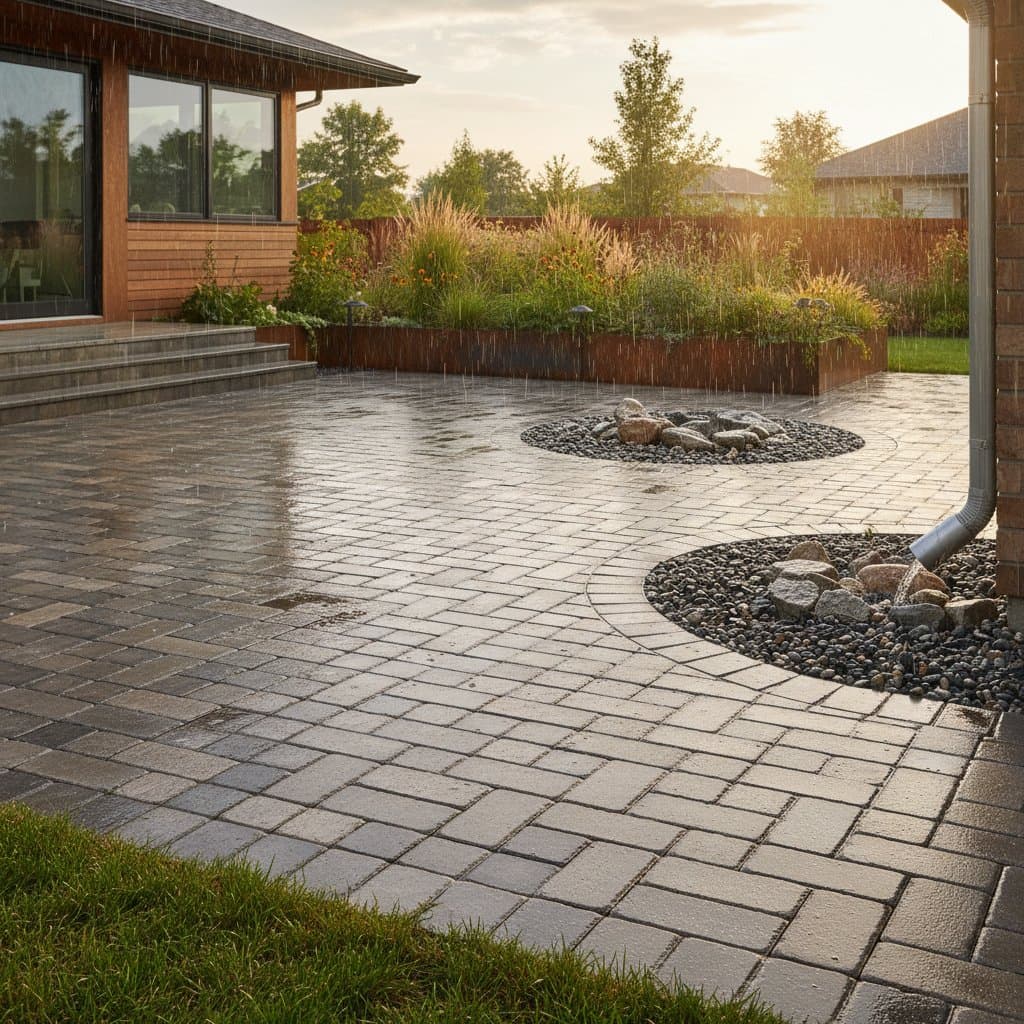
Why Eight States Now Mandate Permeable Hardscaping
States nationwide strengthen environmental regulations to preserve waterways and promote sustainable urban expansion. A significant development involves requirements for permeable hardscaping, which enables rainwater to infiltrate the ground rather than flow directly into storm drains. Homeowners encounter direct implications in the construction of driveways, patios, and walkways. Knowledge of these regulations equips property owners to achieve compliance, enhance land health, and increase property value.
This article details permeable hardscaping, the reasons for state mandates, environmental and homeowner advantages, adaptation strategies for properties, and selection of appropriate materials and professionals.
Understanding Permeable Hardscaping
Permeable hardscaping consists of outdoor surfaces constructed from materials that permit water passage. Unlike impermeable concrete or asphalt that blocks soil absorption, these systems incorporate pavers, gravel, or porous concrete to facilitate water filtration into the underlying earth.
Such designs mitigate runoff, capture pollutants, and recharge groundwater supplies. Municipalities increasingly enforce these features in regions prone to intense rainfall, flooding, or erosion that overburden stormwater infrastructure.
Reasons for State Mandates on Permeable Hardscaping
Eight states enforce permeable materials for designated residential and commercial developments. Objectives include flood reduction, ecosystem preservation, and adherence to federal water quality guidelines. These policies extend beyond visual appeal to avert property damage and advance enduring sustainability.
Local building codes incorporate stormwater provisions that demand permeability in driveways, parking areas, and patios. Property owners undertaking renovations or new builds must verify compliance to avoid penalties and project setbacks.
Environmental and Economic Advantages
Permeable hardscaping promotes ecological equilibrium and elevates property worth. Natural filtration of stormwater excludes contaminants such as oil, fertilizers, and sediment from entering rivers and lakes, thereby elevating water purity and easing burdens on municipal drainage networks.
Economically, these installations decrease ongoing maintenance expenditures. They diminish reliance on costly drainage systems and avert structural issues from water accumulation. In select areas, adoption of eco-friendly pavers qualifies owners for stormwater rebates or tax reductions.
Materials for Permeable Hardscaping
Property owners select from various permeable options that balance functionality and style:
- Permeable Pavers: Interlocking units of concrete or clay with gravel- or sand-filled joints for water entry.
- Porous Asphalt: An open-graded variant of traditional asphalt that accommodates water passage.
- Pervious Concrete: A mix with reduced fines to form voids for efficient drainage.
- Gravel Systems: Cost-effective solutions for driveways or paths, ideal for natural aesthetics.
Selections vary in infiltration capacity, longevity, and appearance. Factors like local weather, soil composition, and usage determine the optimal material.
Factors Prompting State Regulations
Urban Flooding Mitigation
Development frequently substitutes absorbent land with non-porous coverings. Intense rains overwhelm these surfaces, causing floods and soil loss. Permeable installations absorb excess water, preventing harmful overflow.
Safeguarding Water Quality
Surface runoff transports oils, pesticides, and debris into waterways. Soil filtration in permeable setups captures these elements, protecting streams and aquifers from contamination.
Replenishing Groundwater
Conventional pavements prevent rain from reaching underground reserves. Permeable approaches mimic natural processes to sustain aquifer levels essential for potable water supplies.
Adhering to Federal Stormwater Standards
States bear responsibility for national clean water compliance. Mandating permeable elements prevents local projects from straining regional stormwater capacities.
Adapting to Climate Shifts
Escalating storm intensity necessitates robust water management. Permeable surfaces function as integrated absorbers, bolstering urban areas against evolving precipitation patterns.
Steps in Permeable Hardscaping Installation
Professionals execute permeable installations through structured phases to guarantee effective drainage. Preparation emphasizes layering for stability and water retention.
- Site Evaluation and Design: Assess soil characteristics, gradients, and flow paths to tailor the system.
- Excavation Work: Clear existing material to accommodate foundational layers.
- Base Construction: Layer crushed stone or gravel to store water and ensure stability.
- Surface Application: Position pavers, porous concrete, or asphalt with gaps for infiltration.
- Finalization and Testing: Fill joints with permeable aggregates, compact the assembly, and verify performance.
- Review and Care Guidelines: Inspect for optimal slope and flow, then outline upkeep routines.
Homeowner Maintenance Strategies
Permeable surfaces require minimal effort to sustain performance. Routine sweeping clears debris from joints, preserving infiltration. Refrain from sealants, as they impede water flow; opt for occasional pressure washing to eliminate buildup.
Schedule expert cleanings biennially for high-use zones like driveways. These practices extend system lifespan and maintain regulatory alignment.
Impacts on Homeowners and Professionals
New mandates compel homeowners to integrate permeability in upcoming endeavors. Landscapers evolve services with certified materials and techniques attuned to environmental needs.
Authorities scrutinize plans for adherence, spurring demand for skilled practitioners. This evolution yields superior, eco-conscious outdoor environments for residents.
Selecting Qualified Installers
Prioritize contractors with these attributes for permeable work:
- Specialized Certification: Proof of training in drainage and code compliance.
- Regional Expertise: Familiarity with local soils and weather influences.
- Project Examples: Examination of past installations for quality assurance.
- Guarantee Documentation: Coverage for installation flaws or material defects.
Obtain several bids and secure written confirmation of regulatory conformity.
Implementing Permeable Solutions for Lasting Benefits
Permeable hardscaping advances accountable development that shields ecosystems and bolsters community vitality. As additional states embrace these requirements, proactive adoption secures compliance and amplifies property resilience.
Investing in such features today cultivates pristine waterways, secure surroundings, and adaptive landscapes enduring for generations.