
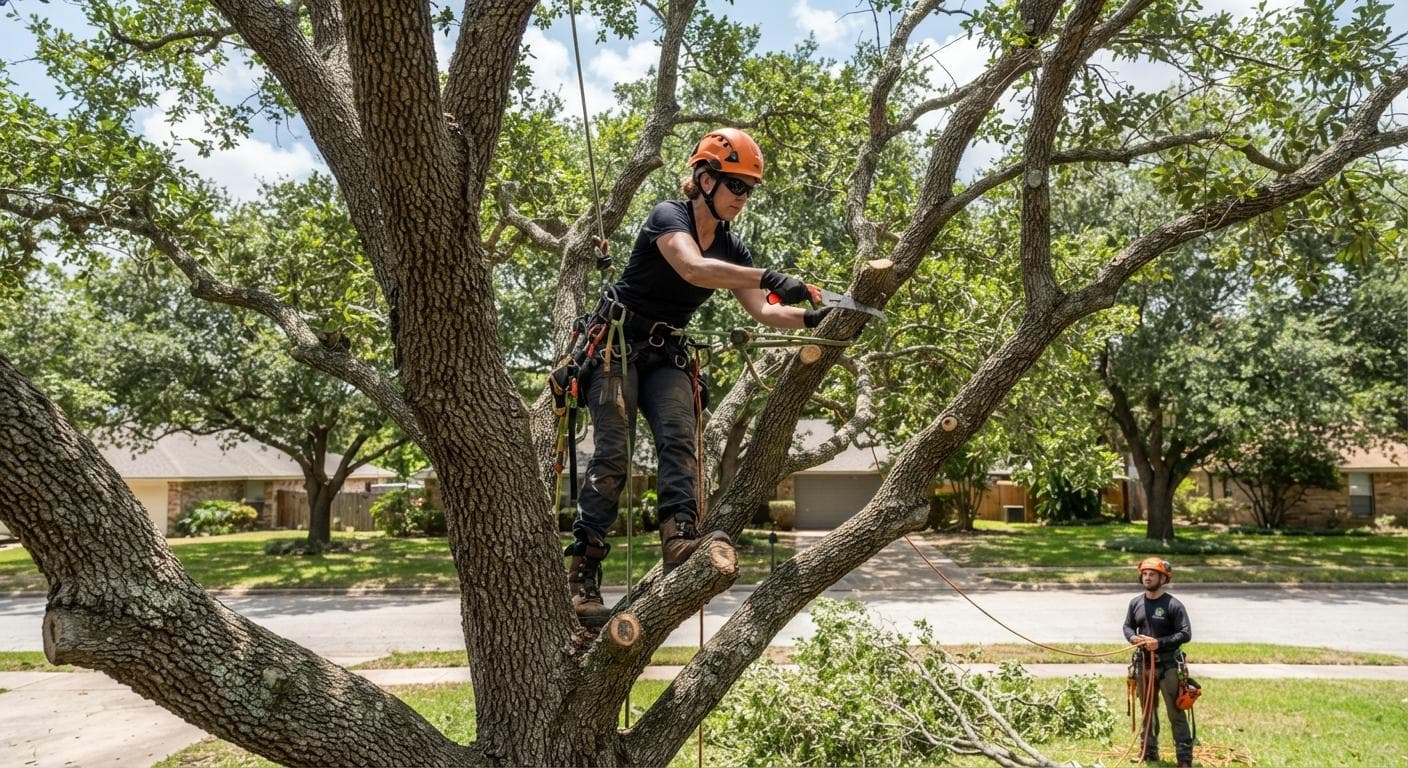
Storm Pruning Secrets That Save Trees in Hurricanes
Storm pruning can help trees withstand hurricane winds by removing dead, damaged, and poorly attached branches while preserving a strong, balanced canopy. The safest preparation starts with a professional assessment, since excessive or poorly timed pruning can weaken a tree and make breakage more likely.
Good hurricane tree preparation focuses on a tree's structure, health, and surroundings, not simply on cutting away as much foliage as possible. A qualified arborist can identify hazards, recommend targeted pruning, and explain which problems require action before a storm threatens your property.
How Strategic Pruning Helps Trees
Wind puts force on trunks, branches, and root systems. Dead limbs, cracked unions, and crowded growth can fail under stress, while a heavy, uneven canopy may place extra strain on a tree's structure. Removing specific defects can reduce avoidable hazards and improve a tree's form.
Pruning cannot make a tree hurricane-proof. Severe winds can uproot or break even healthy trees, especially when soil becomes saturated. The goal is to reduce preventable failures without removing healthy foliage the tree needs for energy, growth, and protection.
A certified arborist is a trained tree-care specialist who can assess a tree's condition and recommend appropriate work. Look for targeted cuts that preserve the natural shape and balance of the canopy, rather than aggressive cutting that leaves large stubs or strips branches back to bare limbs.
What to Prune Before Hurricane Season
The right work depends on the species, age, health, and location of each tree. A professional may recommend removing:
- Dead or broken branches. These limbs can fall with little warning and often fail first in strong winds.
- Diseased or decaying wood. Decay can weaken branches or the trunk, though visible symptoms do not always reveal how much strength remains.
- Rubbing or crossing limbs. Repeated contact can damage bark and create weak points.
- Weakly attached branches. Included bark, which forms where two stems grow tightly together, can prevent a strong attachment.
- Hazardous limbs near structures. A branch over a roof, driveway, or service line deserves careful evaluation, not a rushed cut.
- Small, competing growth. Selective thinning can improve structure when an arborist identifies specific branches that crowd or unbalance the canopy.
Avoid removing large portions of a tree's living crown. Heavy pruning can trigger stress, stimulate weak regrowth, and expose bark to sun damage. A reputable tree specialist should explain why each proposed cut is needed and avoid promising that pruning will prevent all storm damage.
Pruning Practices That Can Harm Trees
Some familiar-sounding methods can leave trees less stable. Topping, the removal of large sections of a tree's upper crown, creates large wounds and often leads to clusters of weak shoots. It can also distort the tree's natural structure without making it reliably safer in high winds.
Over-thinning is another concern. Removing too many interior branches can leave dense growth at the ends of limbs, which may catch wind and place added stress on long branches. Good pruning maintains an appropriate canopy and does not turn a tree into a bare framework.
Improper cuts can also invite decay. Cuts should generally be made just outside the branch collar, the slightly raised area where a branch joins the trunk or a larger limb. Cutting flush against the trunk or leaving a long stub can interfere with the tree's natural wound response.
The Storm-Damage Tree Pruning Assessment
A useful assessment looks at the entire tree and its surroundings, not just the most visible branch. The arborist may inspect the trunk, branch unions, root zone, soil, and nearby buildings. They may also ask about past damage, recent construction, drainage changes, or pruning.
Before work begins, ask the professional to describe the tree's condition and separate urgent hazards from routine maintenance. A written estimate should identify the trees and limbs involved, the proposed pruning methods, cleanup, and any additional services such as stump grinding.
Costs depend on tree height, access, species, condition, and how close branches sit to buildings or power lines. Routine pruning of a small to medium tree often ranges from $250 to $800, while large trees or complex work can cost $800 to $2,000 or more. These are broad estimates, not a quote. Emergency service after a storm may cost more due to difficult conditions and urgent scheduling.
DIY or Hire a Professional?
Homeowners can safely handle light pruning of small branches from the ground, using clean, sharp tools and following local disposal rules. Stay within easy reach and avoid any limb that is cracked, under tension, or positioned above a person, structure, or utility line.
Hire a professional for large trees, overhead branches, climbing, chainsaw work, or limbs close to electrical wires. Tree work at height carries serious risks from falling wood, unstable branches, and equipment. Never attempt to cut a branch that could contact a power line. Contact the utility provider or a qualified tree service that coordinates this work.
For a hazardous tree, do not stand beneath the canopy or try to pull down hanging limbs. Keep people and pets away, and arrange a professional evaluation. If a tree or branch has fallen onto a power line, treat the line as energized and contact emergency services and the utility provider.
Choosing a Qualified Tree Specialist
A careful hiring process can protect both the tree and your property. Ask for proof of liability insurance and workers' compensation coverage, plus a written estimate. A reputable provider should explain the work in plain language, discuss risks, and welcome questions.
Check whether the person assessing the tree holds a current arborist credential from a recognized professional organization. Credentials do not guarantee a particular result, but they indicate relevant training. Also confirm who will perform the work and whether the crew has experience with storm preparation and hazardous tree care.
Be cautious of anyone who recommends topping, demands immediate payment, or claims that every tree needs the same treatment. Avoid contractors who arrive unsolicited after a storm and pressure you into signing before you understand the scope. For work involving utility lines, confirm that the contractor has the appropriate qualifications and coordination procedures.
A Practical Hurricane Tree Preparation Plan
Prepare well before a storm is forecast. Trees should not receive drastic last-minute pruning, and wet ground can increase the risk that a weakened tree will uproot. A regular inspection gives you time to plan necessary work and compare estimates.
Use this checklist to organize your preparation:
- Walk the property from a safe distance and note dead limbs, cracks, leaning trunks, or exposed roots.
- Look for branches touching roofs, windows, fences, or utility lines.
- Arrange an arborist assessment for large, mature, damaged, or uncertain trees.
- Complete recommended pruning and remove loose debris according to local rules.
- Keep vehicles, outdoor furniture, and play equipment away from trees with suspected defects.
- Reassess after strong winds, flooding, or construction that changes soil or drainage.
Do not cut roots to solve a canopy concern. Roots anchor and supply the tree, and cutting them can destabilize it. Likewise, avoid fastening objects to the trunk or storing soil and materials over the root zone.
Frequently Asked Questions
When should I prune trees for hurricane preparation?
Schedule an inspection well before a storm is forecast, then follow the arborist's advice on timing. The best window depends on tree species, health, local growing conditions, and the type of pruning required.
Does thinning a tree's canopy prevent storm damage?
No pruning method can guarantee protection from hurricanes. Selective removal of specific defective branches may reduce certain risks, but excessive thinning can harm the tree and leave it poorly balanced.
Should I remove a leaning tree before a hurricane?
Not necessarily. Some trees naturally lean, while a new lean, raised soil, or cracked ground can signal root failure. Keep clear of a tree with changing movement or soil disturbance and have a qualified professional assess it promptly.
Can I prune a tree myself with a ladder?
Avoid ladder-based pruning. A falling branch can knock you off balance, and a ladder may shift while you handle a saw. Limit DIY work to small branches reachable from the ground, and leave overhead or heavy limbs to trained crews.
How much does storm pruning cost?
Many routine jobs fall around $250 to $800 for small or medium trees. Large trees, restricted access, hazardous limbs, and extensive cleanup can raise the price to $800 to $2,000 or more. Ask for a site-specific written estimate.
Should I remove a tree that has storm damage?
A tree with storm damage may still be stable enough to remain, or it may pose an immediate hazard. Only a qualified arborist can determine whether removal is necessary based on the extent of damage, the tree's location, and the risk to nearby structures or people.
Protecting Your Trees and Property
A well-planned approach to storm preparation gives you the best chance of preserving both your trees and your property. Regular assessments, targeted pruning, and professional guidance help reduce risks while maintaining the health and beauty of your landscape. Taking these steps before hurricane season arrives allows you to respond confidently when storms threaten.