
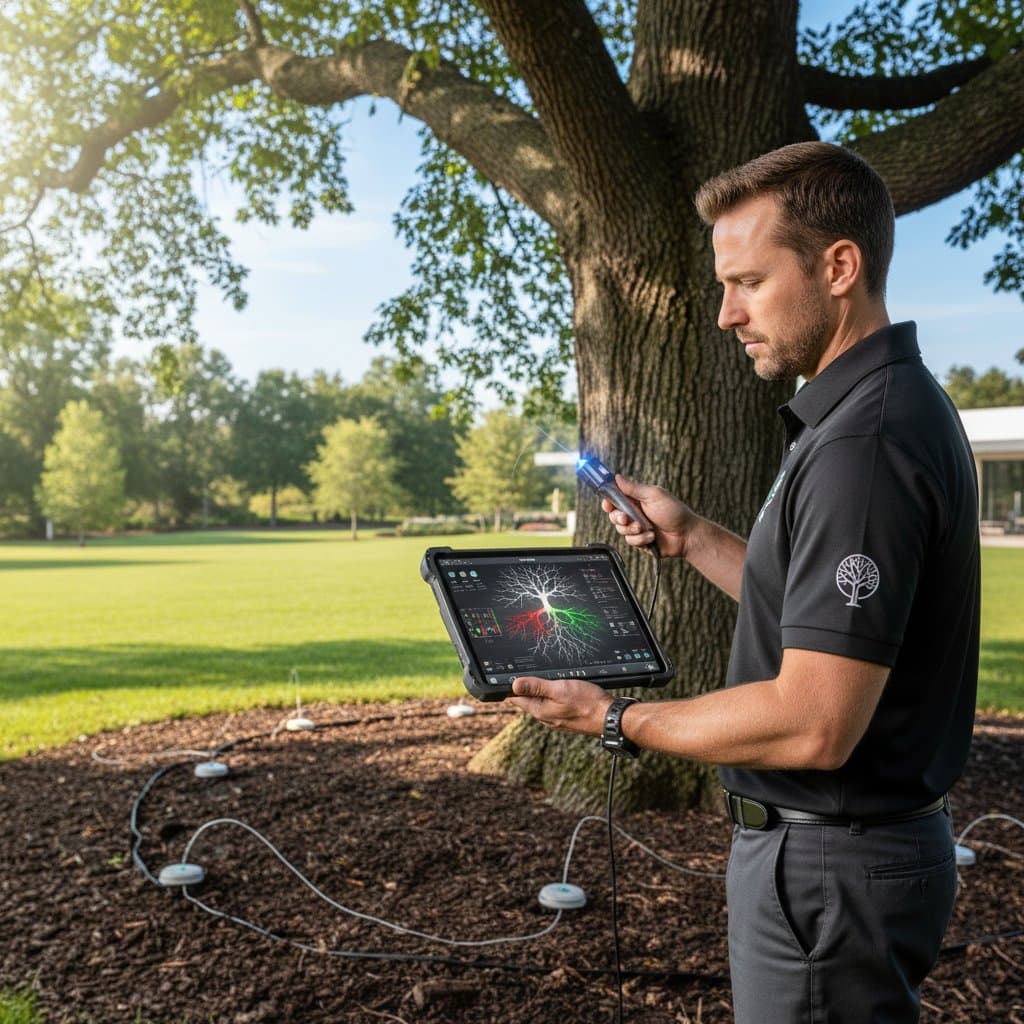
Save Trees from Root Rot with Early Detection Apps
Healthy trees form the foundation of any vibrant landscape, but a hidden danger often strikes from below. Root rot, triggered by soil-dwelling fungi such as Phytophthora, transforms robust trees into fragile, hazardous structures. Fortunately, innovative early detection apps empower homeowners and arborists to intervene promptly, halting the disease before it proves lethal.
This guide details the progression of root rot, the mechanics of detection apps, and practical measures to safeguard trees and preserve landscape value.
Understanding Root Rot and Its Costs
Root rot targets tree roots, blocking water and nutrient uptake. As the infection advances, reversal becomes challenging. Affected trees risk collapse, creating safety concerns and necessitating expensive removal.
National Average Cost of Tree Replacement
The price to replace a mature tree ranges from several hundred to thousands of dollars, influenced by species, size, and region. Factor in stump grinding, soil remediation, and new planting, and expenses mount rapidly. Proactive detection via apps proves more economical than managing severe cases.
Key Cost Factors
- Species of Tree: Certain varieties resist root rot better than others.
- Extent of Damage: Initial infections might respond to treatment, whereas progressed ones demand removal.
- Soil Conditions: Inadequate drainage and dense soil foster fungal proliferation.
- Professional Intervention: Engaging a certified arborist for assessment and remedies increases overall outlay.
Detection apps enable early symptom identification, curbing escalation and minimizing financial impact.
How Root Rot Detection Apps Work
Contemporary tree health applications employ visual assessment, artificial intelligence algorithms, and environmental metrics to pinpoint root rot indicators. Tailored for both novices and experts, these tools eliminate the need for costly lab analyses.
Image Recognition and AI Analysis
Users photograph foliage, bark, or adjacent soil, which the app's AI evaluates against a repository of disease patterns. Indicators like subtle leaf yellowing or basal fungal mats surface early, beyond unaided observation.
Soil and Moisture Monitoring
Advanced versions pair with sensors measuring soil humidity and temperature. Excess moisture, a prime enabler of root rot, triggers alerts for corrective drainage adjustments.
Geolocation and Historical Tracking
By logging data tied to specific sites, apps facilitate trend analysis over seasons. On expansive estates or communal grounds, this aids in isolating and containing potential outbreaks.
Types of Tree Health Apps
Basic Visual Diagnostic Apps
Focused on photo-based evaluation, these suit casual users seeking straightforward health checks.
Pros:
- User-friendly interface
- No supplementary gear needed
- Instant feedback
Cons:
- Relies on surface visuals, potentially overlooking subsurface issues
- Accuracy varies with image quality
Integrated Sensor-Based Apps
These link to probes gauging moisture, heat, and electrical conductivity in soil, offering holistic root zone insights.
Pros:
- Ongoing surveillance
- Flags conditions ripe for fungal development
- Proactive notifications
Cons:
- Upfront investment in sensors
- Involves installation and periodic calibration
Professional-Grade Diagnostic Platforms
Arborists leverage these for broad-scale evaluations, incorporating aerial imagery, lab integration, and forecasting models.
Pros:
- Superior precision
- Manages extensive sites efficiently
- Ideal for business operations
Cons:
- Substantial cost and technical demands
- Often requires ongoing fees
DIY Detection vs. Hiring a Professional
Apps simplify initial scouting, yet nuanced diagnosis and remediation benefit from expert input.
DIY Detection:
Individuals employ apps to note anomalies and log environmental data. This method delivers cost savings and real-time insights, though it risks underdetecting intricate root problems.
Hiring a Professional:
Arborists utilize specialized equipment and laboratory verification to pinpoint pathogens. They prescribe targeted therapies, such as fungicides, root barriers, or grading alterations. Though pricier, this yields reliable outcomes.
Recommendation:
Incorporate apps into routine checks; summon professionals upon alerts or evident deterioration.
Steps to Protect Trees from Root Rot
- Assess Drainage: Verify that runoff directs away from roots. Stagnant water accelerates fungal onset.
- Scan Regularly: Employ an app for monthly photo captures and sensor logs to monitor shifts.
- Adjust Watering: Apply thorough, spaced irrigations to avoid saturation.
- Mulch Carefully: Position organic layers several inches from trunks to promote ventilation.
- Act at the First Sign: Address app-detected changes like wilting or mushy roots by consulting experts without delay.
Tips for Long-Term Tree Health
Select indigenous or resilient species for new plantings to bolster natural defenses. Periodically aerate dense soil to enhance percolation. Clean tools between cuts to curb pathogen transfer. Refrain from mounding earth against trunks, which traps moisture. Sustain app-based vigilance to anticipate and avert decline.
Frequently Asked Questions
What are the first signs of root rot in trees?
Initial indicators encompass leaf yellowing, sparse foliage, and mushy or darkened roots. Fungal mats or an acrid odor at the trunk base may also appear.
Can root rot spread to nearby trees?
Indeed, spores disseminate via soil and runoff, endangering adjacent trees, particularly where roots interconnect or drainage falters.
How accurate are tree health detection apps?
Accuracy ranges from 80 to 95 percent, contingent on app sophistication, image clarity, and integration with sensors. They excel at early flagging but pair best with professional confirmation.
Are these apps compatible with all types of trees?
Most cover prevalent species like oaks, maples, and pines, though coverage varies. Review app documentation for specific compatibility.
Can root rot be cured once detected?
Early discovery permits treatments like fungicide applications and improved aeration, often salvaging trees. Advanced infections typically necessitate removal to protect surrounding vegetation.
Safeguard Your Trees for Lasting Vitality
Integrating detection apps with vigilant care transforms root rot from a devastating force into a manageable challenge. By acting swiftly on technological insights, homeowners secure enduring landscapes free from unforeseen losses.