
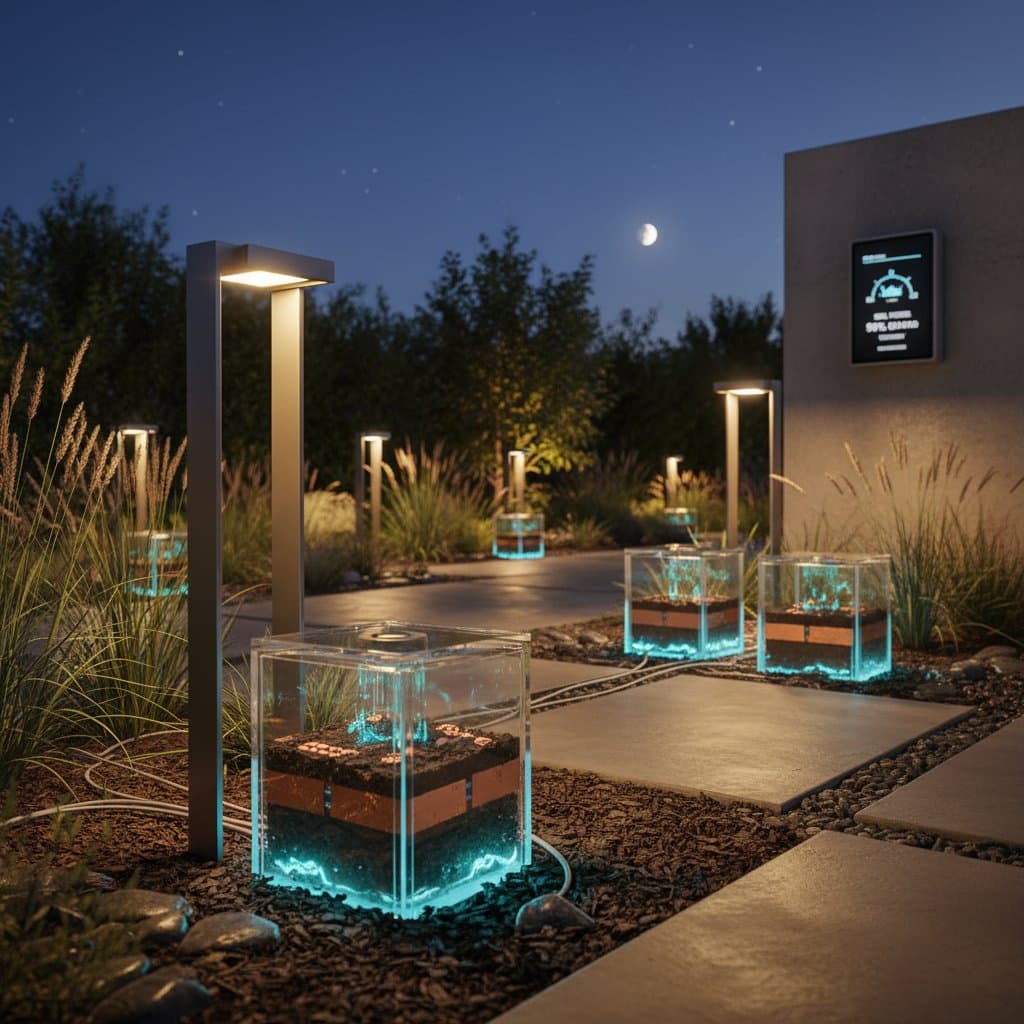
Soil Batteries: Illuminating Sustainable Landscapes Without Grid Power
Sustainable landscaping advances rapidly, and soil batteries stand out as a pivotal innovation. These devices convert the inherent chemistry of soil into a renewable energy source that powers outdoor lighting and sensors. Homeowners and landscape designers increasingly adopt soil batteries to achieve cleaner, self-reliant solutions for illuminating gardens, pathways, and public spaces, bypassing reliance on traditional electricity grids.
This guide details the mechanics of soil batteries, associated costs, advantages and drawbacks, and integration strategies within sustainable landscape designs.
Soil Battery Costs
National Average Costs
Installation costs for soil battery systems depend on scale, complexity, and energy requirements. Small-scale residential setups for garden lights or low-voltage devices range from several hundred to a few thousand dollars. Larger configurations supporting multiple lighting zones or smart irrigation systems incur higher expenses yet provide enhanced energy autonomy over time.
Costs by Project Scale or Type
- Small gardens or single-light setups: These remain the most economical, featuring a basic soil battery module paired with an LED fixture.
- Medium residential landscapes: Configurations often involve multiple battery cells linked in series to energize several lights or sensors.
- Large gardens or commercial projects: Such installations demand extensive wiring, moisture regulation systems, and monitoring tools to maintain reliable output.
Primary Cost Influences
Multiple factors determine the overall expense of a soil battery installation:
- Soil composition and moisture levels: Loamy or organic-rich soil boosts conductivity, which enhances efficiency and minimizes the need for supplementary materials.
- System configuration: Tailored designs incorporating multiple cells or smart controls elevate both functionality and price.
- Labor involvement: Professional services guarantee optimal efficiency and safety, though they contribute to elevated total costs.
- Lighting selections: LED fixtures consume minimal energy, rendering them suitable companions for soil-based power systems.
- Maintenance considerations: Designs facilitating easy access and oversight carry modestly higher initial costs but yield reduced long-term expenditures.
Varieties of Soil Battery Systems
Soil batteries vary in design to accommodate diverse landscape demands and power needs.
Microbial Fuel Cell Soil Batteries
These systems leverage soil-dwelling microbes to produce electricity. Bacteria decompose organic materials, releasing electrons that electrodes capture.
Advantages:
- Renewable and self-perpetuating operation.
- Low maintenance requirements after initial setup.
- Continuous function provided soil moisture persists.
Disadvantages:
- Energy output varies with temperature and moisture fluctuations.
- Optimal performance necessitates suitable soil chemistry.
Metal Electrode Soil Batteries
This design employs two distinct metal electrodes embedded in the soil, initiating a chemical reaction that generates electricity.
Advantages:
- Straightforward and cost-effective assembly.
- Instant energy production post-installation.
- Compatibility with most soil types requiring little preparation.
Disadvantages:
- Electrodes degrade through corrosion, necessitating periodic replacement.
- Power yield proves lower than that of microbial alternatives in many cases.
Hybrid Soil-Energy Systems
Hybrid approaches integrate soil energy harvesting with solar panels or small wind turbines to enhance reliability and output.
Advantages:
- Delivers steady power irrespective of soil variability.
- Suited for expansive landscapes or continuous lighting demands.
- Distributes load across energy sources, preventing overuse of any one.
Disadvantages:
- Demands greater upfront investment.
- Involves intricate wiring and control mechanisms.
DIY Approaches Versus Professional Installation
Assembling a modest soil battery offers an engaging project for hands-on homeowners. Basic configurations using materials such as copper and zinc electrodes can energize a single LED or sensor. Expanding to a comprehensive landscape illumination requires meticulous planning, however.
DIY Limitations:
- Regulating steady soil moisture and pH balance.
- Securing reliable electrical connections and insulation.
- Mitigating corrosion while upholding safe voltage thresholds.
Professional Benefits:
- Specialized knowledge in soil evaluation and electrical engineering.
- Utilization of robust, weatherproof components.
- Expedited setup and sustained dependability.
A combined strategy suits many homeowners. Begin with a modest DIY trial to gauge system response in local soil, then engage a landscape electrician or sustainable energy expert for comprehensive deployment.
Installing a Soil Battery Lighting System
Effective installation optimizes energy generation and longevity. Adhere to these essential steps for establishing a soil-powered lighting network.
-
Evaluate the Location
Pinpoint zones with reliable moisture and robust soil quality. Steer clear of compacted or sandy areas that hinder conductivity. -
Choose the Appropriate System
Select microbial, metal-electrode, or hybrid variants based on power demands and site-specific soil traits. -
Condition the Soil
Aerate the ground and incorporate organic compost to foster microbial activity and elevate conductivity. -
Position the Electrodes
Place the anode and cathode per manufacturer specifications, maintaining adequate separation and secure anchoring to avoid displacement. -
Link to Lighting Components
Connect electrodes to low-voltage LED lights or a compact inverter. Employ waterproof fittings and verify circuit integrity through testing. -
Oversee and Uphold the System
Routinely inspect soil moisture. Substitute deteriorated electrodes promptly, and confirm wiring insulation integrity.
Strategies for Optimal Performance
- Maintain Soil Hydration: Water serves as the medium for electrical conduction in soil batteries. Implement routine irrigation or drip systems to sustain uniform output.
- Incorporate Energy-Efficient Lights: Opt for LED or hybrid solar fixtures to lessen power consumption and prolong system durability.
- Conduct Regular Voltage Assessments: Frequent evaluations confirm component efficacy and reveal potential issues in advance.
- Shield Electrical Connections: Encase wiring in waterproof conduits to protect against corrosion and environmental damage.
- Promote Soil Vitality: Nutrient-dense soil bolsters microbial processes, directly enhancing electricity production.
Frequently Asked Questions
How Do Soil Batteries Produce Electricity?
Soil batteries generate power via chemical reactions or microbial processes within the earth. Electrons derived from soil interactions or bacterial activity flow between electrodes, forming a modest yet reliable current.
Can a Soil Battery Energize an Entire Yard?
Such capability exists, contingent on energy scale. Compact systems suffice for pathway illumination, whereas expanded arrays or hybrids manage numerous fixtures and sensors.
Does Soil Type Affect Performance?
Soil characteristics prove crucial. Loamy, nutrient-laden types with strong moisture retention excel. Arid or sandy soils benefit from amendments or hydration controls for steady results.
Are Soil Batteries Safe for Plants and Pets?
These systems pose minimal risk when installed correctly. Non-toxic materials and sealed designs prevent harm to roots or environmental release of byproducts.
What Is the Lifespan of a Soil Battery?
Systems endure for multiple years prior to upkeep needs. Microbial types operate ongoing with vital soil, though metal electrodes demand eventual renewal.
Do Soil Batteries Integrate with Existing Landscape Lighting?
Compatibility exists with low-voltage or solar networks, serving as supplementary or reserve power options.
Implementing Soil Batteries in Your Landscape
Soil batteries offer a pathway to energy-independent, eco-friendly outdoor spaces. By selecting the right system and following proven installation practices, individuals transform gardens into self-sustaining havens. This technology not only reduces reliance on fossil fuels but also enhances the aesthetic and functional appeal of landscapes, fostering long-term environmental stewardship.