
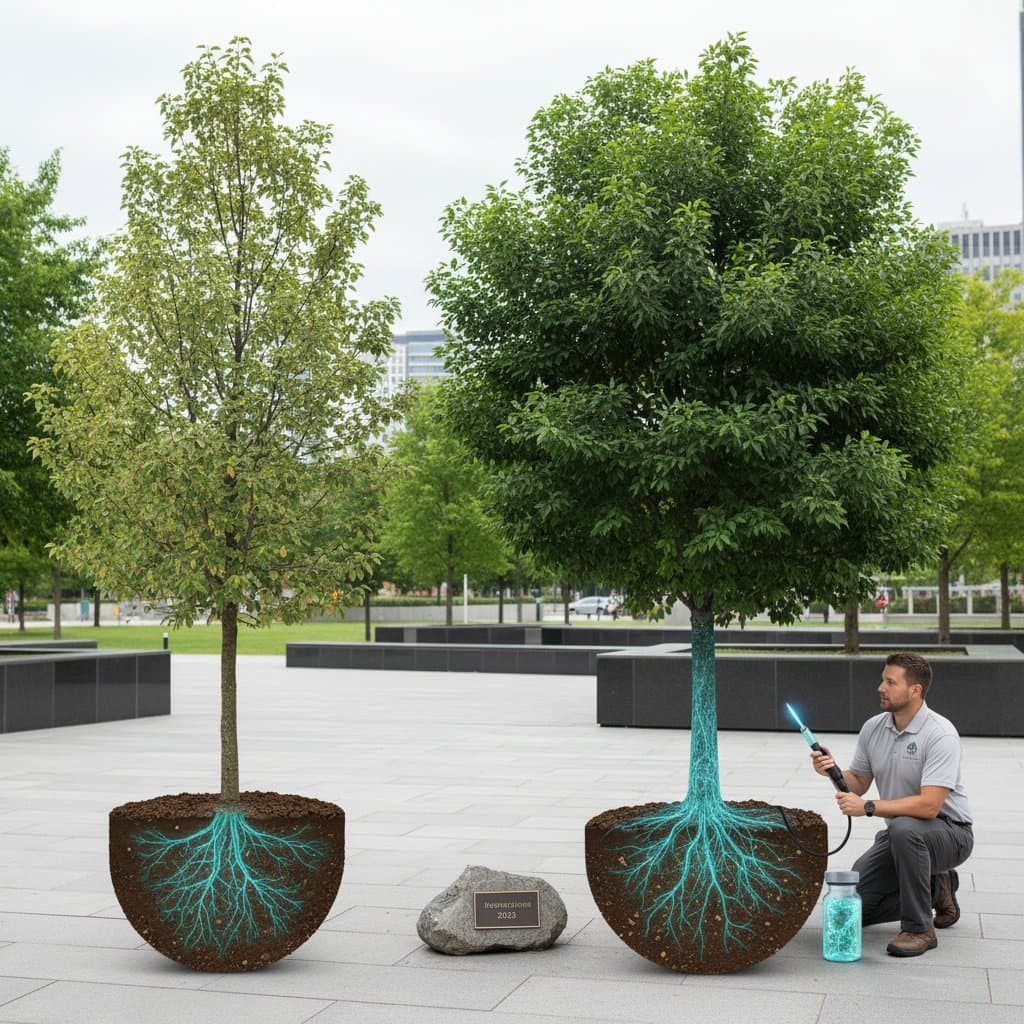
Mycorrhizal Injections: Triple Tree Growth in 2025
Healthy trees begin with robust root systems. Homeowners often notice sluggish growth or sparse foliage, issues that originate in the soil beneath the surface. Mycorrhizal injections address these challenges by introducing beneficial fungi that enhance nutrient uptake, water retention, and overall tree vitality. This comprehensive guide covers the essentials of mycorrhizal injections, including their mechanisms, costs, application methods, and selection criteria for professional services.
What Are Mycorrhizal Injections?
Mycorrhizal injections deliver living fungi directly into a tree's root zone through targeted soil applications. These fungi establish a symbiotic bond with the tree roots, forming an extensive network called a mycorrhizal web. This web extends the roots' access to water and essential nutrients, such as phosphorus and nitrogen, which support vigorous growth and resilience.
The fungi function as an auxiliary root system, exchanging sugars from the tree for improved soil exploration. Over time, this partnership strengthens soil aggregation, increases root mass, and bolsters defenses against environmental stresses like drought or pathogens.
Average Cost of Mycorrhizal Injections
Costs for mycorrhizal injections depend on factors such as tree dimensions, soil quality, and treatment scale. Homeowners typically pay between $100 and $400 per tree, with a national average of $250 for a typical residential tree.
| Factor | Average Cost Range |
|---|---|
| Small Tree (under 20 ft) | $100 - $175 |
| Medium Tree (20 - 40 ft) | $175 - $300 |
| Large Tree (over 40 ft) | $300 - $400 |
| Multiple Trees (per tree) | $75 - $200 |
These estimates encompass the fungal inoculum, labor, and use of injection tools. Arborists may integrate complementary elements, such as balanced fertilizers, to optimize soil conditions.
Factors Affecting the Cost of Mycorrhizal Injections
Tree Size
Trees with larger canopies demand greater volumes of fungal solution and additional injection sites to cover expansive root areas. Scale directly correlates with labor and material requirements.
Tree Health and Condition
Trees exhibiting stress or disease require preparatory steps, such as soil aeration or targeted amendments, to facilitate fungal establishment. These extras elevate the overall expense.
Tree Species
Species like oaks and pines integrate mycorrhizal fungi efficiently, yielding rapid benefits. Specialized strains for particular trees, such as ornamentals, may incur higher costs due to formulation differences.
Soil Type and Condition
Soils with high sand or clay content necessitate denser injection grids for uniform dispersal. Regions with low organic matter or drainage issues demand concentrated applications to promote colonization.
Location and Accessibility
Challenging sites, including sloped terrain or obstructed areas, require specialized gear and extended setup, increasing fees. Straightforward access streamlines the process and contains costs.
Number of Trees Treated
Bulk treatments qualify for volume discounts, lowering the rate per tree. Coordinating multiple applications in one session minimizes travel and setup overhead.
The Mycorrhizal Injection Process
Arborists employ a methodical approach to integrate fungi effectively into the root environment.
-
Initial Assessment and Soil Testing
Professionals inspect the tree for stress indicators, species compatibility, and soil composition. Laboratory analysis reveals pH levels, nutrient gaps, and microbial activity. -
Preparation and Mixing
The fungal suspension, in liquid or powdered form, is compounded. Enhancements like micronutrient additives align with test outcomes to support initial growth. -
Soil Injection
A calibrated probe penetrates 6 to 12 inches into the soil along the drip line. Multiple points ensure comprehensive coverage of the active root zone. -
Observation and Follow-Up
Visible improvements, including denser foliage and enhanced vigor, emerge within months. Periodic re-treatments every two to three years sustain the network.
DIY vs. Hiring a Professional for Mycorrhizal Injections
When to DIY
For young saplings or shrubs, retail mycorrhizal products offer a viable starting point. Mix powders into planting holes or irrigation water to encourage early root development.
When to Hire a Pro
Established or high-value trees benefit from expert intervention, which employs precise tools for deep placement. Professionals select optimal fungal varieties matched to local conditions, avoiding ineffective or harmful applications.
| Scenario | Recommended Approach |
|---|---|
| Small new tree or sapling | DIY application |
| Mature shade tree | Professional injection |
| Poor soil or compacted ground | Professional injection |
| Multiple trees or large property | Professional injection |
| Tree showing disease or stress signs | Professional injection |
How to Hire a Tree Service for Mycorrhizal Injections
Selecting a reliable provider ensures effective outcomes and tree safety.
-
Check Credentials and Certification
Verify arborist certifications in soil science and integrated pest management. Affiliations with industry associations indicate commitment to best practices. -
Confirm Insurance and Licensing
Require proof of general liability and workers' compensation to safeguard against on-site incidents. -
Ask About Fungal Strains and Products Used
Inquire about strain specificity for your tree types and sourcing from certified suppliers to guarantee viability. -
Request a Detailed Quote
The proposal should specify injection quantities, fungal composition, and supplementary treatments. -
Get References or Reviews
Review testimonials highlighting post-treatment tree performance and service reliability. -
Schedule Regular Follow-Ups
Plan annual evaluations to track progress and address evolving soil dynamics.
Frequently Asked Questions
How much does it cost to inject mycorrhizal fungi into a large tree?
For trees exceeding 40 feet, expect fees of $300 to $400. This accounts for expanded root coverage and intensive application efforts.
How long do mycorrhizal injections last?
Established networks persist for several years in stable soils. Reapplications every two to three years reinforce activity amid disturbances.
Are mycorrhizal injections safe for pets and lawns?
These treatments utilize native fungi that pose no toxicity risks. They enhance the broader soil biology without adverse effects on surrounding vegetation or animals.
Can mycorrhizal treatments revive a dying tree?
Such treatments aid recovery in moderately stressed trees by improving nutrient access and resilience. Severe decline, however, may necessitate combined interventions like pruning or disease control.
What types of trees benefit most from mycorrhizal injections?
Deciduous species such as maples and fruit trees, along with conifers like pines, show pronounced gains. Trees in nutrient-poor or disturbed soils derive the greatest advantages.
Sustaining Tree Vitality Through Root Care
Investing in mycorrhizal injections fosters long-term landscape health. By prioritizing underground ecosystems, homeowners cultivate resilient trees that thrive amid changing conditions. Consult professionals to tailor these solutions to your property's unique needs.