
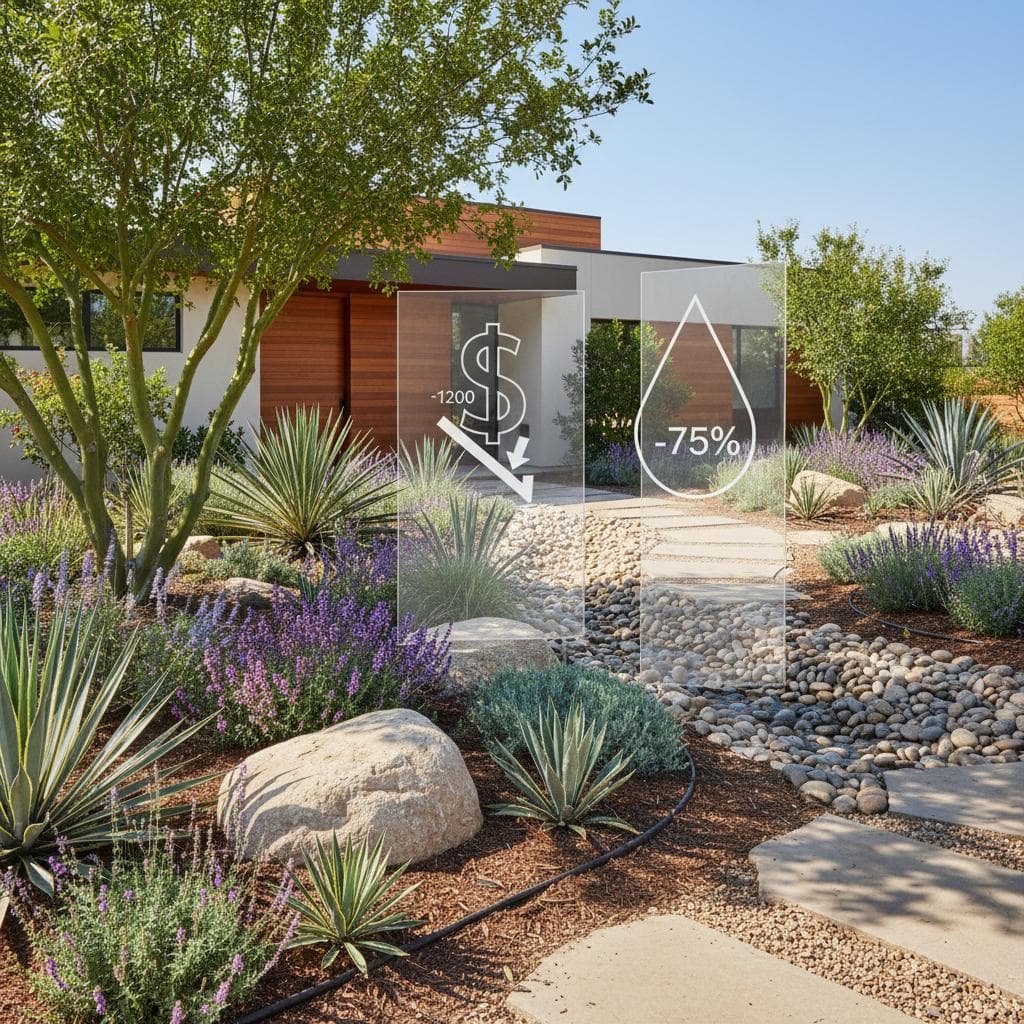
Cut $1,200 Yearly Water Bills with Xeriscaping ROI
High water bills frustrate many homeowners, particularly in dry seasons when lawns require extensive irrigation. If utility statements reveal significant spending on keeping grass green, xeriscaping provides an effective remedy. This landscaping strategy emphasizes water efficiency and can reduce annual water costs by up to $1,200, while enhancing sustainability and curb appeal. The following sections detail xeriscaping fundamentals, expenses, savings potential, and implementation steps for enduring financial and ecological advantages.
What is Xeriscaping?
Xeriscaping represents a landscaping technique that minimizes or eliminates supplemental watering needs. It incorporates drought-resistant plants, efficient irrigation setups, and soil enhancements to develop attractive, sustainable outdoor areas. By aligning the landscape with local climate conditions, this approach lowers maintenance demands, cuts expenses, and fosters a resilient yard that flourishes on limited water.
Average Xeriscaping Costs
Xeriscaping a yard typically costs between $5,000 and $18,000, with an average expenditure of $10,000 for a midsize property. Expenses fluctuate according to yard dimensions, plant choices, and design intricacy. Although the initial outlay appears substantial, diminished water and upkeep costs often recoup the investment within several years.
| Yard Size or Project Scope | Average Cost Range |
|---|---|
| Small yard (under 500 sq ft) | $2,000 - $5,000 |
| Medium yard (500 - 1,000 sq ft) | $5,000 - $10,000 |
| Large yard (1,000+ sq ft) | $10,000 - $18,000 |
| Partial conversion (front yard) | $3,000 - $7,000 |
| Full conversion (entire property) | $8,000 - $18,000 |
An optimized xeriscape cuts outdoor water consumption by 50 to 75 percent. In regions with $150 monthly water bills during peak growth periods, such reductions yield over $1,200 in yearly savings.
Factors Affecting Xeriscaping Costs
Yard Size and Layout
Yard square footage directly impacts project expenses, as larger areas demand more plants, mulch, and irrigation components. Intricate configurations, including slopes or varied planting zones, elevate labor and planning efforts.
Plant Selection
Costs for native and drought-tolerant plants differ widely. Economical options include ornamental grasses, succulents, and desert shrubs, whereas premium choices like specialty cacti or perennials increase budgets. Opting for locally adapted varieties minimizes both setup and ongoing care expenditures.
Irrigation System
Efficient systems such as drip lines or subsurface emitters form the backbone of xeriscaping. A standard drip setup runs about $1,000, but advanced versions with timers and sensors may exceed $2,500. These investments yield returns via minimized waste and targeted hydration.
Soil Preparation
Robust soil bolsters root systems and conserves moisture. Enhancing compacted or sandy soils with compost or organics improves drainage and curbs runoff. Preparation fees span $500 to $1,500, contingent on existing conditions.
Mulch and Ground Cover
Materials like gravel, decomposed granite, and organic mulches prevail in xeriscaping applications. These elements curb evaporation and weed growth. Gravel outlasts bark or wood chips, though it carries a higher price tag.
Design Complexity
Basic layouts featuring native shrubs and rock paths prove more affordable than elaborate schemes with terraces, lighting, or bespoke stone features. Engaging a landscape designer incurs fees from $500 to $2,000, scaled to project scope.
Regional Climate
Prevailing weather dictates plant varieties and irrigation requirements. Arid zones necessitate hardy species, whereas temperate settings permit diverse selections at reduced costs. Regions prone to water restrictions reap the greatest long-term gains.
The Xeriscaping Process
Effective xeriscaping adheres to a methodical sequence that integrates strategic planning with execution.
-
Site Evaluation and Planning
Professionals or homeowners examine soil quality, sunlight patterns, drainage, and runoff dynamics. This analysis identifies suitable plants and materials for optimal performance. -
Design and Budgeting
The blueprint outlines plant positions, irrigation routes, pathways, and coverings. Establishing a firm budget maintains fiscal discipline throughout. -
Soil Improvement
Testing precedes amendments with compost or organics, promoting water retention and root vitality. -
Irrigation Installation
Drip systems or intelligent controllers deliver water to roots, supplanting wasteful sprinklers prone to evaporation. -
Planting and Mulching
Plants suited to similar hydration levels cluster together, followed by mulch or gravel application to shield soil and limit moisture loss. -
Final Inspection and Adjustments
Testing verifies system functionality, timer settings, and plant spacing, with refinements as needed for efficacy and aesthetics. -
Ongoing Maintenance
Though low-effort, xeriscapes benefit from periodic pruning, weeding, and irrigation reviews to sustain excellence.
DIY vs. Hiring a Professional Xeriscaping Service
| Approach | When It Works | Key Considerations |
|---|---|---|
| DIY Xeriscaping | Best for small front yards or garden beds | Individuals with foundational landscaping knowledge can economize on labor through self-directed design and planting. Select straightforward native species and employ ready-to-install drip kits for watering. |
| Professional Xeriscaping | Recommended for full-yard conversions or complex designs | Experts guarantee accurate grading, apt plant choices, and irrigation optimization. They navigate permits, rebates, and utility regulations adeptly. |
Professionals generally deliver superior returns for extensive projects. Their expertise in soil types, microclimates, and plant care averts errors such as excessive watering or inadequate drainage.
How to Hire a Xeriscaping Contractor
-
Check Credentials and Insurance
Verify licensing and coverage for landscaping and irrigation tasks to safeguard against liabilities from accidents or property harm. -
Ask for References and Photos
Examine past project galleries, prioritizing those akin to your yard's scale and aesthetic goals. -
Get Multiple Estimates
Solicit at least three detailed proposals to gauge pricing norms and service variances, including breakdowns of labor, supplies, and irrigation elements. -
Confirm Knowledge of Local Regulations
Inquire about rebate programs for efficient landscapes; contractors familiar with these can assist applications and ordinance adherence. -
Review the Contract in Writing
Ensure the document delineates timelines, materials, species, and payments. Clarify ambiguities prior to commitment. -
Ask About Maintenance Plans
Explore service packages for routine inspections, trimming, and system tweaks to preserve efficiency and investment value.
Frequently Asked Questions (FAQs)
How much can I save by xeriscaping my yard?
Conversions to xeriscaping yield 30 to 75 percent reductions in outdoor water expenses. Local rates may produce $800 to $1,200 or greater annual savings.
Is xeriscaping only for desert climates?
Xeriscaping suits diverse locales through climate-appropriate plant selections. In moist or moderate zones, it prioritizes natives that demand less water than standard turf.
Does xeriscaping increase property value?
Thoughtful xeriscapes elevate visual appeal and draw sustainability-minded purchasers. Such low-care designs boost resale values by thousands.
What types of plants work best in a xeriscape?
Effective choices encompass lavender, sage, yucca, ornamental grasses, and succulents, tailored to regional soil and light.
How long does a xeriscaping project take?
Midsize endeavors span one to three weeks, influenced by design details, weather, and crew schedules.
Are there rebates or incentives for xeriscaping?
Utilities and municipalities frequently provide incentives for turf swaps or efficient designs. Review local criteria and submission protocols.
How much maintenance does xeriscaping require?
Established xeriscapes involve minimal tasks like pruning, weeding, and emitter cleaning, far below traditional lawn demands.
Can I mix xeriscaping with traditional landscaping?
Hybrid setups integrate rock gardens, native shrubs, and targeted irrigation with lawn remnants or beds, curbing overall water needs while preserving conventional elements.
Securing Lasting Returns from Your Xeriscape
View xeriscaping as a strategic, enduring enhancement. Develop a climate-aligned plan incorporating native flora and precise watering. Regular upkeep sustains low consumption; monitor bills to quantify gains. Investments often recover swiftly, with benefits persisting indefinitely.
Beyond finances, xeriscapes promote ecological health by preserving water, limiting chemicals, and bolstering habitats. This transforms yards into valuable, sustainable features. Pursue modest self-guided efforts or expert overhauls to realize tangible savings, enduring allure, and stewardship satisfaction.