
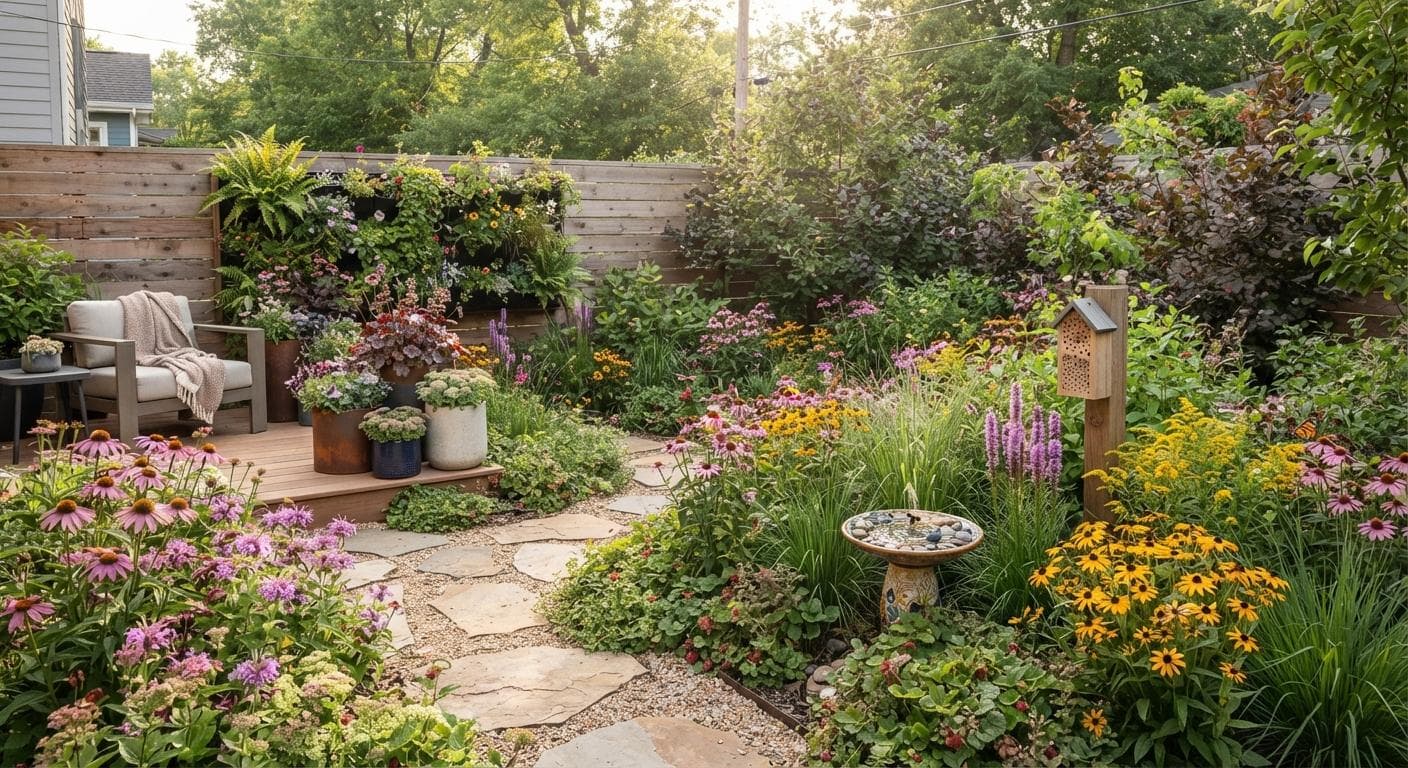
Small Yard Pollinator Garden Design Trends
A compact yard can support bees, butterflies, and other helpful pollinators without sacrificing a comfortable place to sit or play. Small yard pollinator garden design focuses on dense, well planned plantings, varied bloom shapes, and simple habitat features that make every square foot count.
The most effective designs combine native plants, flowers that bloom across several seasons, and thoughtful use of containers, fences, and vertical space. With a clear plan, a small garden can become a colorful, useful landscape that is easier to care for than a scattered collection of plants.
Current Design Choices
Current design choices favor gardens that look intentional while providing reliable food and shelter. Instead of setting aside a large patch for wildflowers, homeowners are weaving pollinator friendly plants into borders, entryways, patio edges, and container groupings.
Compact Native Planting
Native plants are adapted to local conditions and often provide food that local pollinators can use. A compact planting can feature a few carefully selected species repeated in groups, which creates a cohesive look and makes flowers easier for insects to find.
Choose plants that fit the site rather than forcing a popular species into unsuitable conditions. Check mature height and spread before buying, since an aggressive plant can quickly crowd a narrow bed.
Layered Blooms and Long Seasons
A garden with flowers at different heights feels full without needing a large footprint. Low growing groundcovers can edge a path, medium plants can fill the center, and a few taller flowers can add vertical interest near a fence or wall.
Select species with overlapping bloom periods. Aim for flowers from early in the growing season through fall, so pollinators have a steady supply rather than a brief burst of color.
Patio Containers With a Purpose
Containers make it possible to add pollinator plants to paved yards, balconies, and sunny doorsteps. Grouping several pots together creates a stronger visual focal point and gives pollinators a more noticeable cluster of blooms.
Use pots with drainage holes and match plant choices to the amount of sun the containers receive. Soil in pots dries faster than garden soil, so choose a watering routine that keeps roots from drying out.
Edible Gardens and Pollinator Plants Together
Herbs and flowering vegetables can serve both household and wildlife needs. Letting some herbs flower, or allowing a few vegetable plants to bloom, can add nectar and pollen while keeping the garden productive.
Keep food crops and ornamental flowers accessible for harvesting and maintenance. A clear path or defined bed edge prevents a small, densely planted yard from feeling cramped.
Designing for Bees and Other Pollinators
A bee friendly yard needs more than flowers. Pollinators also benefit from clean water, undisturbed nesting areas, and a garden routine that avoids unnecessary chemical exposure.
Choose Plants for Your Site
Start by noting how much direct sunlight each area receives and whether the soil stays wet or dries quickly. Use those conditions to narrow plant choices, then look for locally native flowers with different shapes and bloom periods.
Plant in small groups rather than placing one specimen of every kind around the yard. Repeating three or more plants of a species can create a clearer target for pollinators and a more polished design.
Add Simple Habitat Features
A shallow dish with pebbles can provide a safe place for insects to drink. Keep the water shallow and refresh it regularly to discourage mosquitoes.
Leave some bare, well drained soil where ground nesting bees can access it. Avoid covering every open patch with thick mulch, and leave hollow stems or fallen leaves in a discreet corner when they do not create a safety or maintenance problem.
Reduce Chemical Exposure
Broad spectrum insecticides can harm beneficial insects along with pests. Focus first on healthy soil, suitable plant placement, and hand removal of small pest outbreaks.
If a treatment is necessary, identify the pest, read the product label, and avoid spraying flowers where pollinators are feeding. Never assume that a product is harmless to bees simply because it is sold for home gardens.
How to Plan a Small Pollinator Garden
- Measure the space. Note bed dimensions, paths, doors, utilities, and areas where people need room to move.
- Map sunlight and soil. Observe sun exposure and drainage, then choose plants suited to those conditions.
- Set a practical layout. Reserve access paths and seating areas before assigning space to beds and containers.
- Select a plant palette. Choose locally appropriate native species with staggered bloom periods and varied heights.
- Prepare the planting area. Remove persistent weeds, loosen compacted soil carefully, and amend it only when a soil test or plant needs support.
- Plant in groups. Arrange repeated clusters, leaving enough room for mature growth and airflow.
- Water and observe. Keep new plants consistently watered while they establish, then adjust care to their needs and watch which flowers attract visitors.
Tips for Small Yard Landscaping Success
- Read mature plant dimensions. A plant that fits in a nursery pot may become too wide or tall for a narrow bed.
- Repeat colors and shapes. A limited palette helps a compact garden feel calm and connected.
- Use vertical space carefully. A trellis can support a suitable flowering vine, but keep it away from doors, gutters, and crowded walkways.
- Choose mulch with restraint. A light layer can help manage weeds, but thick mulch may block access to bare soil for ground nesting bees.
- Plan for maintenance access. Leave room to prune, water, and remove weeds without stepping on plants.
Frequently Asked Questions
What flowers attract pollinators to a small yard?
Choose flowers suited to local conditions and select several species with different bloom periods. Native flowers are often a strong starting point, while herbs and flowering vegetables can add useful variety.
How do I make a small yard bee friendly?
Plant clusters of suitable flowers, provide shallow water, and leave a small patch of accessible soil for nesting bees. Avoid unnecessary pesticides and keep some stems or leaves in a tidy, undisturbed area.
Can a pollinator garden work in a shady yard?
Yes, if you select plants adapted to shade or partial shade. Observe the light throughout the day and ask a local nursery or extension service for native options suited to your soil and exposure.
How many plants should I put in a pollinator garden?
There is no fixed number. Choose plants based on mature size, group repeated species together, and leave enough room for healthy growth, paths, and routine care.
Do pollinator gardens need special maintenance?
They need basic watering during establishment, occasional weeding, and pruning suited to each plant. Leaving some stems and leaf litter in a discreet spot can support habitat while keeping the rest of the yard orderly.
Your Next Steps for a Bee Friendly Yard
A small pollinator garden succeeds when its plants match the site and its layout works for everyday use. Start with a few locally suitable flowers, build in bloom variety, and add habitat features without crowding paths or seating. Before buying plants or changing a larger landscape area, compare plans with qualified local landscaping professionals and check their experience, references, and project details.